Digital Sales Room

By
Avaran

How High-Performing Teams Keep Deal Momentum Consistent
In B2B sales, momentum is everything. A deal that stalls for even a few days can quickly turn cold, with buyers losing interest or getting pulled in different directions. Yet the difference between high-performing teams and everyone else isn't luck or talent, it's process.
The best teams don't rely on individual heroics or hope that deals will naturally progress. They build repeatable frameworks that guide buyers through the decision journey with clarity, transparency, and continuous engagement.
According to Gartner, 77% of B2B buyers describe their latest purchase as complex or difficult, which means sales teams need structured approaches to reduce friction and maintain forward movement.
When deals lose momentum, it's rarely because the product isn't a fit. It's because buyers get confused about next steps, stakeholders aren't aligned, or critical information gets lost in fragmented email threads. High-performing teams solve these problems by operationalizing five core practices that keep every deal moving toward close.
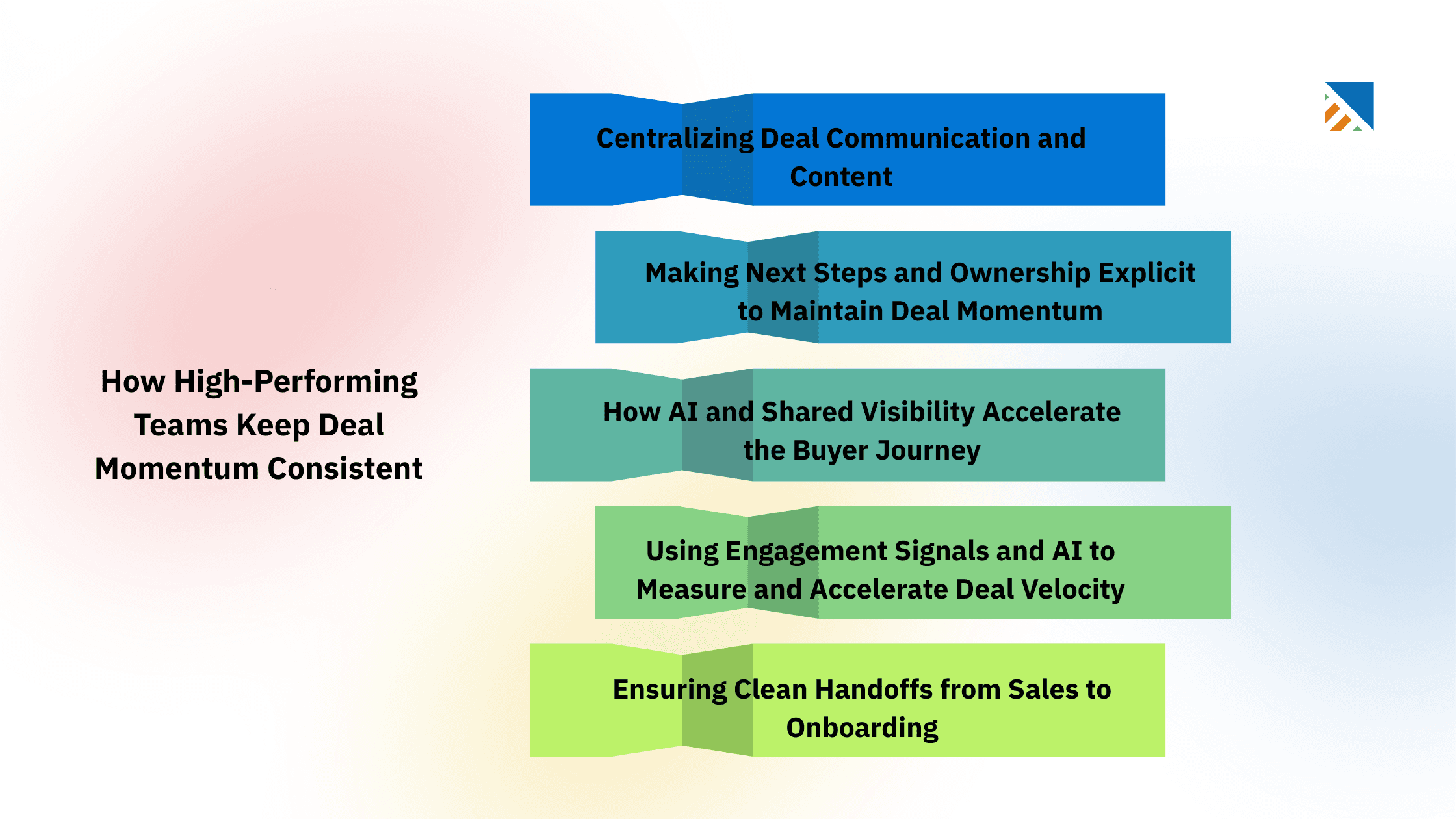
1. Centralizing Deal Communication and Content
The Problem with Scattered Information
One of the fastest ways to kill deal momentum is to scatter information across multiple channels. When buyers need to dig through email threads, Slack messages, and shared drives to find pricing documents, case studies, or technical specifications, engagement drops dramatically. The old saying "time kills all deals" exists precisely because of this friction; every obstacle adds delay and reduces the likelihood of closing the deal.
The Digital Sales Room Solution
High-performing teams consolidate everything into a single source of truth. Rather than attaching PDFs to emails or sending links to multiple resources, they use a Digital Sales Room where all deal-related content lives in one accessible location. This approach eliminates the friction that causes buyers to disengage and helps accelerate the buying process.
A centralized hub also ensures that when new stakeholders join the conversation, which happens in 74% of enterprise deals according to recent research, they can get up to speed immediately. This is especially critical in complex business sales where the buying group often expands during evaluation.
Key Benefits of Centralization:
Instant stakeholder onboarding: New decision-makers access the complete deal context without requesting resent materials
Eliminated information silos: No more lost attachments or forgotten links
Reduced buyer friction: All resources available 24/7 without asking
Consistent messaging: Everyone works from the same, up-to-date materials
Enhanced trust: Transparency in communication builds buyer confidence
What Belongs in Your Centralized Hub
This centralization extends beyond documents. Everything related to the deal should live in the same space:
Meeting notes and recordings
Product demos and walkthroughs
Technical requirements and specifications
Pricing configurations and proposals
Implementation timelines and milestones
Case studies and customer references
Security and compliance documentation
ROI calculators and business cases
When buyers can access everything without asking, they stay engaged and keep deals moving forward on their own timeline.
Book a Demo to see how leading teams centralize their deal content and communication.
2. Making Next Steps and Ownership Explicit to Maintain Deal Momentum

Why Ambiguity Kills Deal Progress
Deals stall when there's ambiguity about who needs to do what by when. Even when sales reps think they've been clear about next steps, buyers often leave conversations with different understandings of their responsibilities. This lack of clarity is one of the primary factors that kill momentum in otherwise promising opportunities.
Creating Mutual Accountability
High-performing teams make the next steps impossible to miss. After every interaction, they document specific action items with clear owners and deadlines. But they don't just send this information in an email that gets buried; they make it visible in the Deal Room Software where both sides can track progress and maintain momentum throughout the sales cycle.
This mutual accountability changes the dynamic. Instead of sales reps chasing buyers for updates, both parties are working from a shared plan.
Forrester notes that 86% of B2B purchases stall during the buying process, and 81% of buyers express dissatisfaction with their chosen providers. |
Components of Effective Action Plans:
Specific tasks – "Review security documentation" not "Look over materials"
Clear ownership – Named individuals, not just roles or departments
Realistic deadlines – Mutually agreed timelines that respect both sides
Dependencies – Understanding what needs to happen before the next step
Success criteria – What "done" looks like for each milestone
Preventing Internal Confusion
Explicit ownership also prevents internal confusion. When multiple people from the buying organization are involved in procurement, IT, finance, and end users, everyone knows their role in moving the deal forward. This organizational alignment is critical for complex deals where the full buying committee must reach an agreement.
Typical Stakeholder Responsibilities:
Economic buyer – Final budget approval and contract signature
Technical evaluator – Product validation and integration assessment
IT security – Security review and compliance verification
Procurement – Contract negotiation and vendor onboarding
End users – Feature validation and user acceptance testing
Champion – Internal advocate driving the evaluation forward
Building Mutual Action Plans
The best teams take this a step further by building mutual action plans that outline the entire path to close. These plans include milestones, decision criteria, and dependencies, giving both sides a roadmap they can reference throughout the decision process. When everyone knows what success looks like and how to get there, deal momentum becomes self-sustaining.
Related Blog: Where Are Your Enterprise Deals Losing Momentum?
3. How AI and Shared Visibility Accelerate the Buyer Journey
The Transparency Modern Buyers Expect
Buyers today expect the same transparency in B2B purchases that they experience as consumers. They want to know where things stand, what's coming next, and whether the deal is on track without having to ask their sales rep for an update. Modern buyers have been conditioned by consumer experiences to expect real-time visibility into every transaction they're involved in.
How Deal Rooms Provide Visibility
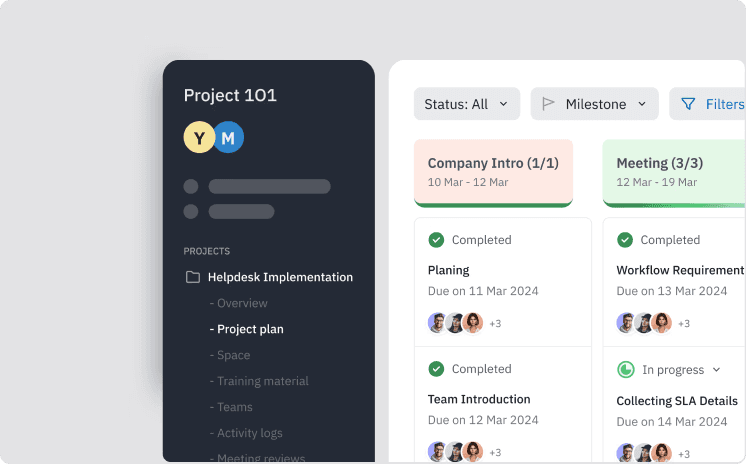
DSR Software provides this visibility by showing buyers exactly where they are in the journey. Progress indicators, completed milestones, and upcoming steps are all visible at a glance. This transparency builds trust and reduces the anxiety that often causes buyers to pause or reconsider.
When buyers can see that they're 60% of the way through the evaluation process, with only a few steps remaining, they're more likely to stay engaged and complete those final tasks.
According to Salesforce, 86% of buyers are more likely to purchase from a company that provides transparency throughout the sales process.
What Buyers Should See:
Overall progress percentage: Visual indicator of journey completion
Completed milestones: What's been accomplished so far
Current stage: Where the deal stands right now
Next steps: What needs to happen next
Upcoming milestones: What's on the horizon
Team activity: Who's engaged and reviewing materials
AI-Powered Insights for Sellers
Advanced AI capabilities within modern deal rooms enable sellers to gain deeper insight into buyer behavior and deal health. AI can analyze patterns across thousands of deals to identify which behaviors correlate with successful outcomes, providing timely recommendations to help sales teams maintain deal momentum.
AI-Driven Intelligence:
Predictive deal scoring: AI evaluates the likelihood to close based on engagement patterns
Risk identification: Behavioral signals that indicate potential deal stall
Content recommendations: AI suggests which resources to share based on the buyer's role and stage
Optimal timing alerts: Machine learning determines the best follow-up timing
Anomaly detection: Flags unusual drops in activity that need intervention
Improving Internal Stakeholder Alignment
Shared visibility also improves internal stakeholder alignment. When an economic buyer can see that the technical team has completed their evaluation and IT has approved the security review, they have the confidence to move forward. There's no need for lengthy internal meetings to confirm everyone is on the same page. The deal workspace shows the current status in real-time.
Maintaining Momentum in Long Sales Cycles
This approach particularly benefits complex deals with long sales cycles. When deals stretch over months, it's easy for urgency to fade. But when buyers have a visual representation of their progress and can see momentum building, they're more likely to maintain their commitment and complete the remaining steps. The strategic use of visibility helps deals move forward even during natural waiting periods.
Start a Free Trial and discover how AI-powered engagement insights transform your follow-up strategy.
4. Using Engagement Signals and AI to Measure and Accelerate Deal Velocity
Why All Interactions Aren't Equal
Not all buyer interactions are created equal. A champion who spends 15 minutes reviewing your pricing proposal is sending a different signal than someone who opens an email and immediately closes it. High-performing teams pay close attention to these signals and adjust their approach accordingly to keep deals on track.
Tracking Meaningful Engagement to Measure Deal Health
Modern Digital Sales Room Software tracks how buyers engage with content, what they view, how long they spend on each resource, what they share with colleagues, and when they return for another look. These engagement signals provide invaluable insight that guides follow-up strategy and helps sellers measure the true health of each opportunity in their pipeline.
Critical Engagement Metrics:
Content views: Which materials are being reviewed
Time spent: Depth of engagement with each resource
Stakeholder activity: Who's active and who's absent
Sharing behavior: Content forwarded to colleagues
Return visits: Buyers coming back for a second looks
Download activity: Materials saved for offline review
AI-Enhanced Deal Intelligence
AI takes engagement tracking to the next level by identifying patterns that human sellers might miss. By analyzing behavioral data across your entire deal pipeline, AI can predict which deals have enough momentum to close and which are at risk of stalling. This predictive capability enables proactive intervention before problems become critical.
Related Blog: Enterprise Sales Cycle Deal Stages That Stall Deals
AI Applications for Deal Acceleration:
Early warning system: Detect engagement drops before the deal goes cold
Champion identification: Identify which stakeholders are truly advocating internally
Buying signal recognition: Spot patterns indicating readiness to move forward
Competitive insights: Understand when buyers are evaluating alternatives
Message optimization: Learn which communication approaches drive engagement
Turning Data Into Action
When a sales rep sees that multiple stakeholders have reviewed the security documentation, they know it's time to address any concerns and move toward the next stage proactively. When activity drops off completely, they can intervene before the deal goes completely cold. CSO Insights reports that sales teams that leverage buyer engagement data achieve a 23% increase in close rates compared to those that don't.
Data-Driven Follow-Up Examples:
High engagement with pricing: "I noticed your CFO spent time with the ROI calculator. Would it help to walk through those numbers together?"
Multiple stakeholders reviewing security docs: "I see your IT team has reviewed our security documentation. Shall we schedule a call to address any questions?"
Return visits to case studies: "I noticed you revisited the enterprise case study. Would connecting with that customer directly be valuable?"
Sudden drop in activity: "Haven't seen much activity this week. Has anything changed on your end that we should discuss?"
Optimizing Your Content Library
This data-driven approach replaces guesswork with precision. Engagement signals also reveal which content resonates and which doesn't. If buyers consistently skip certain resources or spend minimal time on specific pages, that's valuable feedback. High-performing teams continuously refine their content libraries based on what actually drives deals forward, creating a metric-driven approach to content development.
Build content that actually moves deals forward.
Contact us to learn how leading teams use engagement signals and AI to measure impact and win consistently.
5. Ensuring Clean Handoffs from Sales to Onboarding
The Critical Transition Point
The finish line of a closed deal is actually the starting line for the customer relationship. Yet many organizations drop the ball during this critical transition, creating confusion and buyer's remorse just when the customer should be feeling most excited. This handoff moment is where many sellers inadvertently kill the goodwill they've built during the sales process.
Why Handoffs Fail
Common problems during the sales-to-success transition include:
Lost context: Customer success teams starting from scratch
Forgotten promises: Commitments made during sales that aren't documented
Relationship reset: Having to rebuild rapport with new stakeholders
Repeated conversations: Customers explaining their needs all over again
Delayed value: Implementation teams are missing critical requirements
Broken trust: Customers feel like they were passed off after closing
The Deal Room as Connective Tissue
High-performing teams treat the handoff from sales to customer success as a make-or-break moment. They ensure that everything discussed during the sales process, specific use cases, promised timelines, custom requirements, and key stakeholder relationships, transfers seamlessly to the implementation team.
A Deal Room platform serves as the connective tissue between these phases. Rather than starting fresh with a new customer success manager who needs to rebuild context, the onboarding team inherits the complete deal history. This continuity is what separates strategic sellers from transactional ones.
What Gets Transferred:
Specific use cases: Why the customer bought and what they want to achieve
Success criteria: How the customer will measure value
Key stakeholders: Who matters and what they care about (including the champion)
Custom requirements: Special configurations or integrations needed
Timeline commitments: When specific milestones were promised
Challenges discussed: Pain points and concerns raised during evaluation
Competitive context: What alternatives were considered
Internal dynamics: Organizational structure and decision-making patterns
The Impact on Customer Success
This continuity dramatically improves time-to-value.
McKinsey research shows that clear transitions from sales to post-sales teams reduce churn risk by up to 20%, while improving customer satisfaction and expansion opportunities.
Benefits for the Sales Team
The handoff also benefits the sales team:
Reduced post-sale involvement: Customer success has everything they need
Protected selling time: Reps can focus on new opportunities
Maintained relationships: Confidence that customers are well cared for
Faster referrals: Happy customers become advocates sooner
Commission protection: Lower risk of early churn affecting revenue
Extending the Deal Room Into Customer Success
Progressive organizations extend their Digital Sales Room into a customer success workspace, maintaining the same centralized hub throughout the entire customer lifecycle. This approach eliminates information silos and creates a single, continuous experience from first conversation through renewal and expansion.
Contact Us to learn how high-performing teams are building scalable frameworks that drive consistent results
Frequently Asked Questions
1: How do you maintain deal momentum when multiple stakeholders are involved?
Maintaining deal momentum with multiple stakeholders requires a centralized Digital Sales Room where everyone works from the same information. Map stakeholders early, understand their goals, and deliver role-specific content that addresses their concerns.
2: What role does AI play in maintaining deal momentum?
AI helps sales teams measure and sustain deal momentum by analyzing buyer engagement, predicting deal outcomes, and flagging risks early. It detects slowing momentum through changes in activity or buying patterns, enabling proactive action before deals stall. AI also reveals which behaviors and content drive wins, helping teams repeat what works.
3: How can sellers measure deal momentum effectively?
Measure deal momentum using leading and lagging indicators. Leading signals include stakeholder engagement, buying group expansion, stage progression, and action plan completion. Lagging indicators include sales cycle length, stage duration, and close rates.
4: What kills deal momentum most frequently?
Several common factors kill deal momentum:
(1) Lack of clarity around next steps or decision criteria,
(2) Poor stakeholder alignment where the full buying committee hasn't reached an agreement,
(3) Information overload or scattered content that creates friction in the evaluation,
(4) Champion departure or loss of your internal advocate,
5: How do you keep deals moving when buyers go silent?
When buyers go silent, use deal room data to diagnose the drop, who disengaged and when. Reach out to your champion with a direct, empathetic message and suggest a low-effort next step. If needed, engage other interested stakeholders with relevant content or a quick demo. If momentum doesn’t return, qualify out respectfully and refocus on active deals. The goal is persistence without pressure.
Start a free trial today and build deal momentum that drives long-term value—not buyer’s remorse.
Conclusion: Building Predictable Revenue Engines
Deal momentum doesn’t happen by accident. It’s built through intentional, repeatable practices that guide buyers with clarity and confidence. High-performing B2B teams rely on structured frameworks and AI-powered systems not hustle to drive consistent results.
As buyer expectations rise, winning teams deliver transparent, collaborative experiences and build predictable, scalable revenue engines. They use data-driven processes to create efficient buying journeys that turn prospects into long-term advocates.
The question isn’t whether to evolve, but how fast. Teams acting now are gaining AI insights, scaling personalization, and accelerating deals.
Book a demo to transform your deal management. See how AI-powered deal rooms help you maintain momentum, close faster, and build a lasting competitive advantage.
You may also like

A Guide to Project Management Professional Certification

Laugh Your Way to Productivity: 50 Workplace Quotes

50 Funny Workplace Memes That’ll Brighten Your Workday.
What Does a Customer-First Mindset Mean? Explained in 2025

What It Takes to be a Great Customer Success Manager in 2025