Digital Sales Room

By
Sam

7 Best Seismic Alternatives for Sales Enablement Software
Seismic is a solid pick for enterprise teams that need deep content governance, compliance-grade version control, and analytics across a sprawling library of sales assets. But that depth comes at a cost.
Seismic uses quote-based pricing. Implementation can take up to four months, and the platform is primarily designed for content management rather than post-sale onboarding continuity.
The strongest alternative is Projetly, an AI-native digital sales room built for enterprise B2B deals that carries the same workspace straight from proposal through onboarding, instead of stopping at content delivery.
Other options worth evaluating include Showpad for content management and buyer engagement, Mindtickle for training and coaching, Allego for video-based sales learning, Spekit for in-workflow enablement, Highspot for content and training, and Gong for conversation intelligence.
Below, we compare AI capabilities, CRM sync, pricing, G2 reviews, and onboarding continuity.
For a broader look at the category, see our roundup of the 17 Best Digital Sales Room Software in 2026.
Why Teams Look for a Seismic Alternative
Seismic earns its reputation among large, regulated enterprises. Its content governance, compliance controls, and version tracking are difficult to match, which is reflected in its strong 4.6 G2 rating.
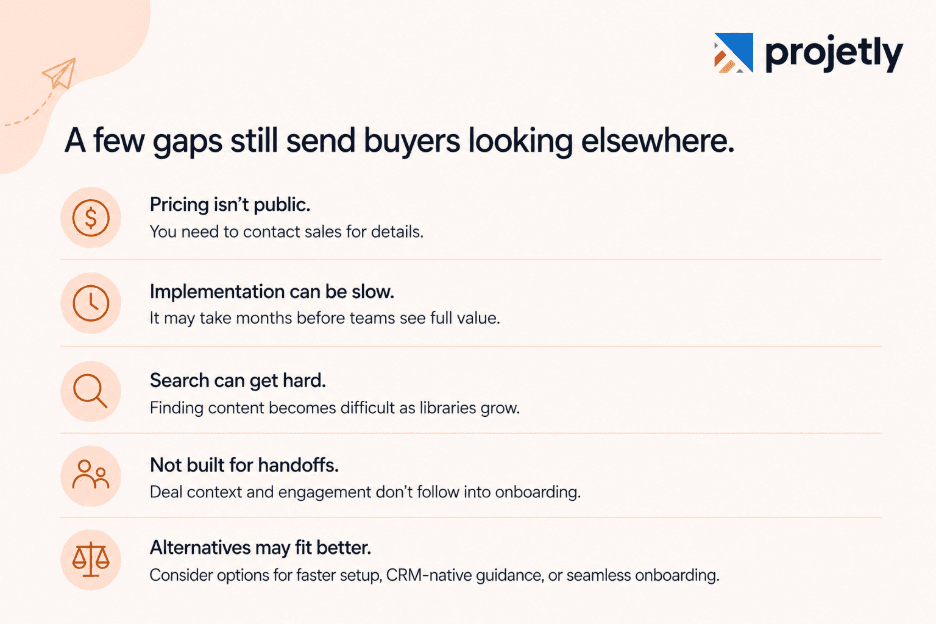
Pricing is not publicly available. Implementation can take four months before teams see full value, making it a significant investment for many organizations.
Search and navigation are the single most common complaint across reviews once a content library grows past a few thousand assets, which undercuts the “find the right content fast” promise the category is built on.
Seismic is built to manage and govern content, not to carry a live deal into customer onboarding. Once a contract is signed, the workspace, engagement history, and stakeholder context stay behind rather than following the customer forward.
If your evaluation includes a lighter mid-market footprint, video-first coaching, in-workflow guidance inside your CRM, or a same-platform bridge from closed deal to onboarding, it is worth comparing Seismic against the platforms below.
Read Now: Seismic vs Projetly: Which Digital Sales Room Is Better in 2026?
Comparison Table: Seismic vs Top Alternatives
Platform | AI | CRM Sync | G2 Rating | Onboarding | Best For |
Seismic | Content AI, recommendations | Salesforce, Microsoft 365, HubSpot, Slack | 4.6/5 | No | Enterprise content governance and compliance |
Projetly | Meeting AI, onboarding AI | Salesforce and HubSpot | 4.8/5 | Same-platform handoff (manual) | Enterprise B2B sales |
Showpad | Content AI | CRM integrations | 4.6/5 | No | Content management and buyer engagement |
Mindtickle | Coaching AI, readiness scoring | Broad CRM integrations | 4.7/5 | No | Training, readiness, and coaching at scale |
Allego | Video and coaching AI | CRM integrations | 4.6/5 | No | Video-first learning and peer coaching |
Spekit | AI Sidekick, in-workflow guidance | Salesforce, HubSpot | 4.6/5 | No | In-workflow enablement inside the CRM |
Highspot | Content and training AI | Broad CRM integrations | 4.7/5 | No | Content management plus training |
Gong | Conversation intelligence AI | Broad CRM integrations | 4.7/5 | No | Call and deal conversation analysis |
Stop Losing Enterprise Deals to Post-Demo Friction
Keep enterprise deals moving with a shared Digital Sales Room that aligns every stakeholder.
Eliminate follow-up gaps, scattered information, and post-demo friction before they delay the sale.
Detailed Breakdown of Each Seismic Alternative
1. Projetly
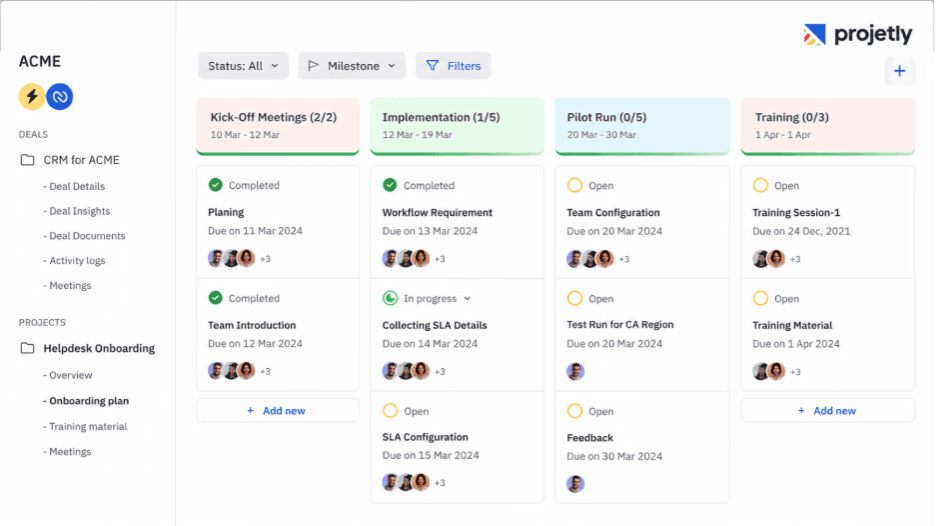
Projetly is an AI-native digital sales room built for complex enterprise B2B sales. It preserves deal context by carrying the same workspace into customer onboarding, so the onboarding team isn’t rebuilding meeting notes, tasks, or stakeholder details from scratch.
Key features:
AI-powered digital sales rooms with branded, centralized workspaces for the full sales cycle.
AI meeting intelligence that transcribes calls, summarizes them, and extracts action items automatically.
Stakeholder engagement analytics showing document views, time spent, and activity by individuals.
Mutual action plans with shared tasks, stakeholder mapping, and milestone tracking.
Same-platform sales-to-onboarding handoff that converts won deals into onboarding projects without manual rebuilding.
AI agents that track onboarding task progress and surface engagement signals to support delivery after the sale.
Limitations:
Newer to market than established players like Seismic or Highspot.
Built for complex, multi-stakeholder enterprise sales rather than transactional, single-buyer deals.
Not designed as a content-governance-first library for large, compliance-heavy asset repositories.
Pricing: Starts at $19/month on annual billing. All plans include a 14-day free trial, no credit card required.
G2 Rating: 4.8/5.
Best for: Enterprise B2B SaaS, fintech, and IT services teams running multi-stakeholder deals where same-platform handoff into onboarding matters as much as the sale itself.
Learn more about how the workspace itself works on the Projetly Digital Sales Room page and see how the handoff is built on the customer onboarding platform page.
2. Showpad
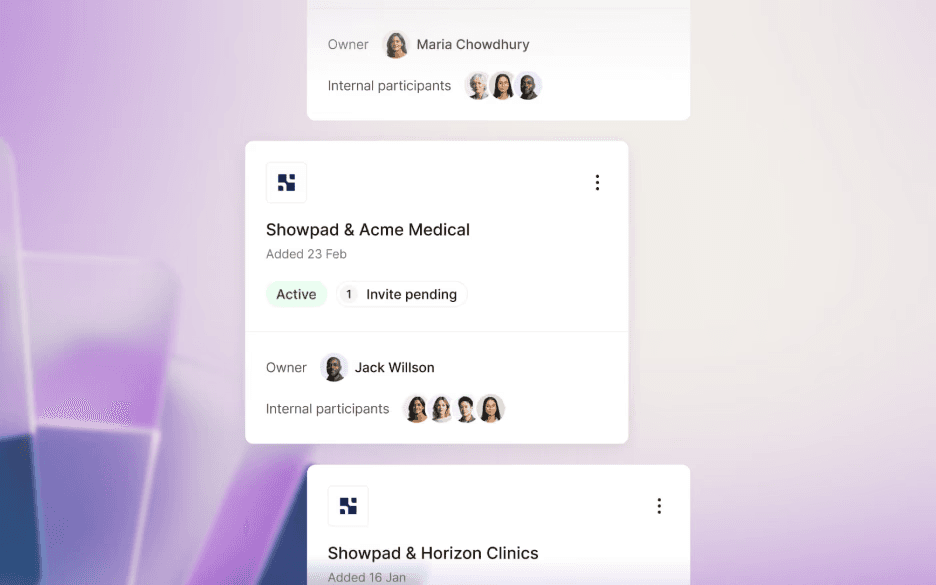
Showpad splits its platform into two components: Showpad Content for sales content management, and Showpad Coach for onboarding and continuous training. It is well regarded for balancing content delivery with buyer-facing engagement at a price point mid-market teams can justify.
Key features:
3D models and immersive showrooms for more engaging buyer presentations.
Digital sales rooms, called Shared Spaces, serve as a single source of truth throughout the sales cycle.
Advanced content analytics that show leaders which assets are driving engagement.
Onboarding and coaching tools bundled through Showpad Coach
Limitations:
Reviewers cite a platform that can feel confusing to navigate and less intuitive than newer entrants.
Search functionality lags more modern content tools.
No native workflow that carries a deal into post-sale onboarding
Pricing: Custom, quoted after a demo call.
G2 Rating: 4.6/5
Best for: Mid-market teams that want a balance of content management and buyer engagement without enterprise-level pricing.
3. Mindtickle
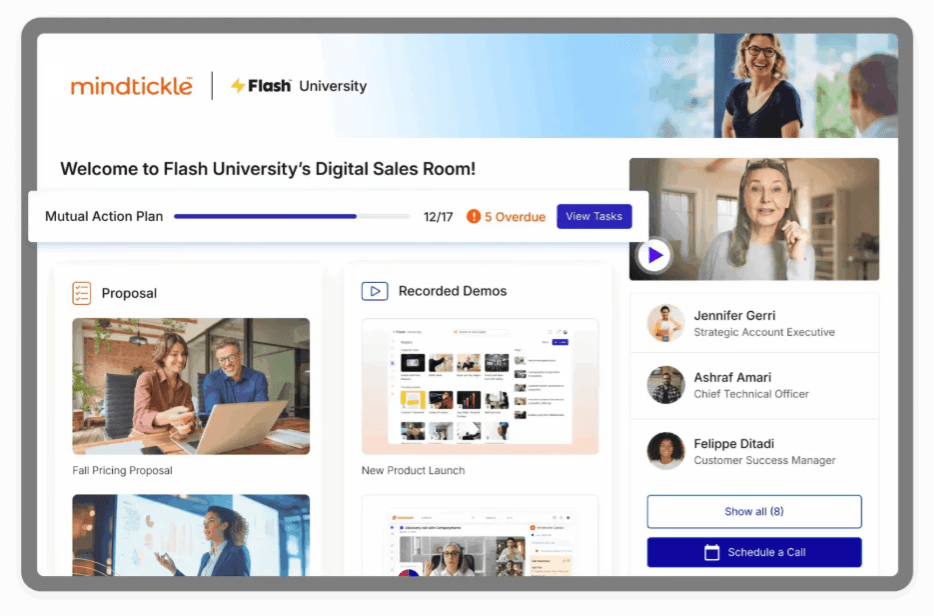
Mindtickle is an AI-powered revenue enablement platform built around training, coaching, and readiness rather than content governance alone. It is widely used to run onboarding, sales kickoffs, and ongoing coaching programs at scale across large distributed sales teams.
Key features:
AI role-plays that let reps practice pitches and get real-time feedback before a live call.
A Readiness Index that benchmarks reps against top-performer skills and behaviors.
Conversation intelligence built into the core platform.
Real-time analytics connecting training and coaching activity to quota attainment and win rates
Limitations:
Positioned around training and coaching more than deal-room-style buyer engagement.
Custom pricing requires a sales conversation before teams can compare cost
No dedicated post-sale onboarding handoff for the buyer’s side of the relationship
Pricing: Custom, available on request. Several pricing tiers exist depending on team size and modules.
G2 Rating: 4.7/5.
Best for: Large revenue organizations that want comprehensive training, readiness scoring, and coaching at scale across sales, onboarding, and ongoing skill development.
4. Allego
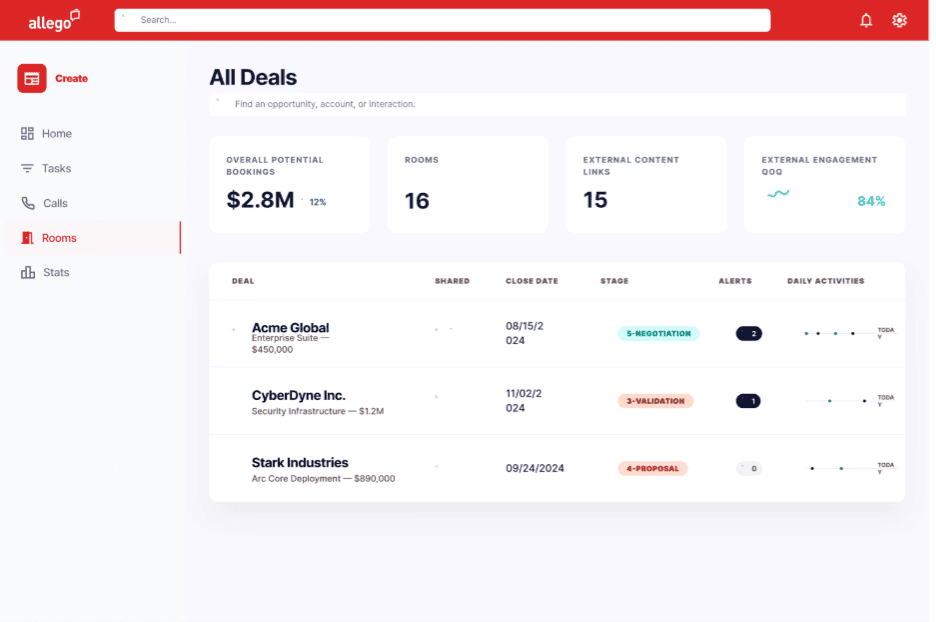
Allego centers its platform on video-first learning, letting reps record pitches, get AI feedback, and learn from peers rather than sitting through static slide-based training. It is a strong fit for distributed teams that rely on asynchronous coaching.
Key features:
Video-based training and coaching designed to boost seller engagement.
AI recommendations tied to sales stage and customer signals.
Collaborative, peer-to-peer learning tools for sharing best practices across reps.
Digital sales rooms for buyer-facing content sharing.
Limitations:
A steep learning curve for admins setting up the platform.
Reviewers note pricing runs high relative to other enablement tools.
An extensive feature set that can feel overwhelming for smaller teams.
Pricing: Custom pricing available on request.
G2 Rating: 4.6/5.
Best for: Distributed sales teams that want video-first learning and peer-to-peer coaching workflows over traditional document-based training.
5. Spekit
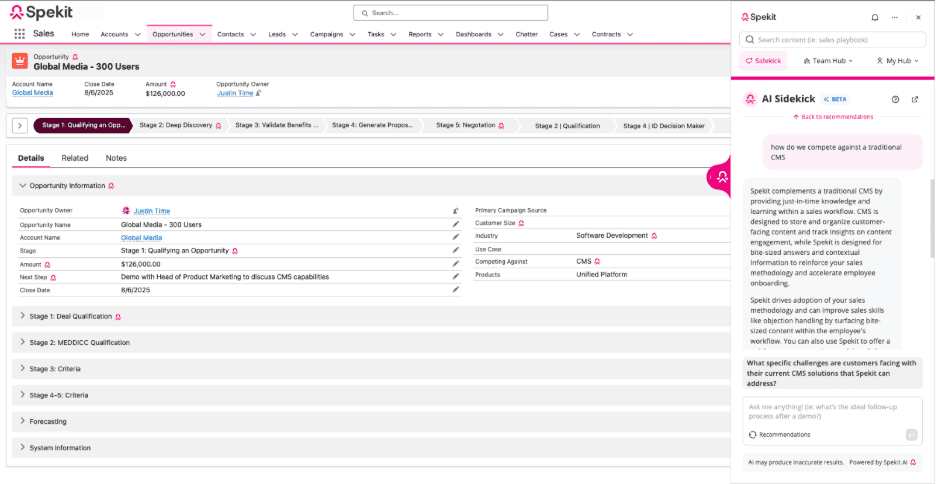
Spekit takes a different approach entirely, embedding contextual guidance, training, and content directly inside the tools reps already use, most notably Salesforce. Instead of sending reps to a separate portal, Spekit surfaces the right answer inside the workflow itself.
Key features:
AI Sidekick, a just-in-time assistant that pulls signals from CRM and call intelligence to recommend content and next steps.
In-app guidance embedded directly inside Salesforce, HubSpot, and similar tools.
Automated Deal Room creation triggered from within the rep’s existing workflow.
Granular analytics on content consumption and its impact on pipeline.
Limitations:
No free tier or self-serve entry point; every deal requires a custom quote.
Value is concentrated around Salesforce-heavy environments, less so for teams outside that ecosystem.
Reviewers note that search can be a weak point without strong initial content organization.
Pricing: Custom, quoted per user per month with annual commitment. Third-party estimates place per-user costs roughly between $10 and $25 per month depending on tier, with a median annual contract value around $15,000.
G2 Rating: 4.6/5
Best for: Salesforce-heavy mid-market and enterprise teams that want in-workflow enablement, so reps never have to leave their CRM to find what they need.
6. Highspot
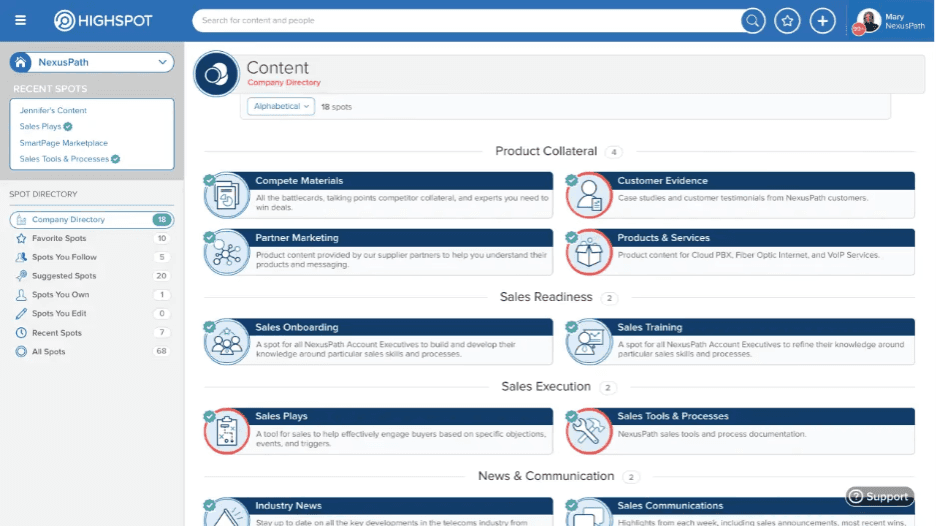
Highspot combines content management, sales training, and analytics into a single platform and is frequently shortlisted alongside Seismic for enterprise deals. It tends to outperform Seismic on ease of setup and content utilization analytics, though reviewers cite a steeper learning curve of its own.
Key features:
Centralized content management with strong search and organization tools.
Detailed data and analytics on which assets drive engagement and conversion.
Integrations with major CRMs and collaboration tools
Limitations:
Users report a confusing layout and friction with platform updates.
No dedicated onboarding handoff once a deal is signed.
Custom pricing only, with no published rate card.
Like Seismic, Highspot is mid-merger: the two companies announced a definitive agreement in February 2026 to combine under the Seismic brand, and the deal remains unclosed as of this writing, which can complicate a purchase decision made today.
Pricing: Custom, available on request.
G2 Rating: 4.7/5.
Best for: Enterprise teams that want a lighter-weight alternative to Seismic’s content governance without sacrificing analytics depth.
7. Gong
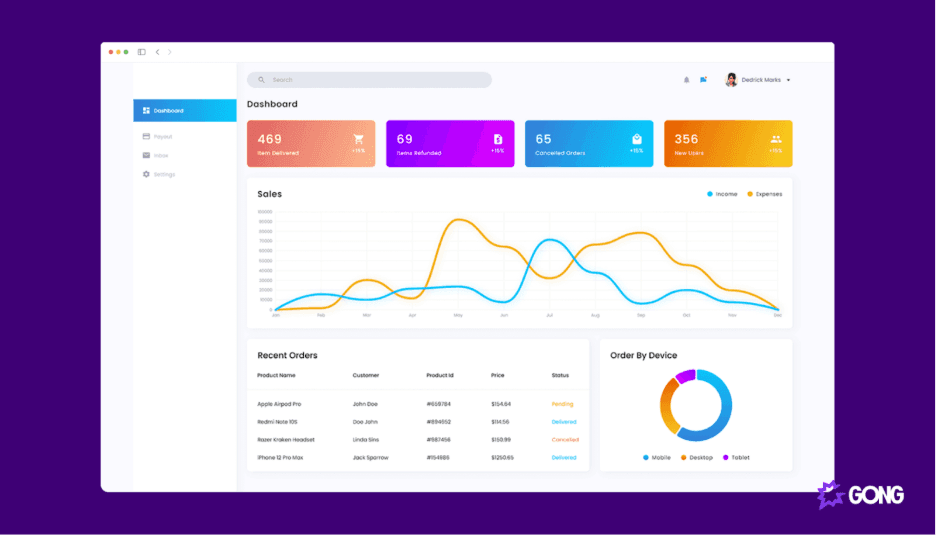
Gong is primarily a conversation intelligence platform rather than a full sales enablement suite, but it is frequently evaluated alongside Seismic by teams that prioritize understanding what happens on calls over managing a content library.
Key features:
Call, email, and meeting analysis that surfaces coaching insights automatically.
Revenue intelligence tools for tracking deal progression and pipeline health.
Data-driven coaching helps managers spot trends across reps over time.
Limitations:
Limited content management capabilities compared to Seismic or Highspot.
No dedicated tools for building or managing sales playbooks.
No workflow for what happens after a deal closes.
Pricing: Custom, available on request.
G2 Rating: 4.7/5.
Best for: Teams whose primary gap is conversation and pipeline visibility rather than content governance or onboarding continuity.
Onboarding Continuity: Where Most Seismic Alternatives Fall Short
Where Seismic and most of its alternatives fall short:
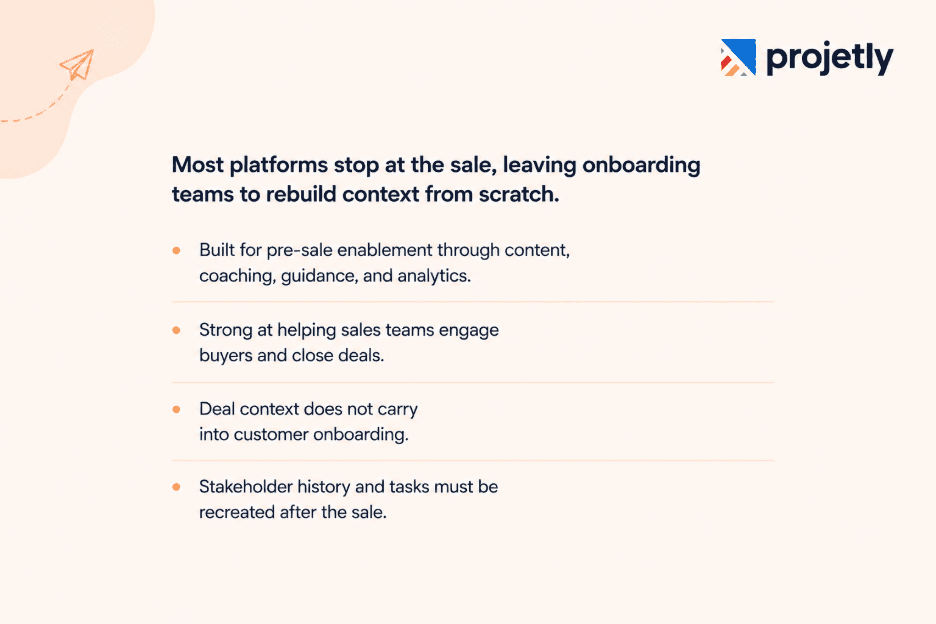
Seismic, Showpad, Mindtickle, Allego, Spekit, Highspot, and Gong are all built around the pre-sale and enablement motion, whether that means content governance, training, coaching, in-workflow guidance, or conversation analysis.
That focus is a real strength, but it means the tool’s job is largely done once the rep has delivered the right content or the deal has closed.
None of the platforms above carries a workspace, its stakeholder history, or its task list into customer onboarding on their own. Whatever context existed during the sale must be rebuilt by hand once the contract is signed.
Where Projetly goes beyond:

A team member converts the won deal into a live onboarding project, with no manual rebuild required.
Carries over meeting notes, documents, tasks, and stakeholder context from the original room.
Tracks onboarding task completion and surfaces engagement signals before it turns into churn.
Keeps the buyer in one continuous relationship instead of starting over with a new team and a blank workspace.
Ready to see how Projetly runs a six-month enterprise deal from first room to first renewal? Book a 30-minute walkthrough or start a free trial at projetly.ai.
For more on how Projetly approaches the full revenue lifecycle, see the Digital Sales Room overview and the customer onboarding platform page.
Frequently Asked Questions
How much does Seismic cost compared to its alternatives?
Seismic pricing is entirely quote-based, with mid-market teams commonly reporting $20,000 to $60,000 a year and enterprise contracts often exceeding $100,000. That puts it well above Showpad, Mindtickle, and Allego's typical mid-market range, while Spekit's in-workflow model tends to land lower still, with a reported median annual contract closer to $15,000.
Which Seismic alternative offers the best path from sales to onboarding?
Projetly is built specifically to carry a won deal into a live onboarding project: a team member creates the Project Room, and meeting notes, tasks, and stakeholder context are already there, no manual rebuild.
What is the closest alternative to Seismic for a lighter content and training combination?
Highspot is the most direct swap for teams that want content management plus training without Seismic's implementation timeline and enterprise-only pricing, though it's currently mid-merger with Seismic itself, which is worth factoring into a purchase decision made today.
Is Seismic good for enterprise sales teams?
Seismic works well for large, regulated enterprises that need deep content governance and compliance controls across a sprawling asset library. Teams that want training and coaching at scale often look at Mindtickle, and those that want a same-platform bridge into onboarding tend to evaluate Projetly.
You may also like

A Guide to Project Management Professional Certification

Laugh Your Way to Productivity: 50 Workplace Quotes

50 Funny Workplace Memes That’ll Brighten Your Workday.
What Does a Customer-First Mindset Mean? Explained in 2025

What It Takes to be a Great Customer Success Manager in 2025