Digital Sales Room

By
Sammy Jones
How AI-Powered Digital Sales Rooms Are Transforming Enterprise Sales in 2026
Here's a number worth sitting with: the average enterprise deal now involves six to ten stakeholders, takes four to six months to close, and generates somewhere between 50 and 200 email threads before anyone signs anything.
Meanwhile, the seller's single biggest competitive advantage, being the most informed person in the room, has quietly eroded, because buyers now do 70% of their research before they ever respond to an outreach.
The old sales playbook wasn't built for this. It was built for a world where the rep-controlled information flow; the champion was one person, and a well-timed phone call could move a deal. That world is gone.
What's replacing it isn't just a new set of tactics. It's a fundamentally different infrastructure; one built around the buyer's experience rather than the seller's convenience.
AI-powered Digital Sales Rooms are at the center that shift, and in 2026, they've graduated from "interesting experiment" to "competitive necessity" for enterprise revenue teams.
Try the Digital Sales Room Free
The Real Problem DSRs Solve (That Nobody Talks About)
Most articles about Digital Sales Rooms open with something about "centralizing content" and "eliminating email ping-pong." That's accurate, but it undersells the actual problem.
The deeper issue is that enterprise buying processes are now fundamentally asynchronous, and traditional sales infrastructure was built for synchronous selling. A rep presents. A buyer responds. A rep follows up. The whole model assumes that information moves linearly, from seller to buyer, through a controlled sequence of interactions.
Real enterprise deals don't work that way. A procurement manager evaluates your security documentation at 11 pm. A CFO forwards your pricing sheet to a finance analyst you've never spoken to.
A champion shares your case study deck with a skeptic in legal who has concerns nobody flagged. All of this happens between your scheduled touchpoints, completely invisible to you, and it shapes the deal outcome in ways you can't influence because you don't know it's happening.
That's the problem AI-powered DSRs actually solved. Not the email clutter; that's a symptom. The real fix is giving sellers visibility the parts of the buying process that happen when they're not in the room.
What "AI-Powered" Actually Means Here
The phrase "AI-powered" has been applied to enough mediocre software that it deserves some scrutiny. In the context of Digital Sales Rooms, there are three meaningful levels of AI capability, and most buyers don't realize how wide the gap is between them.
Level one is content intelligence: AI that helps sellers find the right asset, tag content accurately, and surface relevant materials based on deal context. This is table stakes in 2026. Every credible platform has it.
Level two is engagement intelligence: AI that tracks buyer behavior inside the room, scores it, and tells sellers what it means.
Which stakeholders are active?
Which sections held attention?
Which content led to downstream action? This is where most mid-market platforms currently sit.
Level three is prescriptive intelligence: AI that doesn't just report what happened, but tells you what to do next, and why. "Your champion hasn't opened the room in nine days, but a new contact from procurement visited twice this week. Here's a suggested outreach."
This is where the category leaders are investing in 2026, and it's where the real competitive separation will happen.
Platforms like Projetly, Highspot, ClientPoint, and Trumpet are all pushing toward level three at different speeds. When you're evaluating vendors, this distinction matters more than the feature checklist.
Six Transformations Happening Right Now in Enterprise Sales
The Death of the Static Follow-Up
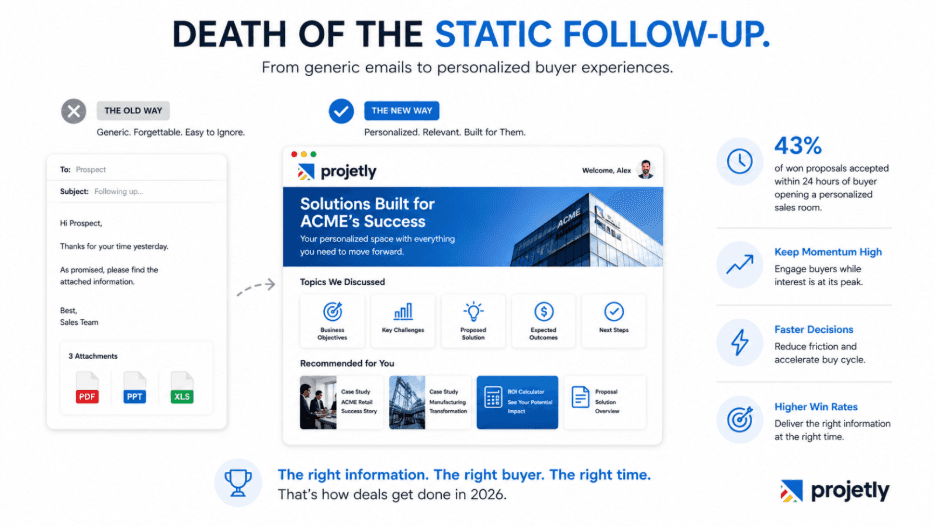
Post-demo follow-ups once meant sending a generic email with a few attachments a day after the call, with personalization limited to changing the prospect’s name in the subject line. In 2026, that approach doesn’t just feel outdated; it signals to modern buyers that the sales team wasn’t fully paying attention.
AI-powered Digital Sales Rooms (DSRs) completely transform this experience by enabling reps to:
Launch personalized microsites within minutes after a meeting
Automatically apply the prospect’s branding, logo, and colours
Include the exact case studies discussed during the call
Organize content around the buyer’s specific priorities and concerns
The result is a buying experience that feels highly tailored and relevant. Buyers receive a centralized space built around their needs, while reps can create and deliver it in just a few minutes instead of spending hours on manual follow-ups.
The commercial impact is significant:
Some platforms report that nearly 43% of won proposals are accepted within 24 hours of a buyer opening a personalized sales room
Faster follow-ups help maintain deal momentum while buyer interest is still high
Reduced friction leads to quicker decision-making and improved conversion rates
That’s the advantage of delivering the right information at the exact moment buyer engagement is at its peak.
Engagement Scoring That Changes How Reps Work
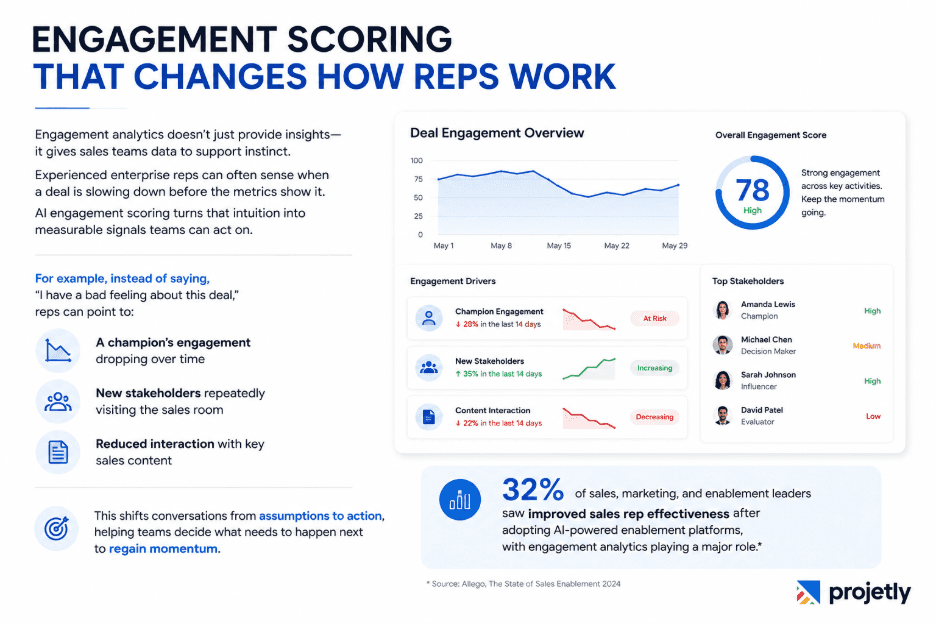
Engagement analytics doesn’t just provide insights; it gives sales teams data to support instinct.
Experienced enterprise reps can often sense when a deal is slowing down before the metrics show it. AI engagement scoring turns that intuition into measurable signals teams can act on.
For example, instead of saying, “I have a bad feeling about this deal,” reps can point to:
A champion’s engagement is dropping over time
New stakeholders are repeatedly visiting the sales room
Reduced interaction with key sales content
This shifts conversations from assumptions to action, helping teams decide what needs to happen next to regain momentum.
Research from Allego found that 32% of sales, marketing, and enablement leaders saw improved sales rep effectiveness after adopting AI-powered enablement platforms, with engagement analytics playing a major role.
Mutual Action Plans Became a Closing Tool
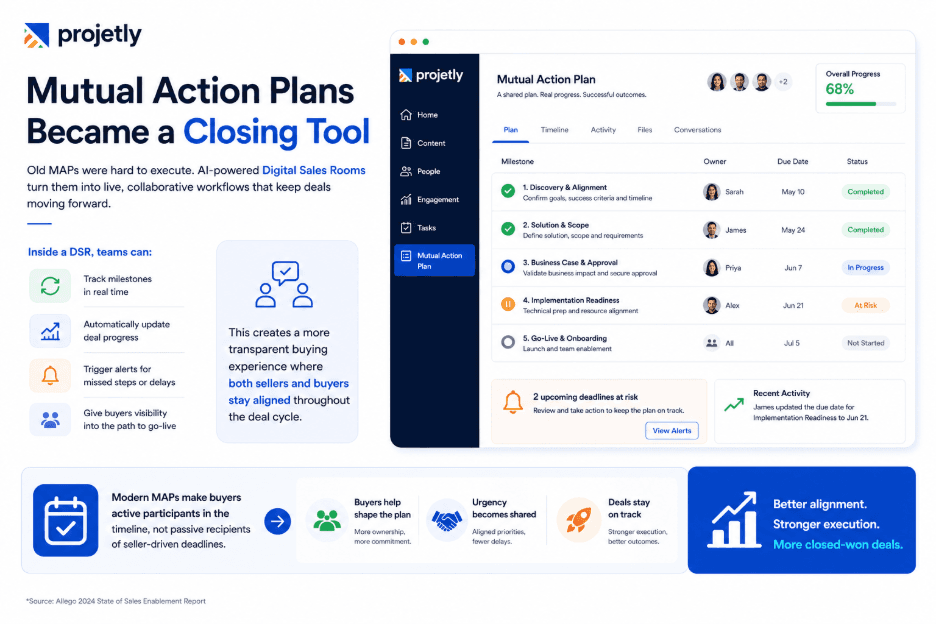
Mutual Action Plans (MAPs) have been part of enterprise sales for years, but executing them was often difficult. They relied on shared documents, manual updates, and constant follow-ups, which meant they quickly became outdated as deals evolved.
AI-powered Digital Sales Rooms (DSRs) make MAPs far more practical by turning them into live, collaborative workflows instead of static documents. Inside a DSR, teams can:
Track milestones in real time
Automatically update deal progress
Trigger alerts for missed steps or delays
Give buyers visibility into the path to go-live
This creates a more transparent buying experience where both sellers and buyers stay aligned throughout the deal cycle.
More importantly, modern MAPs make buyers active participants in the timeline rather than passive recipients of seller-driven deadlines. When buyers help shape the plan, urgency becomes shared, which is especially valuable in enterprise deals where forced timelines often create resistance.
Content Stays Current Without Relying on Rep Discipline
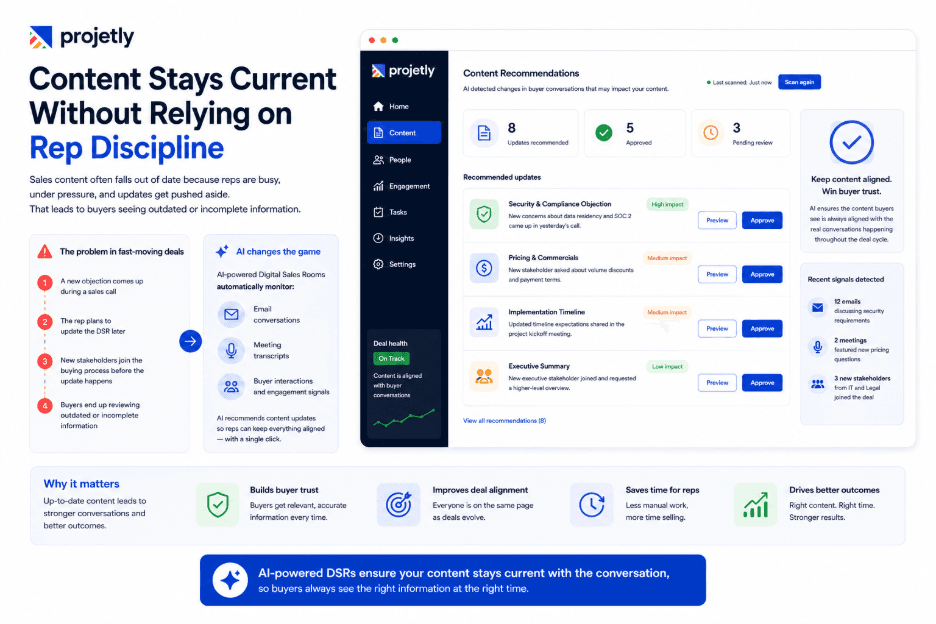
One of the biggest challenges in sales content management is that it relies heavily on reps consistently updating materials during fast-moving deals. Under pressure, updates often get delayed or missed entirely.
For example:
A new objection comes up during a sales call
The rep plans to update the DSR later
New stakeholders join the buying process before the update happens
Buyers end up reviewing outdated or incomplete information
Modern AI-powered Digital Sales Rooms (DSRs) are starting to solve this problem by automatically monitoring:
Email conversations
Meeting transcripts
Buyer interactions and engagement signals
The AI can then recommend content updates and allow reps to approve changes with a single click, reducing the need for manual follow-through.
While this capability is still evolving, it addresses a major gap in enterprise sales by keeping content buyers aligned with the actual conversations happening throughout the deal cycle.
Stakeholder Mapping Went From Spreadsheet to Real-Time Intelligence
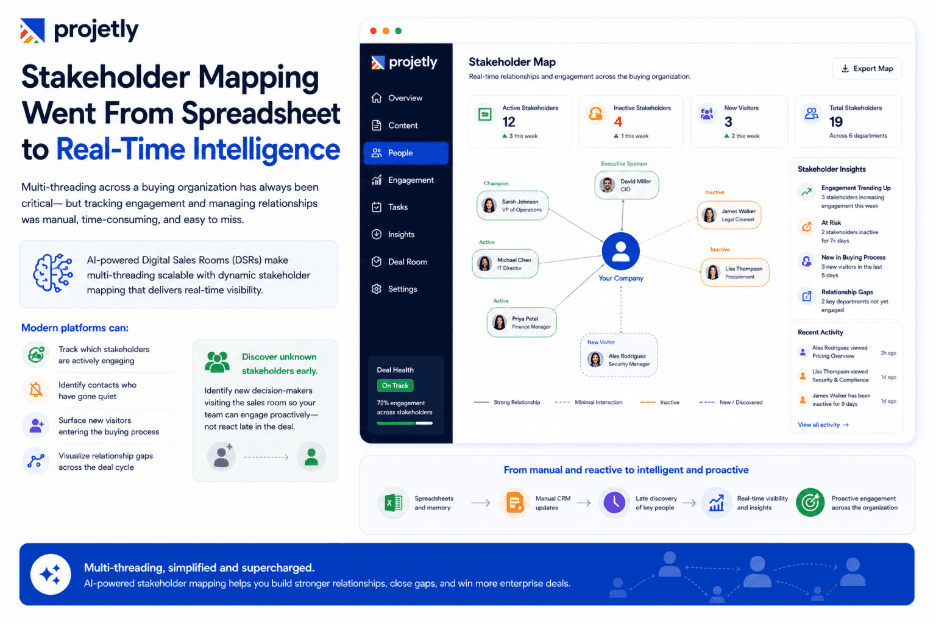
Multi-threading, building relationships with multiple stakeholders across a buying organization has always been a critical part of enterprise sales. The challenge was execution. Tracking stakeholder engagement, identifying inactive contacts, and managing introductions often depended on manual CRM updates or individual memory.
AI-powered Digital Sales Rooms (DSRs) are making multi-threading far more scalable through dynamic stakeholder mapping. Modern platforms can now:
Track which stakeholders are actively engaging
Identify contacts who have gone quiet
Surface new visitors entering the buying process
Visualize relationship gaps across the deal cycle
One of the most valuable capabilities is identifying previously unknown stakeholders visiting the sales room. Instead of discovering new decision-makers late in the deal, sales teams can proactively engage them as soon as buying activity expands internally.
This turns multi-threading from a difficult manual process into a more data-driven and proactive sales strategy.
The Buyer Experience Finally Got the Attention It Deserves
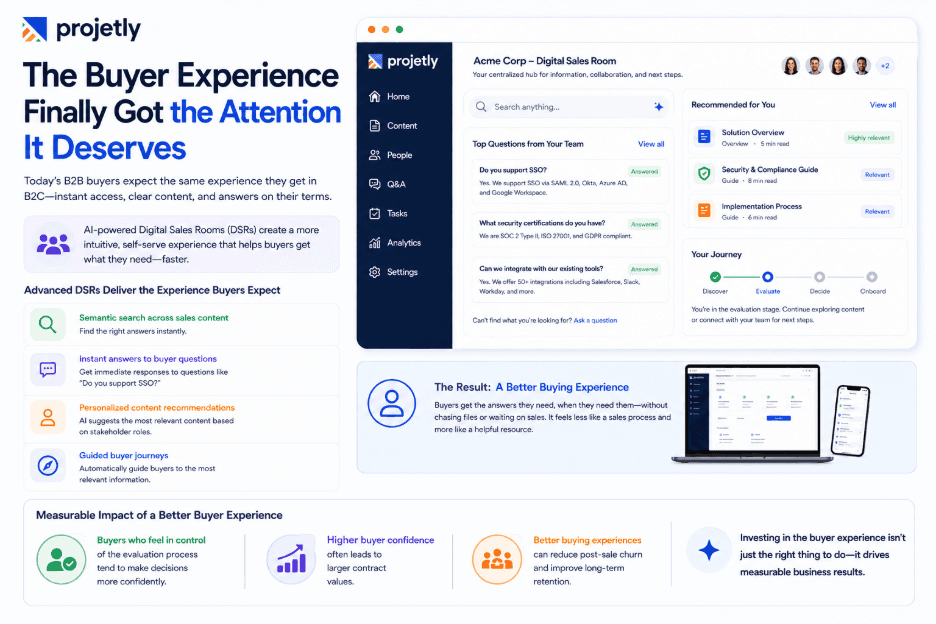
This may be the most important shift in enterprise sales, and many teams are still catching up to it.
Modern B2B buyers now expect the same experience they get in B2C environments:
Instant access to information
Clear and organized content
The ability to self-serve answers without waiting for a sales call
Traditional enterprise sales processes rarely deliver that experience. Buyers are often left navigating scattered files, delayed responses, and disorganized shared drives.
AI-powered Digital Sales Rooms (DSRs) change this by creating a more intuitive and buyer-friendly experience. Advanced DSRs can:
Enable semantic search across sales content
Deliver instant answers to buyer questions like “Do you support SSO?”
Recommend personalized content based on stakeholder roles
Guide buyers toward the most relevant information automatically
As a result, the experience feels less like navigating a sales process and more like using a helpful resource.
Research around self-directed buying experiences suggests this has measurable business impact as well:
Buyers who feel in control of the evaluation process tend to make decisions more confidently
Higher buyer confidence often leads to larger contract values
Better buying experiences can also reduce post-sale churn and improve long-term retention
The Metric That Separates Serious DSR Users from Everyone Else
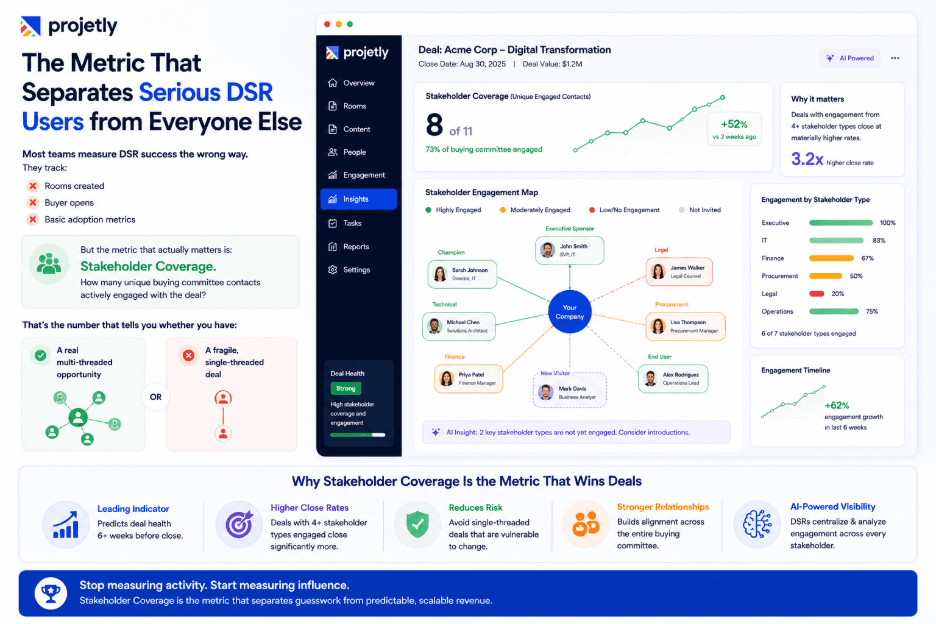
Most teams measure DSR success by adoption: how many rooms were created, how many buyers opened them. That's the wrong metric, and it's why many DSR rollouts produce modest results despite solid technology.
The metric that matters is stakeholder coverage, the number of unique buying committee contacts who have actively engaged with a room across a deal's lifetime.
Deals where sellers have documented engagement from four or more stakeholder types close at materially higher rates than deals where only one or two contacts have been active.
Stakeholder coverage is a leading indicator, not a lagging one. It tells you six weeks before close whether you have a deal or a single-threaded relationship that's one reorganization away from falling apart.
AI-powered DSRs make this metric measurable in a way that was never possible when deal activity was scattered across email, Slack, and shared drives.
Explore Enterprise DSR Solutions
What This Means for Revenue Leaders in 2026
The conversation around AI-powered DSRs has shifted. It's no longer "should we evaluate this category?" It's "Are we using this well enough to matter?"
The teams getting a real competitive advantage from DSRs in 2026 aren't just the ones who deployed the technology. They're the ones who rebuilt their sales process around the data it generates. They use engagement analytics in deal reviews. They coach reps on stakeholder coverage, not just pipeline volume. They measure content effectiveness by deal outcome, not downloads.
The technology is genuinely powerful. But it doesn't change deals on its own; it gives sales organizations the information and infrastructure to change how they sell. That's a distinction worth taking seriously before signing any contract.
Frequently Asked Questions
What is an AI-powered Digital Sales Room, and how is it different from a shared Google Drive or Dropbox folder?
A shared folder simply stores files. An AI-powered Digital Sales Room (DSR) is an interactive workspace that tracks engagement, personalizes content, suggests next actions, and keeps stakeholders aligned throughout the deal cycle. While Google Drive acts like a filing cabinet, a DSR functions more like a deal intelligence platform.
2. At what stage of the sales cycle should a Digital Sales Room be introduced?
Most teams introduce DSRs after demos, but high-performing teams use them throughout the entire buyer journey, from discovery calls to onboarding and renewals. The key isn’t the stage, but using DSRs consistently across the sales process.
3. How do AI-powered DSRs handle multi-stakeholder buying committees?
DSRs track engagement at the individual stakeholder level, showing who viewed content, how long they engaged, and when new contacts enter the deal. Dynamic stakeholder maps help sales teams identify relationship gaps and strengthen multi-threaded engagement.
4. What does a realistic DSR implementation look like, and how long does it take to see results?
Most organizations start seeing measurable engagement improvements within 30–60 days. The biggest challenge is usually adoption, not setup. Teams that integrate DSRs directly into their sales workflow tend to see faster results.
5. Are AI-powered Digital Sales Rooms only relevant for large enterprise deals, or do they work for mid-market sales too?
DSRs work for both enterprise and mid-market sales. Enterprise teams benefit more from advanced stakeholder mapping, while mid-market teams often see the biggest gains in deal speed and smoother collaboration.
6. How do AI-powered DSRs integrate with CRM and sales tools like Salesforce or HubSpot?
Modern DSR platforms integrate with tools like Salesforce, HubSpot, Gong, Outreach, and Slack. Engagement data, stakeholder activity, and deal updates sync automatically into existing workflows, reducing manual data entry.
7. How do you measure whether a Digital Sales Room program is actually working?
Success should be measured through business outcomes, not just usage metrics. Key indicators include:
Stakeholder engagement across deals
Time-to-first buyer interaction
Deal velocity improvements
Close rate changes
Reduced sales cycle length
If results don’t improve after consistent use, the issue is with us
You may also like

A Guide to Project Management Professional Certification

Laugh Your Way to Productivity: 50 Workplace Quotes

50 Funny Workplace Memes That’ll Brighten Your Workday.
What Does a Customer-First Mindset Mean? Explained in 2025

What It Takes to be a Great Customer Success Manager in 2025