
Digital Sales Room

By
Sam
Digital Sales Room (DSR): The Complete Guide for 2026
B2B buyers have fundamentally changed how they make decisions. The average buyer journey now spans 272 days, involves 10+ stakeholders, and touches 88 different interactions before a deal closes. Email chains get buried. PDF attachments go unread. And sales reps are often left guessing who's actually engaged.
That's exactly the problem digital sales rooms were built to solve.
This guide covers everything you need to know about digital sales rooms in 2026, what they are, how they work, who uses them, and how to choose the right platform for your team.
👉 Book a demo and see Projetly in action
What is a Digital Sales Room?
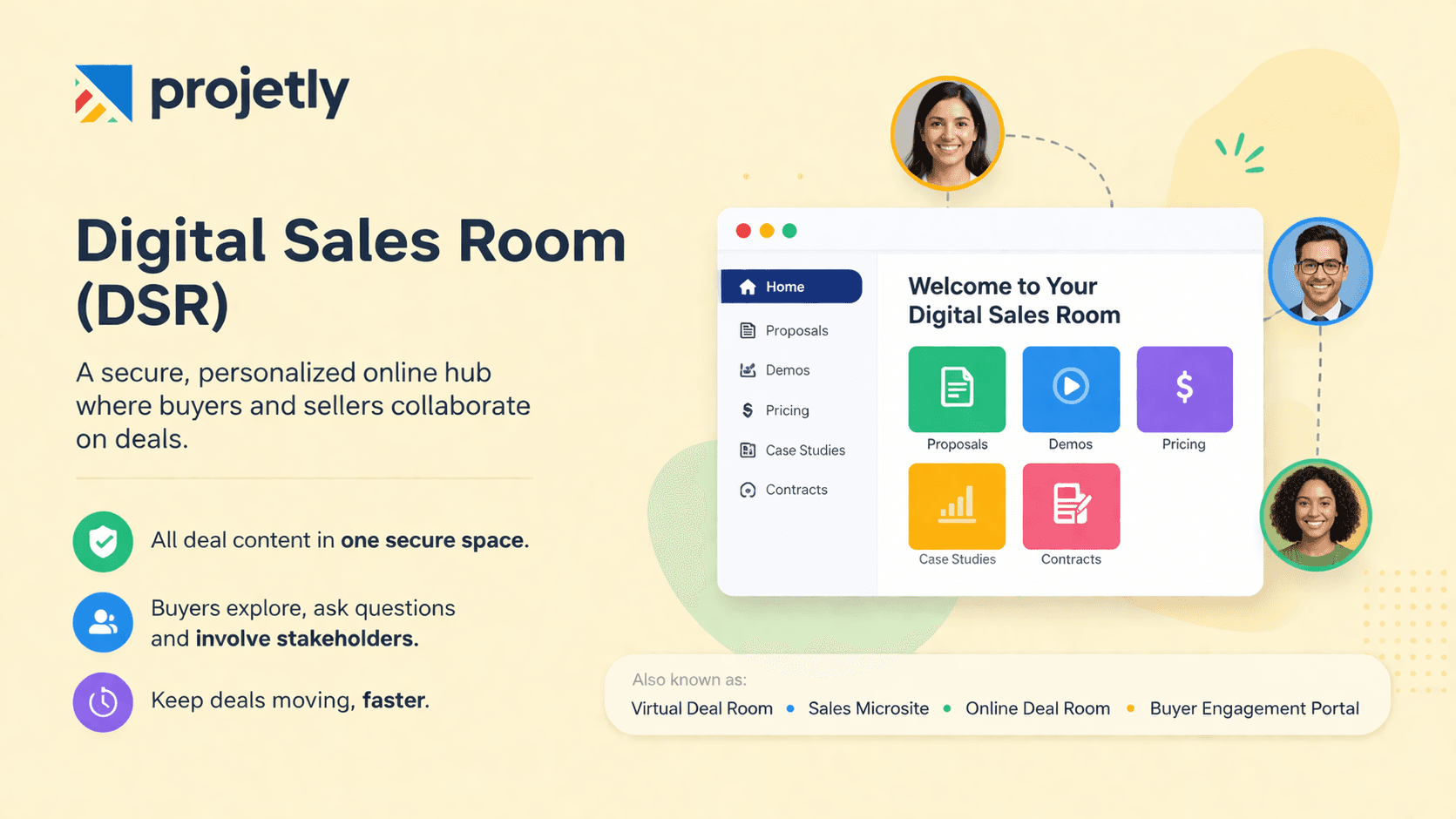
A digital sales room (DSR) is a secure, personalized online workspace where B2B sellers and buyers collaborate throughout the entire sales cycle. Also referred to as a virtual deal room, virtual sales room, or sales microsite, a DSR centralizes every piece of deal-related content, proposals, demos, pricing documents, case studies, and contracts into a single, always-accessible hub.
Think of it as a branded, interactive portal built specifically for one prospect or account. Instead of firing off a string of follow-up emails with attachments, a sales rep builds a dedicated space where buyers can self-serve, ask questions, review materials at their own pace, and loop in other stakeholders, all in one place.
Gartner defines digital sales rooms as: a digital channel designed to increase buyer and seller engagement throughout the customer journey via a privately formed, persistent microsite. It combines revenue enablement content, e-commerce capabilities, and workstream planning to align with the buying jobs that need to be done.
Digital Sales Room Synonyms
The terminology varies by vendor, but these terms all describe the same core concept:
Digital Sales Room (DSR)
Virtual Deal Room
Virtual Sales Room
Online Deal Room
Buyer Engagement Portal
Sales Microsite
Client Site (SalesHood's term)
👉 Start your free trial and streamline your entire sales flow
Digital Sales Room vs. Traditional Sales Methods
To understand the value of a DSR, it helps to see where legacy approaches fall short.
Challenge | Traditional Approach | Digital Sales Room |
Content delivery | Email attachments, shared drives | Centralized, branded microsite |
Buyer visibility | None — content disappears into inboxes | Real-time engagement analytics |
Multi-stakeholder alignment | Disconnected threads, forwarded emails | All stakeholders in one shared space |
Follow-up timing | Guesswork | Triggered by buyer activity signals |
Content freshness | Outdated attachments | Always up-to-date, centrally managed |
Sales cycle length | Long, unstructured | Shortened via self-service and clarity |
The core problem with traditional methods isn't effort; it's architecture. Sending a well-organised email with 12 attachments still requires the buyer to know which file answers which question. A DSR software removes that friction entirely.
👉 Emails create confusion. DSRs create momentum. Start your free trial
Why DSRs Matter More Than Ever in 2026
The shift isn't subtle. B2B buying behaviour has changed dramatically, and sales processes that haven't evolved are leaving deals on the table.
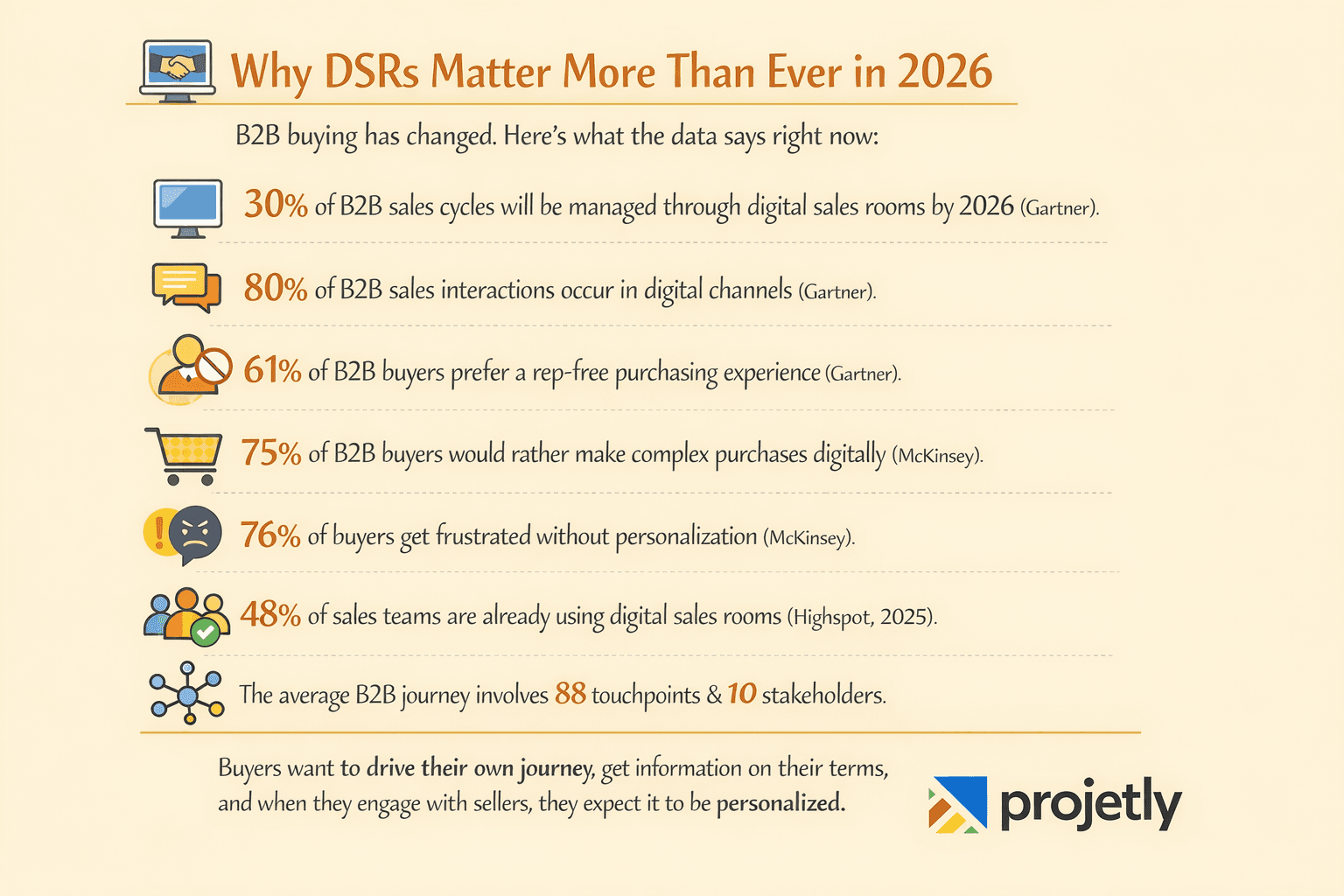
Here's what the data says right now:
30% of B2B sales cycles will be managed through digital sales rooms in 2026, according to Gartner, up from single digits just a few years ago.
80% of B2B sales interactions between suppliers and buyers now occur in digital channels (Gartner).
61% of B2B buyers prefer a purchasing experience that doesn't involve a sales rep (Gartner).
75% of B2B buyers say they'd rather make complex purchases digitally than in person (McKinsey).
76% of buyers become frustrated when their experience lacks personalization (McKinsey).
48% of B2B sales teams are already using digital sales rooms to enhance customer engagement (Highspot State of Sales Enablement, 2025).
The average B2B buyer journey now involves 88 touch points and 10 stakeholders before a deal closes.
The message is consistent across every major research source: buyers want to drive their own journey. They want access to information on their schedule, not when a sales rep is available. And when they do interact with sellers, they expect it to feel tailored, not templated.
Digital sales rooms directly address all three of these expectations.
The "Buying Loop" Problem
Traditional sales processes assume linearity: prospect, demo, proposal, close. But real B2B buying doesn't work that way. Buyers loop back through earlier stages, sometimes multiple times, before they're ready to commit. They revisit content, share it internally with new stakeholders, and reconsider decisions already made.
A DSR is always there when they return. Unlike an email thread that requires excavation, a digital sales room is a persistent space that evolves alongside the deal.
Key Features of a Digital Sales Room
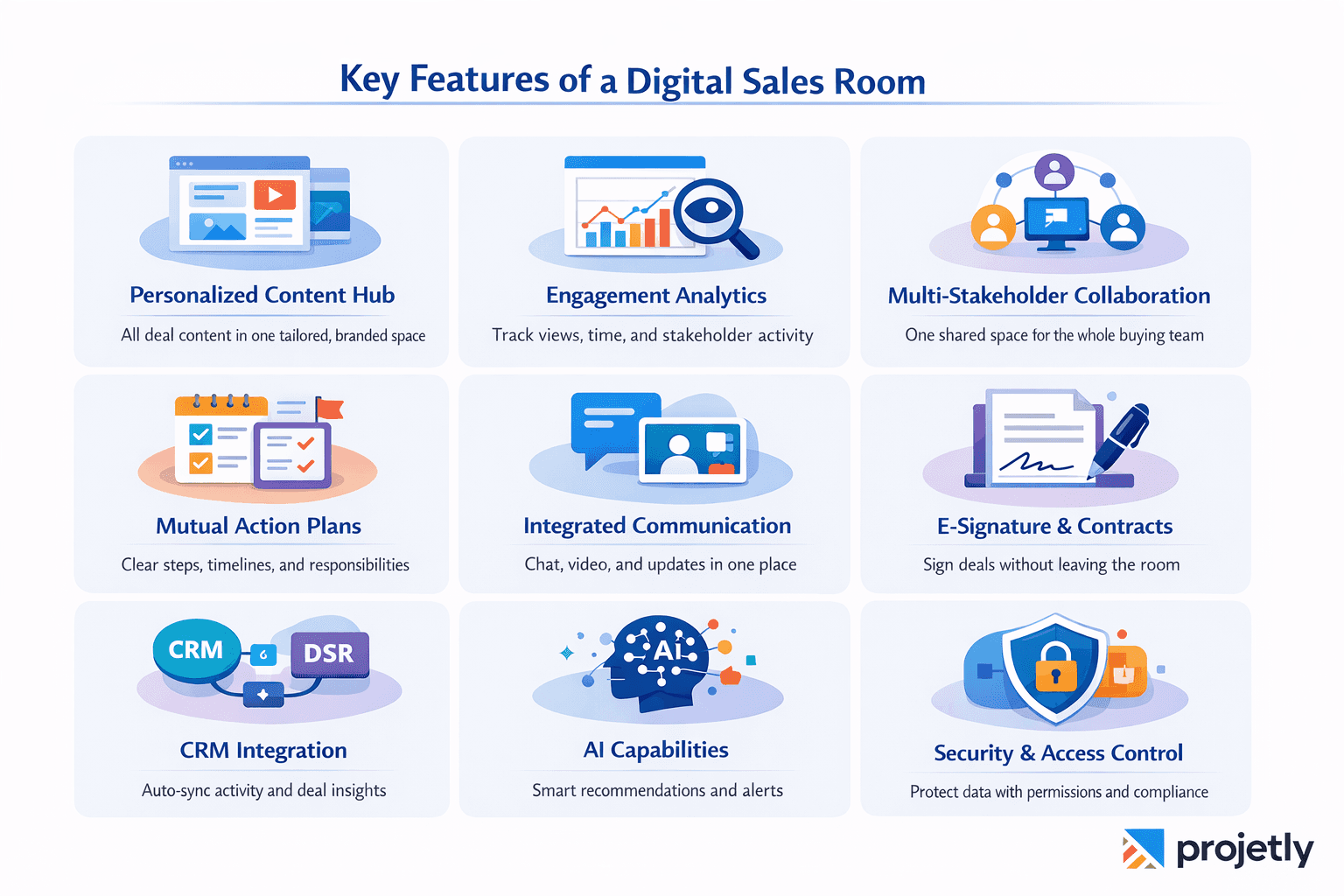
Not all DSR platforms are created equal. Here are the features that separate a functional tool from one that actually moves deals forward.
1. Personalized Content Hub: Upload and organize all deal-relevant assets, demos, pricing, case studies, and proposals in a single branded space tailored to that specific buyer. No generic links. No shared folders full of irrelevant files.
2. Real-Time Buyer Engagement Analytics: See exactly which stakeholders viewed which content, how long they spent on it, and when they revisited the room. This turns follow-up from guesswork into strategy.
3. Multi-Stakeholder Collaboration: Invite multiple members of the buying committee into one shared workspace, enabling everyone to see the same information simultaneously. Comment, tag, and communicate without leaving the room.
4. Mutual Action Plans (MAPs): Co-create a shared roadmap with the buyer, milestones, responsibilities, and timelines, so everyone understands what needs to happen to move the deal forward.
5. Integrated Communication Tools: Built-in chat, video conferencing, and async video messaging mean the conversation happens inside the deal room, not scattered across email, Slack, and phone calls.
6. E-Signature and Contract Management: Many platforms allow buyers to review, negotiate, and sign contracts directly inside the DSR, removing one of the most common sources of late-stage friction.
7. CRM Integration: Buyer activity in the DSR should flow directly into your CRM, updating deal health scores, triggering alerts, and keeping the sales team informed without manual logging.
8. AI-Powered Capabilities: In 2026, every major DSR platform will have integrated AI in some form. This ranges from content recommendations and call transcription to deal health scoring and automated re-engagement sequences triggered by buyer behaviour signals.
9. Security and Access Controls: Role-based permissions, encryption, audit trails, and compliance features (GDPR, HIPAA, where applicable) protect sensitive information throughout the deal cycle.
👉 Want to know more about Projetly? Book a demo today
Benefits of Digital Sales Rooms
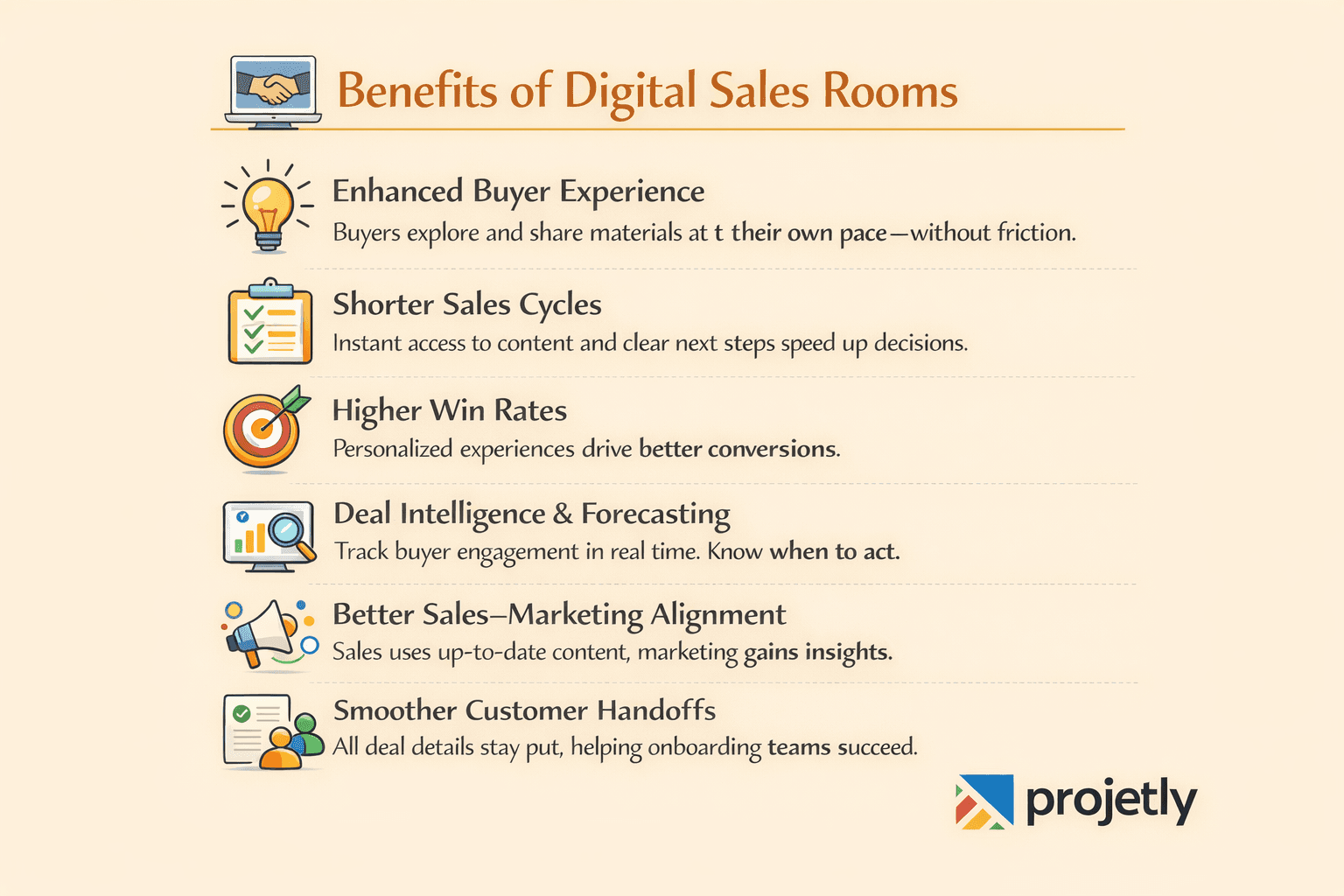
Enhanced Buyer Experience
Buyers revisit content, re-read proposals, and share materials internally, often without the seller knowing. DSRs accommodate this naturally by giving buyers a dedicated space to do exactly that, at their own pace. The result feels less like being sold to, and more like being genuinely supported.
Shorter Sales Cycles
When buyers can access what they need immediately, without waiting for a rep to respond to an email, decisions happen faster. A clear mutual action plan inside the DSR removes ambiguity about next steps. One centralized location means less "can you resend that attachment?" and more forward momentum.
Higher Win Rates
Personalization drives conversion. Teams using DSRs can tailor every aspect of the buyer experience, content, messaging, visuals, and even the room's branding to reflect the prospect's specific challenges, industry, and priorities. SmartRecruiters, for example, saw a 2x increase in win rates after implementing digital sales rooms through SalesHood.
Deal Intelligence and Forecasting
Traditional sales processes offer almost no visibility between interactions. A DSR changes that. When you can see that three new stakeholders just accessed the pricing page at 11 PM, you know something is happening internally. That signal, which would be invisible in an email-based process, allows you to time your follow-up and tailor your message accordingly.
Better Sales and Marketing Alignment
Marketing teams can maintain and update the content libraries that populate DSRs, ensuring sales reps always have current, on-brand materials. Engagement data from the DSR feeds back to marketing, creating a closed loop where content performance informs future content creation.
Smoother Customer Handoffs
Because everything is documented in the DSR, customer success and implementation teams can onboard clients without starting from scratch. They see the buyer's concerns, the commitments made during the sale, and which materials resonated most, making the transition seamless.
👉 Don’t send more. Sell smarter. Try a Digital Sales Room
Who Uses Digital Sales Rooms (DSRs)
Role | Goal | How They Use DSRs |
|---|---|---|
Sales Development Representatives (SDRs) | Generate qualified interest | Share personalized videos and targeted content, track engagement, and use built-in scheduling to convert interest into meetings |
Account Executives (AEs) | Advance and close deals | Create tailored rooms with demos, comparisons, and action plans; manage the entire deal cycle including contracts and e-signatures |
Account Managers (AMs) | Retain and expand accounts | Share renewals, upsell opportunities, and updates; use engagement insights to identify churn risks and expansion potential |
Customer Success Managers (CSMs) | Drive adoption and long-term value | Use DSRs as onboarding hubs with training and resources; track engagement to proactively support customers |
Digital Sales Room Best Practices
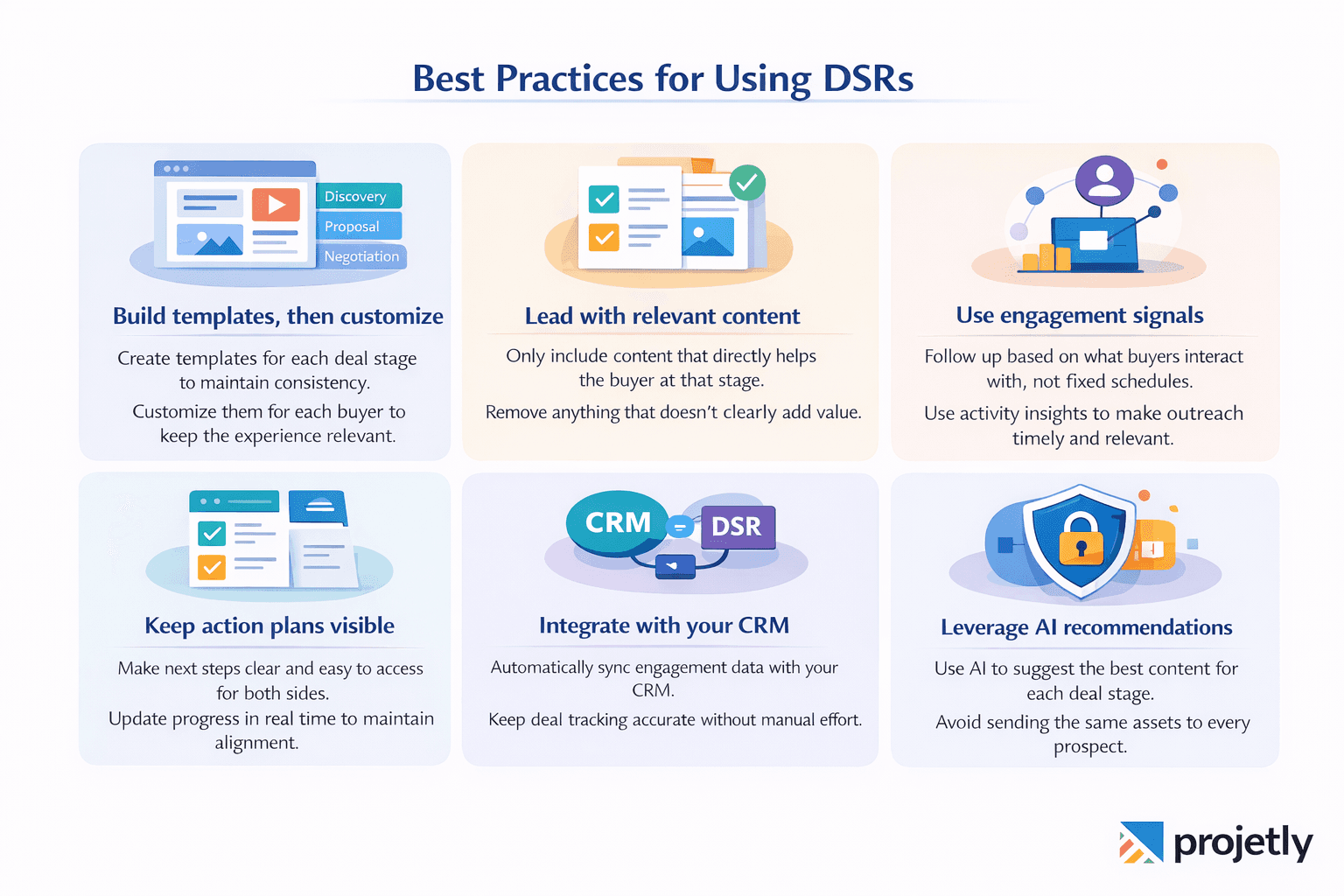
Build templates, then customize: Create templates for each deal stage to maintain consistency. Customize them for each buyer to keep the experience relevant.
Lead with relevant content: Only include content that directly helps the buyer at that stage. Remove anything that doesn’t clearly add value.
Use engagement signals: Follow up based on what buyers interact with, not fixed schedules. Use activity insights to make outreach timely and relevant.
Keep action plans visible: Make next steps clear and easy to access for both sides.
Update progress in real time to maintain alignment.Integrate with your CRM: Automatically sync engagement data with your CRM. Keep deal tracking accurate without manual effort.
Leverage AI recommendations: Use AI to suggest the best content for each deal stage.
Avoid sending the same assets to every prospect.Balance security and ease: Protect sensitive data with the right controls in place. Ensure access remains simple and frictionless for buyers.
👉 Contact us to learn how Projetly can help
How to Choose the Right DSR Software
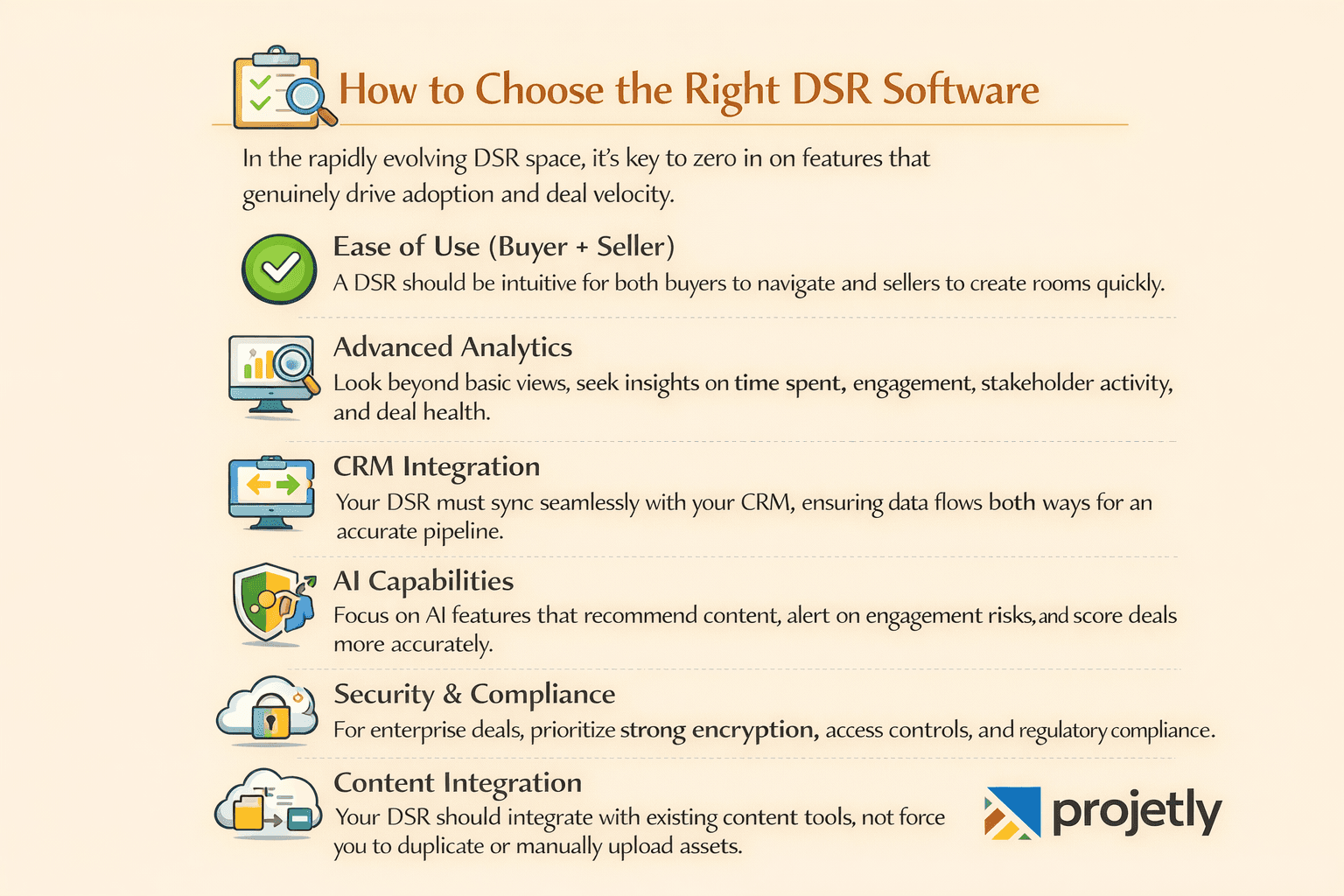
The DSR space has evolved quickly, so choosing the right platform requires focusing on what actually drives adoption, visibility, and deal velocity.
Ease of Use (Buyer + Seller): A DSR only works if both sides actively use it. Buyers should navigate it effortlessly, while reps should be able to create rooms quickly without slowing down their workflow.
Advanced Analytics: Basic views aren’t enough anymore. Look for insights like time spent, stakeholder activity, content engagement, and deal health based on real usage patterns.
CRM Integration: Your DSR should sync seamlessly with your CRM. Data must flow both ways automatically, keeping your pipeline accurate without manual updates.
AI Capabilities: Focus on AI that actually impacts deals. Features like content recommendations, engagement alerts, and deal scoring add real value.
Security & Compliance: For enterprise deals, security is non-negotiable.
Ensure strong encryption, access controls, and compliance with relevant standards.
Content Integration: Your DSR should connect with your existing content tools.
Avoid platforms that require duplicating or manually uploading assets.
Stop sending attachments. Start closing with clarity. Book a demo
Top Digital Sales Room Platforms in 2026
The DSR market has consolidated around a handful of category leaders while maintaining a strong set of specialized tools. Here are the platforms most frequently reviewed and deployed:
Projetly Digital Sales Room
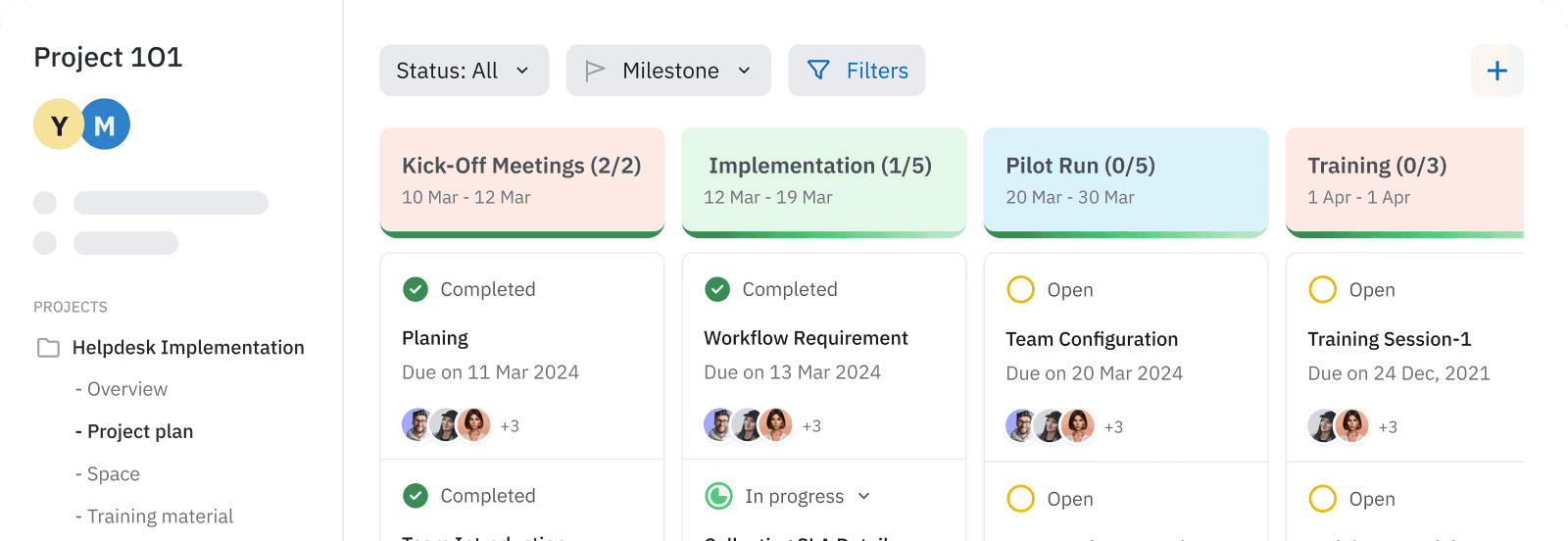
Projetly’s DSR is an AI-powered deal workspace that sits on top of your CRM and helps teams collaborate with buyers, track engagement, and close deals faster.
Unlike traditional tools, it combines sales execution + buyer collaboration + AI automation in one place.
Core Capabilities of Projetly DSR
AI Sales Agent: Automatically manages follow-ups, reminders, and next steps, helping reps stay on top of every deal while reducing manual effort and keeping momentum consistent.
AI Meeting Assistant: Records calls, generates summaries, and assigns action items, ensuring that key insights are captured accurately and shared instantly with the team.
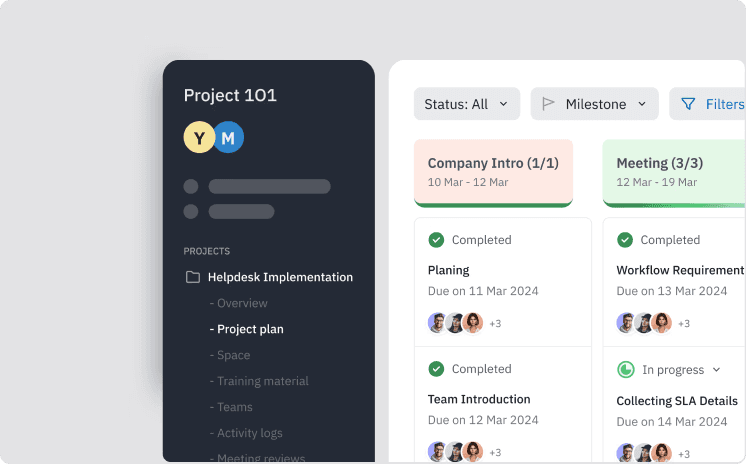
Collaborative Deal Room: Provides a shared workspace where buyers and sellers can access all deal-related content, keeping communication centralized and all stakeholders aligned.
Engagement Tracking: Tracks who viewed content, what they engaged with, and when, enabling sales teams to prioritize follow-ups based on real buyer behavior.
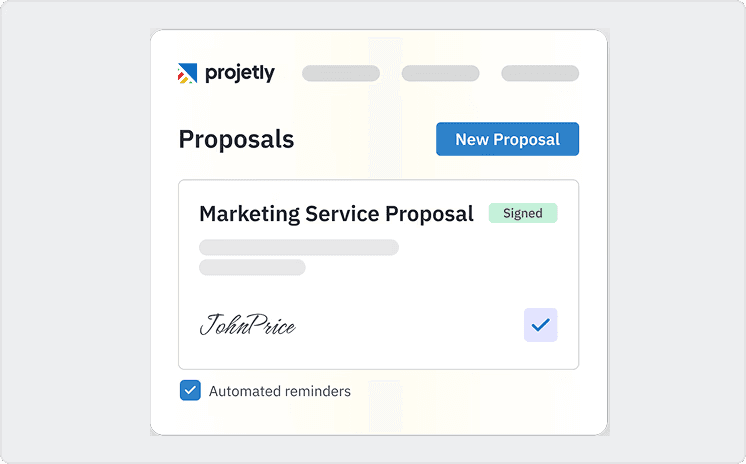
Proposals & E-Signatures: Allows teams to create, share, and finalize agreements directly within the deal room, reducing friction and accelerating the closing process.
CRM Integration: Synchronizes all deal activity and updates automatically with your CRM, eliminating manual data entry and ensuring pipeline accuracy.
Mutual Action Plans: Defines clear steps, timelines, and responsibilities for both buyers and sellers, helping maintain structure and drive deals forward efficiently.
Built-in Communication: Enables chat, updates, and collaboration within the deal room, removing the need for scattered communication across multiple tools.
AI Recommendations: Suggests relevant content and triggers alerts based on buyer behavior, improving personalization and timing throughout the sales cycle.
Incentives: Introduces rewards for actions taken by both reps and buyers, encouraging engagement and helping accelerate deal progression.

Highspot:
Enterprise-grade sales enablement platform with a strong DSR capability. Their Deal Agent (launched in 2025) uses AI to synthesize CRM data, buyer engagement signals, and meeting intelligence into deal recommendations. Strong analytics and content governance.
Seismic:
A comprehensive enablement platform with DSR features well-integrated into their content management and analytics stack. Strong for enterprise teams that need tight marketing-to-sales content alignment.
GetAccept:
Purpose-built for the DSR use case with native e-signature capabilities, AI-powered content generation, and strong CRM integrations. Well-reviewed for ease of use by both sellers and buyers.
SalesHood:
Revenue enablement platform with Client Sites as their DSR offering. Strong in coaching, content management, and buyer engagement analytics. Popular with mid-market teams.
Flowla:
Newer entrant focused on the "connective tissue" model, positioning the DSR as an active deal progression system rather than a content hub. Growing adoption in 2026.
Aligned:
B2B-focused collaborative workspace with clean UX for both buyer and seller sides. Strong mutual action plan capabilities.
DealHub:
Known primarily for CPQ (Configure, Price, Quote), DealHub has expanded its DSR capabilities significantly, making it a strong choice for teams where pricing complexity is a primary pain point.
This is not an exhaustive list. The right DSR platform depends on your team size, existing tech stack, deal complexity, and budget. Always run a pilot with your actual sales process before committing to a platform.
Frequently Asked Questions
What is a digital sales room (DSR)?
A digital sales room is a secure, personalized online workspace where B2B sellers and buyers collaborate throughout the sales process. It centralizes all deal-related content proposals, demos, pricing, case studies, and contracts into a single, branded hub that both parties can access at any time. Also called a virtual deal room or sales microsite.
How is a digital sales room different from a shared Google Drive folder?
A shared folder is seller-centric: it makes sending information easier but does nothing to improve the buyer's experience. A DSR is buyer-centric, it's organized around the buyer's journey, provides engagement analytics, enables real-time collaboration, integrates with your CRM, and can house communication, e-signature, and mutual action plans in one place.
What types of content belong in a digital sales room?
Typical content includes: product demo recordings, personalized video messages from the rep, case studies relevant to the buyer's industry, pricing documents and proposals, competitive comparisons, ROI calculators, implementation guides, contract documents, and mutual action plans. The rule is to include only what's genuinely relevant to that specific buyer at their current stage.
How do digital sales rooms improve win rates?
Three mechanisms drive improved win rates: personalization (buyers experience a tailored journey rather than a generic pitch), multi-stakeholder alignment (everyone on the buying committee has access to the same information), and engagement intelligence (reps can see what buyers care about and follow up accordingly, rather than guessing).
Do digital sales rooms replace CRM systems?
No. DSRs complement CRM; they generate engagement data that flows into the CRM to enrich opportunity records, update deal health scores, and trigger alerts. The CRM remains the system of record for pipeline management; the DSR is the buyer-facing collaboration layer.
Are digital sales rooms only for enterprise sales teams?
No. While DSRs deliver outsized value in complex, multi-stakeholder enterprise deals, they're increasingly used by mid-market teams and in shorter sales cycles. If your deals involve multiple decision-makers, significant contract values, or content-heavy buyer education, a DSR is likely worth the investment regardless of company size.
How long does it take to set up a digital sales room?
Most modern platforms allow a rep to create a basic, branded room in 15–30 minutes using a pre-built template. More sophisticated rooms with custom content, video messages, and mutual action plans might take an hour or two. The investment compounds quickly once templates are established, subsequent rooms can be stood up in minutes.
What metrics should I track in a digital sales room?
Core metrics include: room open rate, content view rate by asset, time spent per section, number of unique stakeholders who accessed the room, number of repeat visits, content sharing activity (when a buyer forwards content internally), and correlation between engagement patterns and deal outcomes.
How are AI capabilities changing digital sales rooms in 2026?
By 2026, AI will have moved from a differentiator to a baseline expectation in the DSR category. Common AI features include: smart content recommendations based on buyer profile and deal stage, automated deal health scoring based on engagement signals, meeting transcription and summarization surfaced inside the room, and draft re-engagement messages triggered when a deal goes quiet.
. What's the difference between a digital sales room and sales enablement software?
Sales enablement platforms manage, organize, and distribute sales content internally, helping reps find the right materials and get trained on messaging. A digital sales room is the buyer-facing layer: a personalized environment where that content is delivered to specific prospects. Many enterprise platforms (Highspot, Seismic) now offer both capabilities in a single product.
The Bottom Line
Digital sales rooms have moved from a novel experiment to foundational infrastructure for B2B revenue teams. The companies seeing the greatest results aren't just using them as a prettier way to share files; they're using the engagement data to coach reps, the mutual action plans to keep deals structured, and the AI capabilities to surface insights that weren't previously visible.
The teams that figure this out and build DSRs into the core of how they sell are the ones who will look back on 2026 as the year their sales process finally caught up with how their buyers actually buy.
You may also like

A Guide to Project Management Professional Certification

Laugh Your Way to Productivity: 50 Workplace Quotes

50 Funny Workplace Memes That’ll Brighten Your Workday.
What Does a Customer-First Mindset Mean? Explained in 2025

What It Takes to be a Great Customer Success Manager in 2025