Digital Sales Room

By
Sam

Dock.us vs. Projetly: Which Digital Sales Room Actually Closes Enterprise Deals Faster?
Dock.us is a capable Digital Sales Room with a clean buyer workspace, a mature template library, and native CRM integrations with Salesforce and HubSpot. For mid-market teams running deals under six months with a handful of stakeholders, it’s a fast, well-built choice.
Projetly DSR is built for complex B2B enterprise deals. It captures deal intelligence from every buyer conversation, surfaces next-best-action guidance, flags deal risk before it costs you the deal, and carries the full deal record into customer onboarding: a team member creates the Project Room from the deal and starts from AI-generated templates rather than a blank workspace.
The difference is not features. It’s how far into the revenue lifecycle each platform is actually built to go.
Want a practical framework for keeping enterprise deals moving post-sale?
Download: How High-Performing B2B Teams Keep Enterprise Deals Moving →
What Each Platform Is Built to Do
Dock.us:
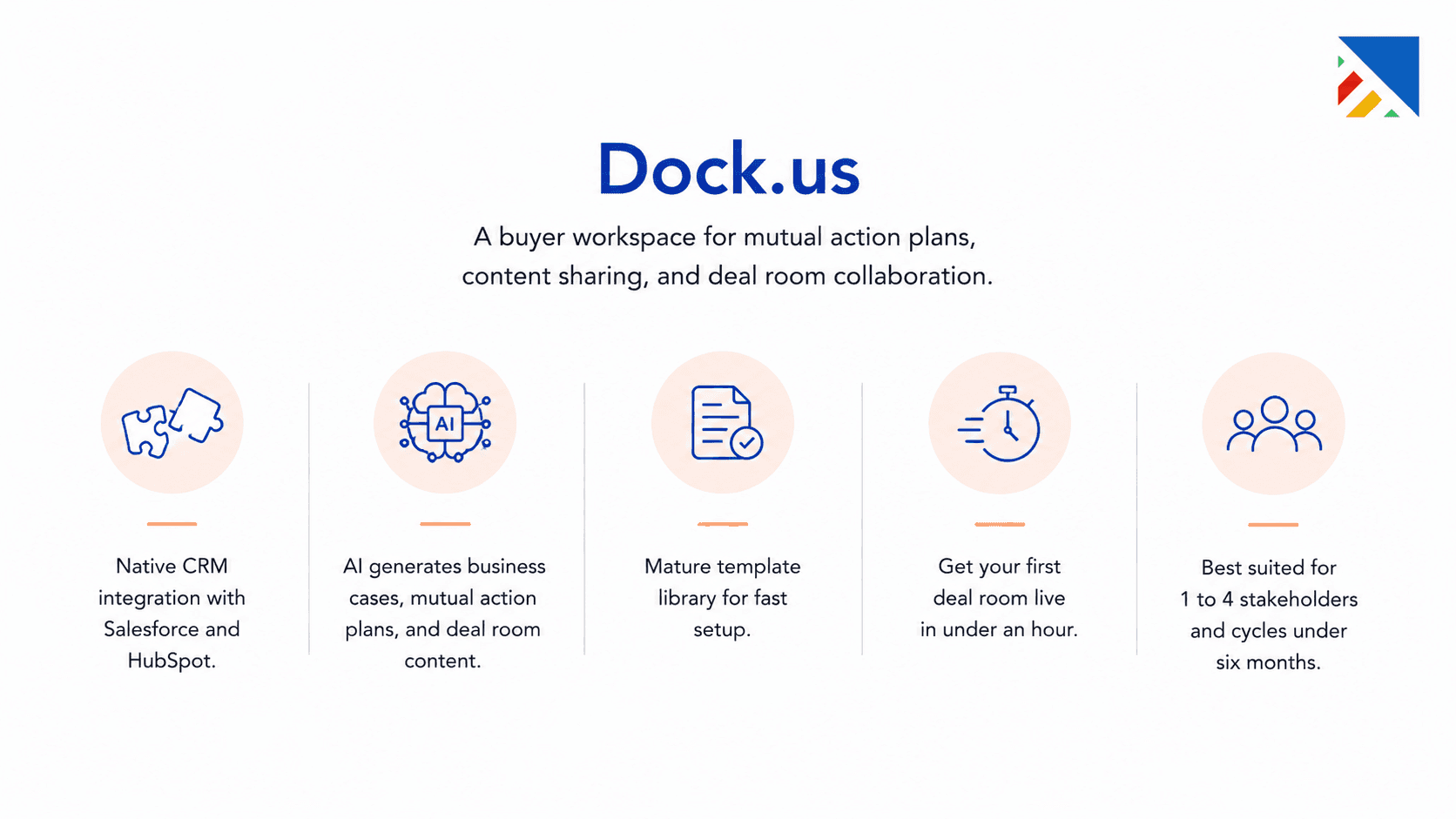
A buyer workspace for mutual action plans, content sharing, and deal room collaboration.
Native CRM integration with Salesforce and HubSpot, with dynamic variables and stage-triggered room creation.
AI that generates business cases, mutual action plans, and deal room content from CRM data and call transcripts
A mature template library that gets a first deal room live in under an hour
Best suited for deals with 1 to 4 stakeholders and cycles under six months
Projetly DSR:
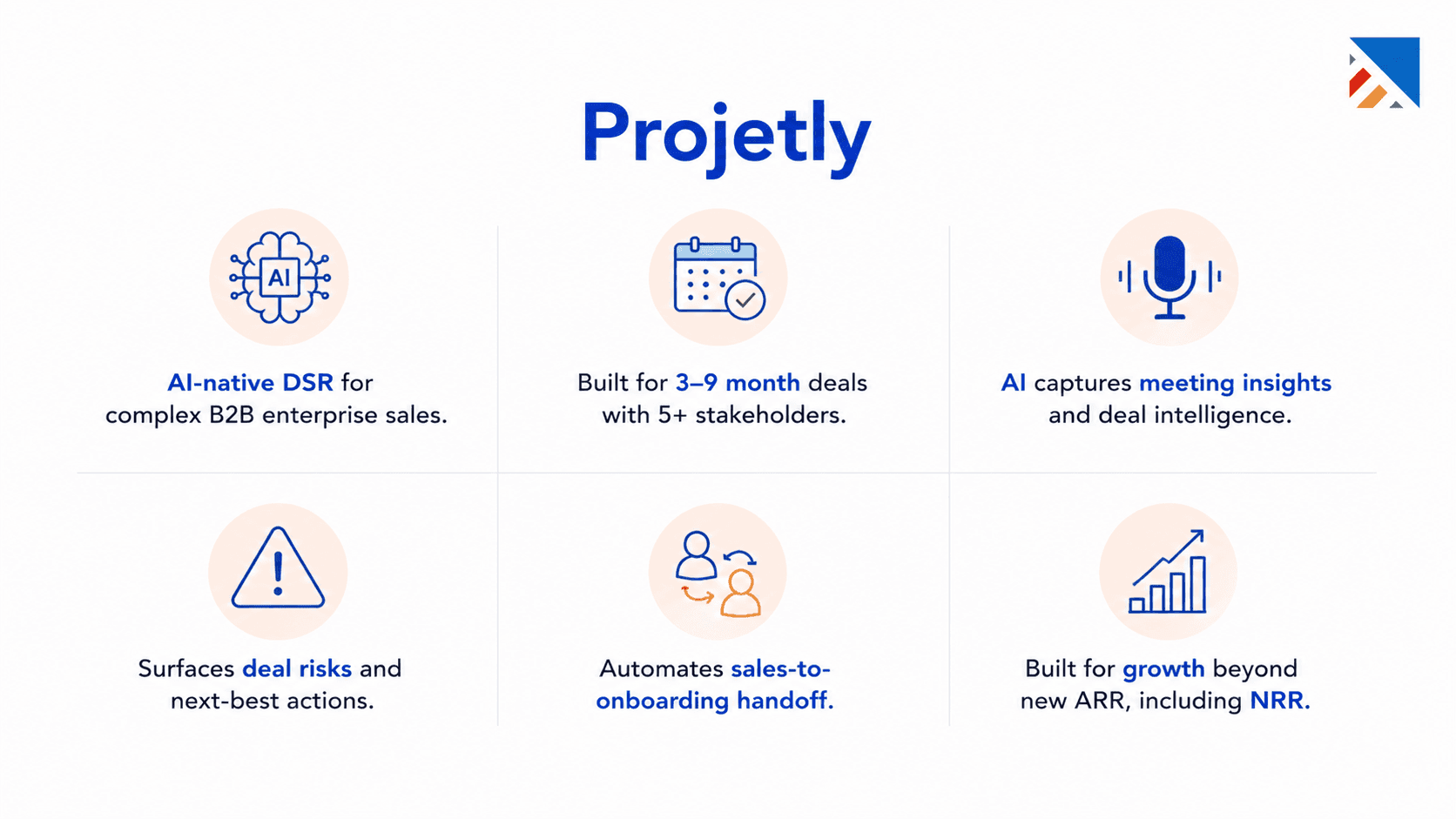
An AI native digital sales room built for B2B SaaS companies running complex enterprise deals
Designed for cycles of three to nine months with five or more stakeholders
Captures deal intelligence automatically from every buyer conversation through AI meeting intelligence
Surfaces next-best-action recommendations and deal risk signals after every interaction
Carries the full deal record into customer onboarding without a separate handoff
Built for teams where net revenue retention sits alongside new ARR on the scorecard
Where Dock.us is Genuinely Strong
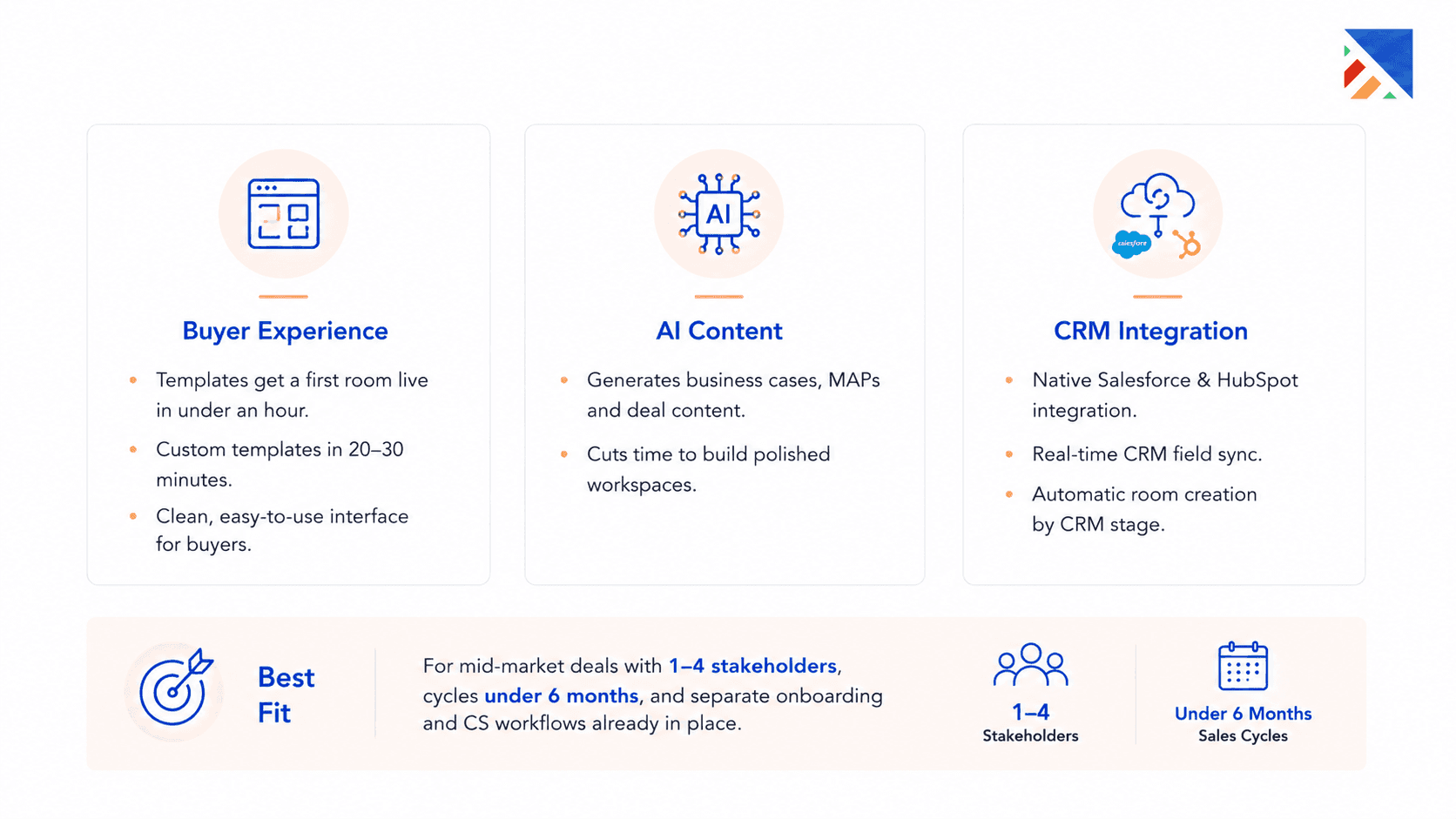
Dock.us delivers a clean, fast-to-deploy buyer experience. It’s a solid fit for straightforward sales cycles with smaller buying committees.
Buyer experience and templates:
A mature template library gets a first deal room live in under an hour
Once a team builds its own templates, subsequent rooms take 20 to 30 minutes in either platform
A clean, minimal interface that non-technical buyers find approachable on first login
AI content generation:
Generates business cases, mutual action plans, and deal room content directly from CRM data and call transcripts.
Cuts the time to build a polished buyer workspace from hours to minutes
CRM integration:
Native, mature integration with Salesforce and HubSpot
Dynamic variables sync in real time with CRM field values, and room creation can trigger automatically by CRM stage
Honest recommendation: If you manage mid-market deals with 1 to 4 stakeholders and cycles under six months, and your customer onboarding and CS workflows already run well in separate systems, Dock.us is a fast, well-built choice.
Where Dock.us Stops
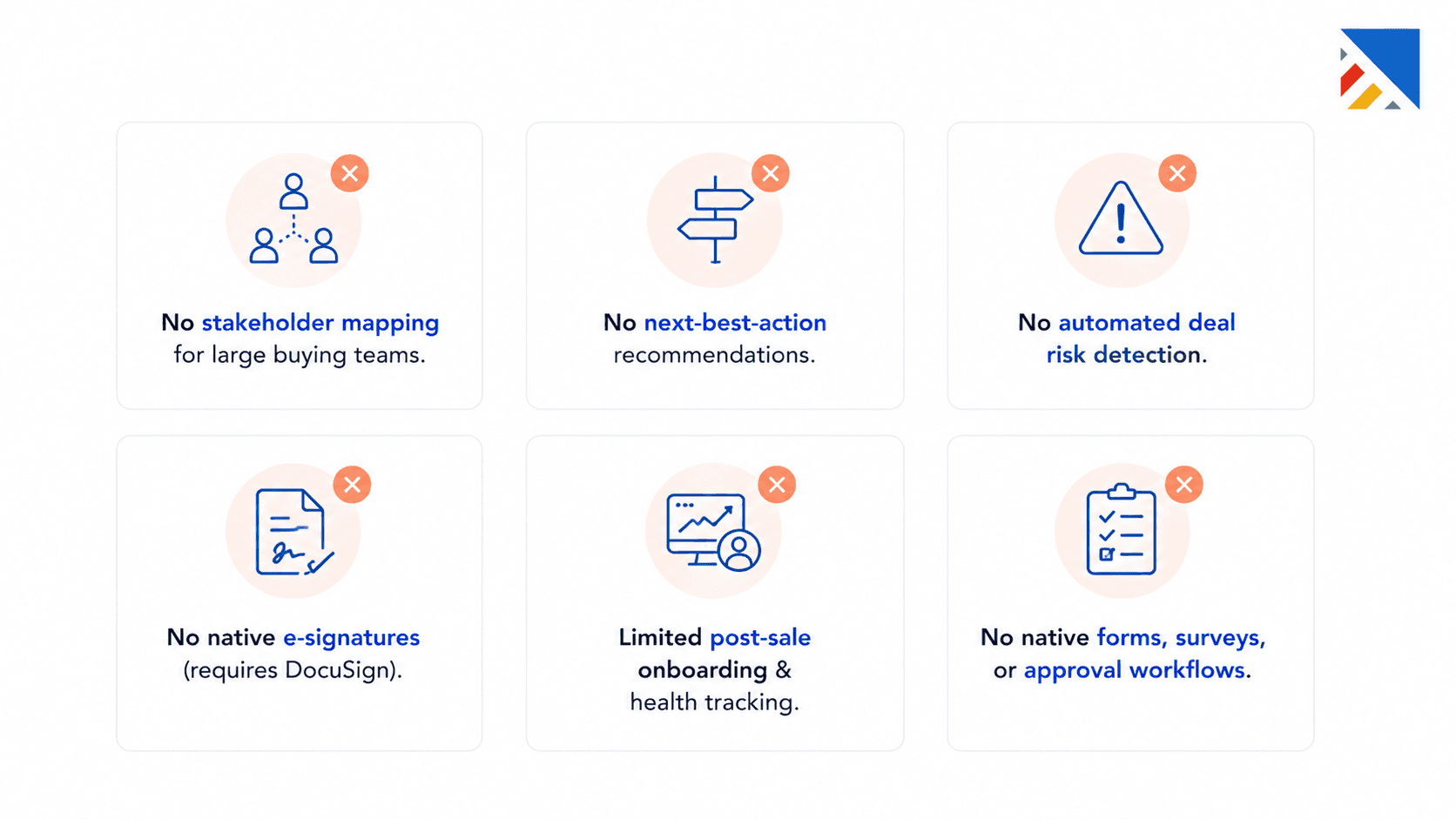
Dock.us organizes a deal room and helps write the content inside it. What it doesn’t do is guide execution or carry that work forward after signature.
No advanced stakeholder mapping; it can’t flag which economic buyer has gone quiet on a deal with 10 or more stakeholders.
No next-best-action guidance; reps decide the next move without platform input.
No deal risk identification; stalled deals and missing milestones aren’t flagged automatically.
No native e-signature; a third-party tool like DocuSign is required, adding a dependency and an extra step at signature
Onboarding project management, milestone tracking, and customer health scoring aren’t core to the platform; post-sale continuity depends on separate tools.
No native forms, surveys, or approval workflows for security and legal review.
Where Projetly Goes Further
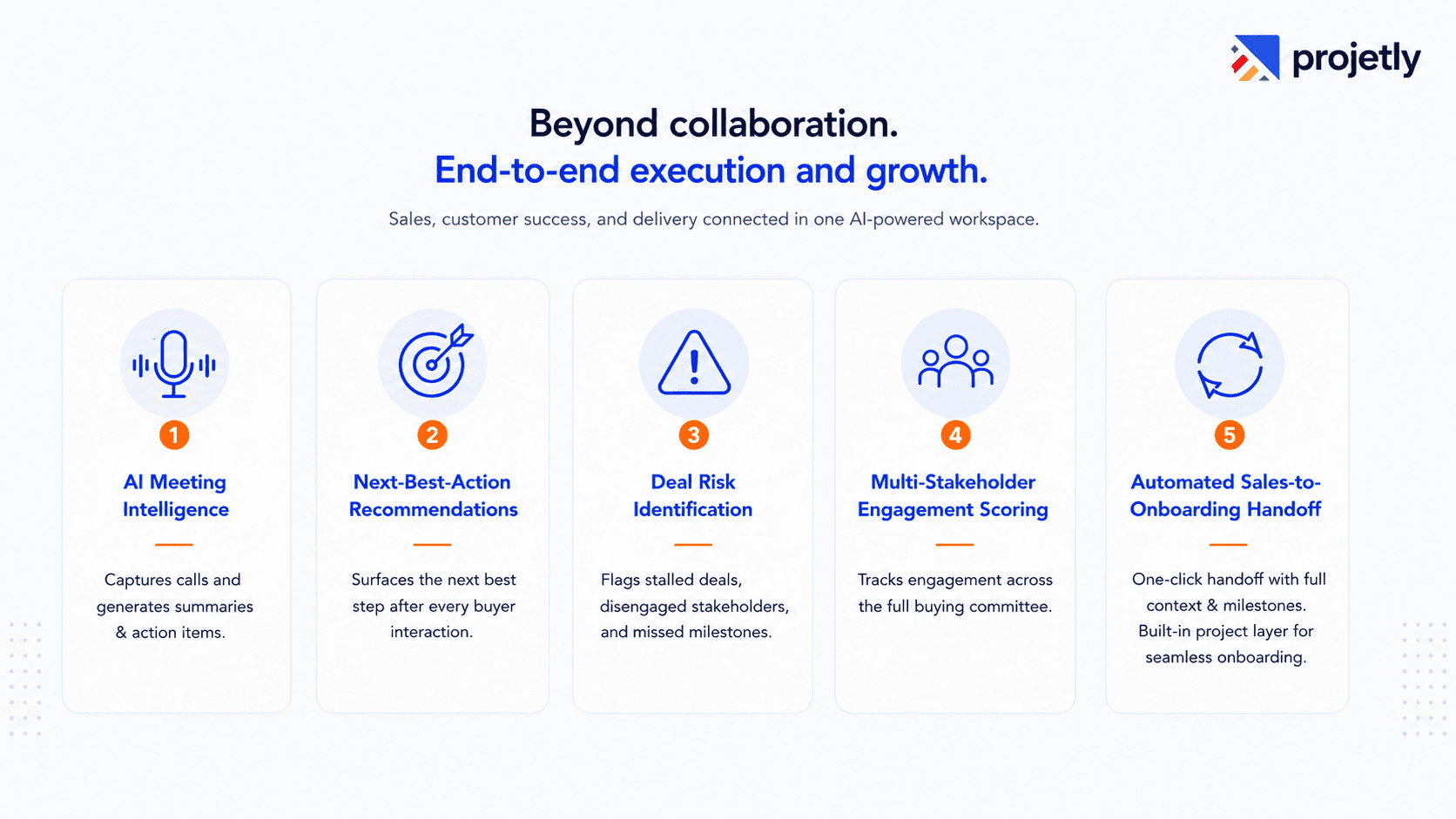
1. AI meeting intelligence
Captures every buyer call, generates summaries, and extracts action items automatically
Reps stay in selling mode; managers get deal visibility without scheduling review calls
Dock’s AI drafts content; it doesn’t listen to calls or generate a record of what was actually said
2. Next-best-action recommendations
After each buyer interaction, Projetly surfaces what should happen next based on deal stage, stakeholder engagement, and historical patterns
Replaces a rep’s guess with a platform recommendation
Dock has no equivalent capability
3. Deal risk identification
Flags stalled deals, disengaged stakeholders, and missing mutual action plan milestones before they become losses
Dock has no native equivalent
4. Multi-stakeholder engagement scoring
Tracks engagement across the full buying committee, not just who opened the room most recently
Surfaces which economic buyer has gone quiet and needs direct outreach
5. Native sales-to-onboarding continuity
The deal room converts to an onboarding workspace in one click
the same platform runs both, so CS inherits the stakeholder map, commitments, and milestones already documented in the deal room once the Project Room is created
A dedicated project management layer tracks tasks, owners, and deadlines, visible to both the vendor team and the customer
Customer health scores surface early warning signals so CS can intervene sooner
Dock offers a basic lifecycle workspace, but not dedicated onboarding project management or customer health scoring; post-sale continuity depends on separate tools
Full Capability Comparison
Feature | Dock.us | Projetly DSR | Why it Changes the Decision |
|---|---|---|---|
Digital Sales Room / Buyer Portal | Yes | Yes | Table stakes; both platforms qualify. |
Mutual Action Plans (MAPs) | Yes | Yes | Table stakes; both platforms qualify. |
Advanced Stakeholder Mapping | No | Yes | Helps manage complex buying committees and enterprise deals. |
AI Next-Best-Action Recommendations | No | Yes | Suggests follow-up actions to keep deals progressing. |
AI Meeting Notes & Action Items | No | Yes | Automatically captures meeting summaries and follow-ups. |
Learning Management System (LMS) / Sales Playbooks | Yes | No | Supports sales coaching and rep training within the platform. |
Free External/Buyer Seats (Flat Internal User Pricing) | Yes | No | Enables buyer collaboration without charging for external users. |
Gong / Chorus Call Intelligence Integration | Yes | No | Connects conversation intelligence from dedicated call recording platforms. |
Native eSignature | No (DocuSign/PandaDoc required) | Yes | Removes the need for a third-party eSignature tool. |
Deal Risk Identification | No | Yes | Flags stalled deals before they impact the forecast. |
Forms, Surveys & Approval Workflows | No | Yes | Supports approvals, security reviews, and customer feedback within the workspace. |
Native sales-to-onboarding continuity | Basic | Yes | A team member converts a closed deal into an onboarding project in a few clicks, starting from AI-generated templates. |
Onboarding Project Management | No | Yes | Customer Success starts with a live project instead of a handoff email. |
Customer Engagement Tracking | No | Yes | Shows engagement signals early, across the customer journey. |
Customer Collaboration Workspace | Yes | Yes | Keeps buyers and internal teams aligned throughout the customer journey. |
Kanban / List / Milestone Views | Partial | Yes | Provides flexible project management during onboarding. |
AI Meeting Transcription & Summaries | No | Yes | Eliminates manual note-taking and improves CRM accuracy. |
Unified Sales, Onboarding & Customer Success Workspace | No | Yes | Connects sales, onboarding, and customer success in a single platform. |
Salesforce Integration | Yes | Yes | Both integrate with Salesforce. |
HubSpot Integration | Yes | Yes | Both integrate with HubSpot. |
Onboarding Continuity: The Capability That Defines the Revenue
According to Gartner’s Market Guide for Digital Sales Rooms (February 2026), the category is expanding beyond the initial sale to cover the full customer lifecycle, as DSRs become the single source of engagement. This matters most in the first 90 days of onboarding, the window where the trajectory toward renewal or churn is largely set.
Yet most Digital Sales Room platforms, Dock.us included, treat contract signature as the finish line and hand customer success a summary email.
Dock.us Offers:
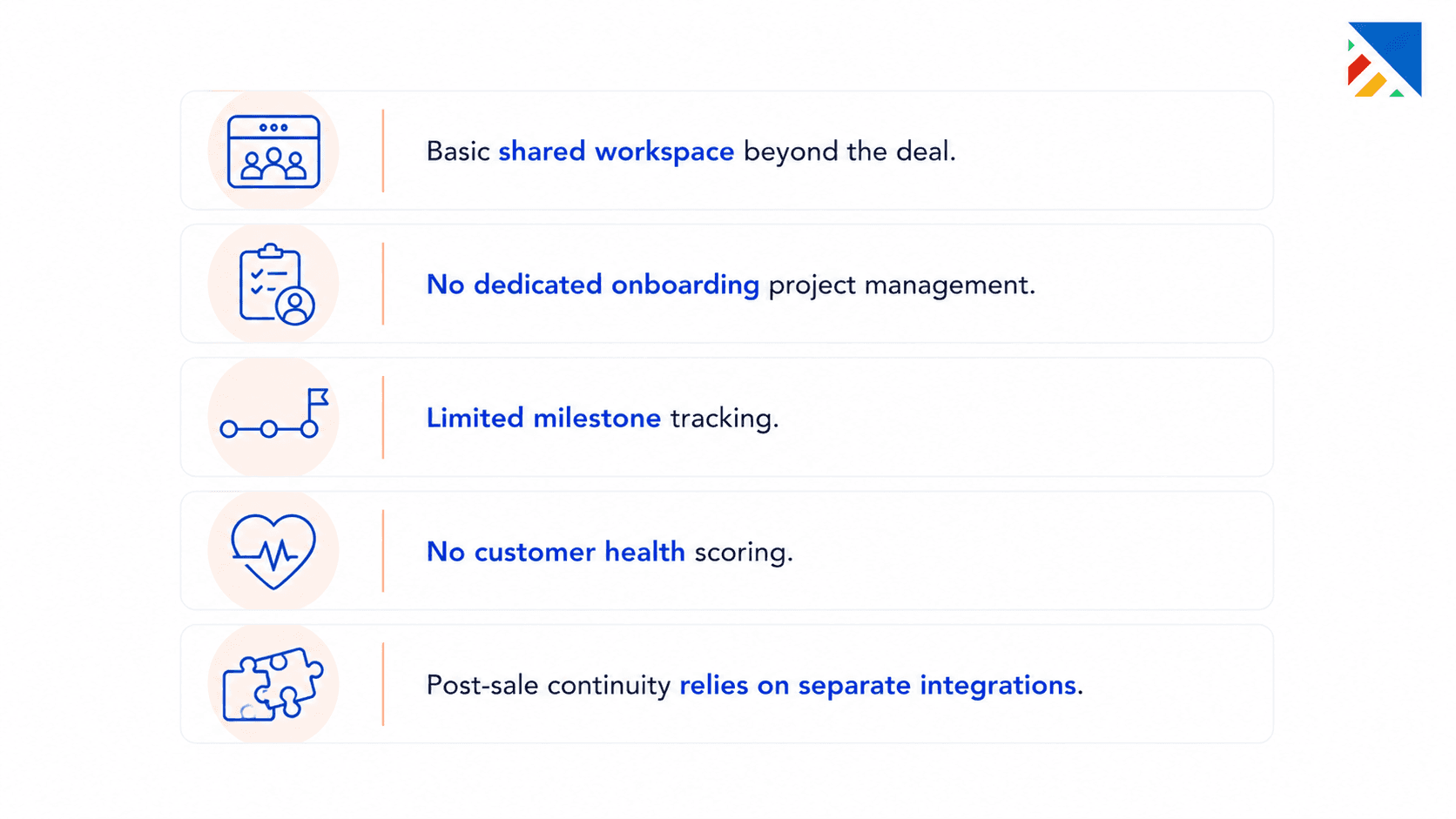
Basic shared workspace beyond the deal: Buyers can continue collaborating after the sale, but the platform isn’t designed as a full post-sale workspace.
No dedicated onboarding project management: Customer onboarding requires separate project management tools to plan, assign, and track implementation work.
Limited milestone tracking: While basic collaboration is supported, there isn’t a robust project management layer for tracking onboarding milestones, owners, and deadlines.
No customer health scoring: The platform doesn’t provide native customer health monitoring or adoption scoring to help identify accounts at risk.
Post-sale continuity relies on separate integrations: Organizations typically need additional tools for onboarding, customer success, and long-term account management.
Projetly Offers:
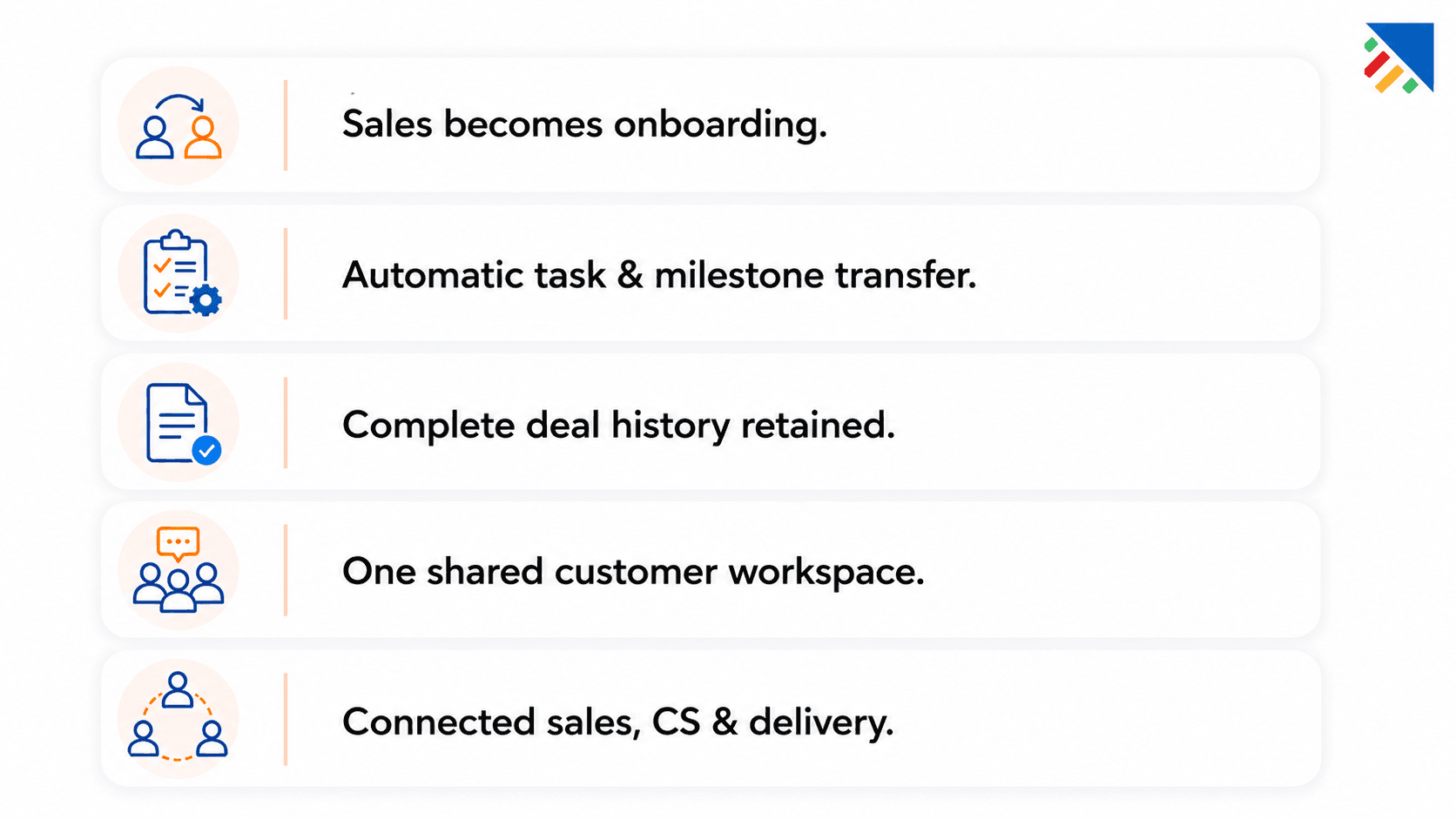
A team member turns the sales workspace into the onboarding workspace in a few clicks, eliminating the need to recreate projects after a deal is won.
Tasks, milestones, stakeholder access, and project timelines carry forward from what was already documented, so onboarding begins with the right context from day one.
The complete deal history, including meeting insights, commitments, documents, and decisions, is transferred without manual re-entry, reducing administrative effort and preventing information loss.
Customers continue working in the same familiar workspace they used during the buying process, so onboarding starts from a workspace they already know.
Sales, Customer Success, and delivery teams collaborate from a single shared workspace, keeping everyone aligned throughout onboarding, adoption, and ongoing customer success.
For enterprise teams where net revenue retention is a board-level metric, this isn’t a feature comparison. It’s a structural difference in how the two platforms define success.
Both Platforms Have Real Weaknesses
Dock.us:
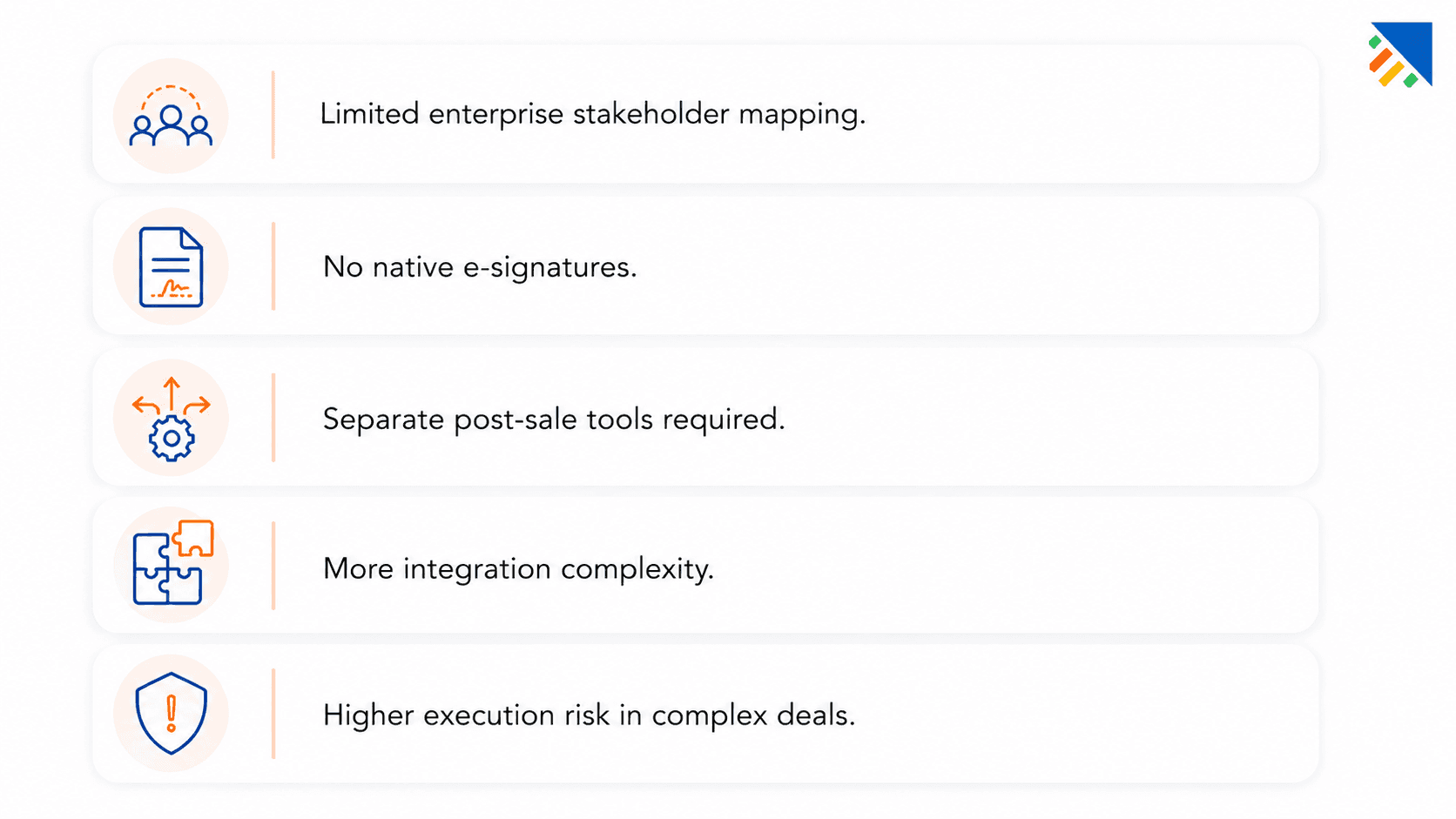
Limited stakeholder mapping for complex enterprise buying teams.
No native e-signature, requiring tools like DocuSign.
Post-sale workflows depend on separate onboarding and CS platforms.
Multiple integrations increase complexity and administrative effort.
Enterprise deals with large buying committees can face greater execution and revenue risk.
Projetly:
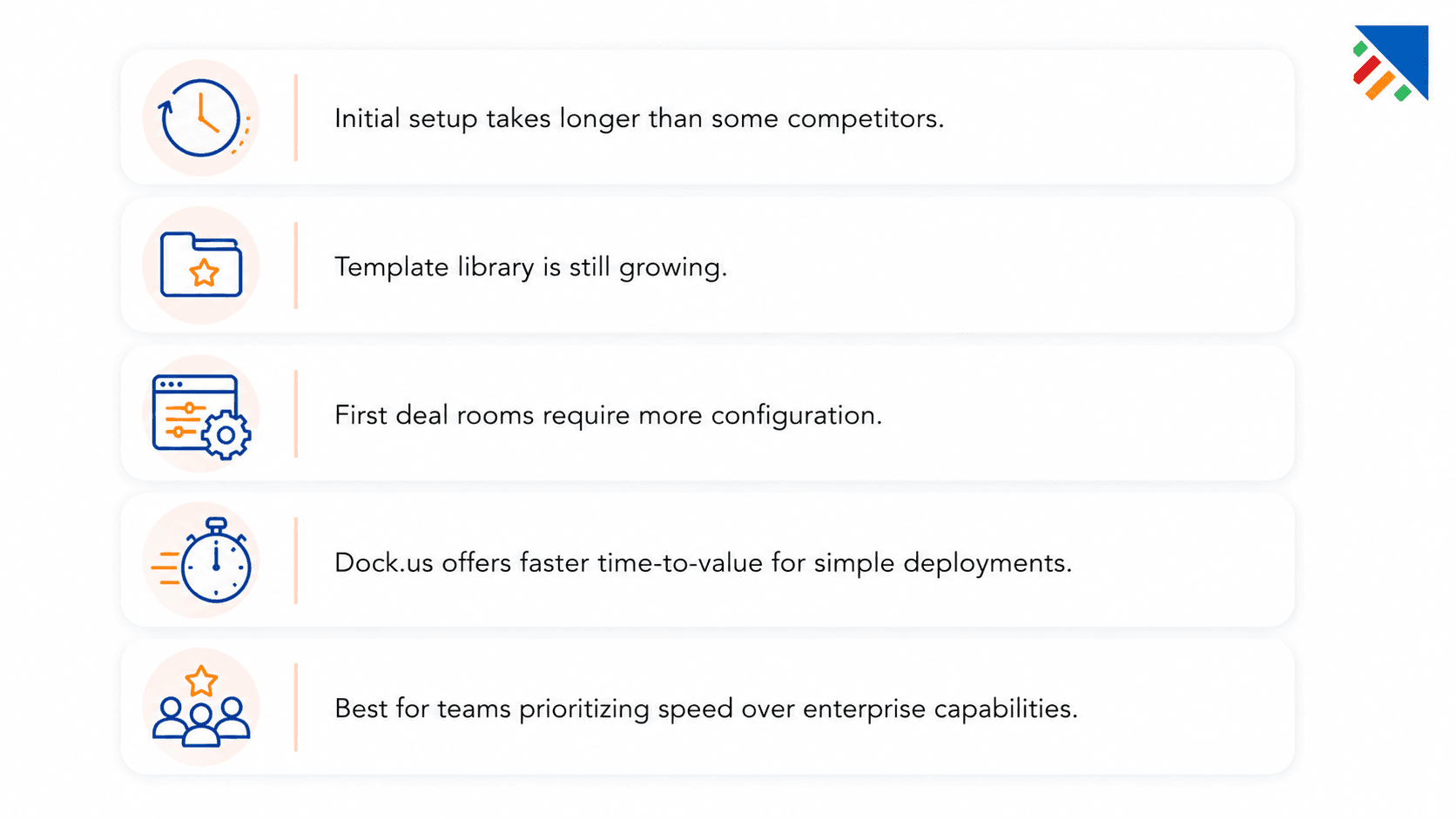
Initial setup takes longer than some competitors.
Template library is still growing.
First deal rooms require more configuration.
Dock.us offers faster TTV for simple deployments.
Best for teams prioritizing speed over enterprise capabilities.
Dock.us is ideal for fast deployment. Projetly is built for complex deals, post-sale continuity, and reducing tool sprawl by combining digital sales rooms, AI meeting intelligence, onboarding, and customer collaboration in one platform.
Which Digital Sales Room Should You Choose?
Choose Dock.us:
Dock.us is a strong choice for teams that prioritize speed, simplicity, and buyer collaboration. It’s best suited for straightforward sales cycles with smaller buying committees.
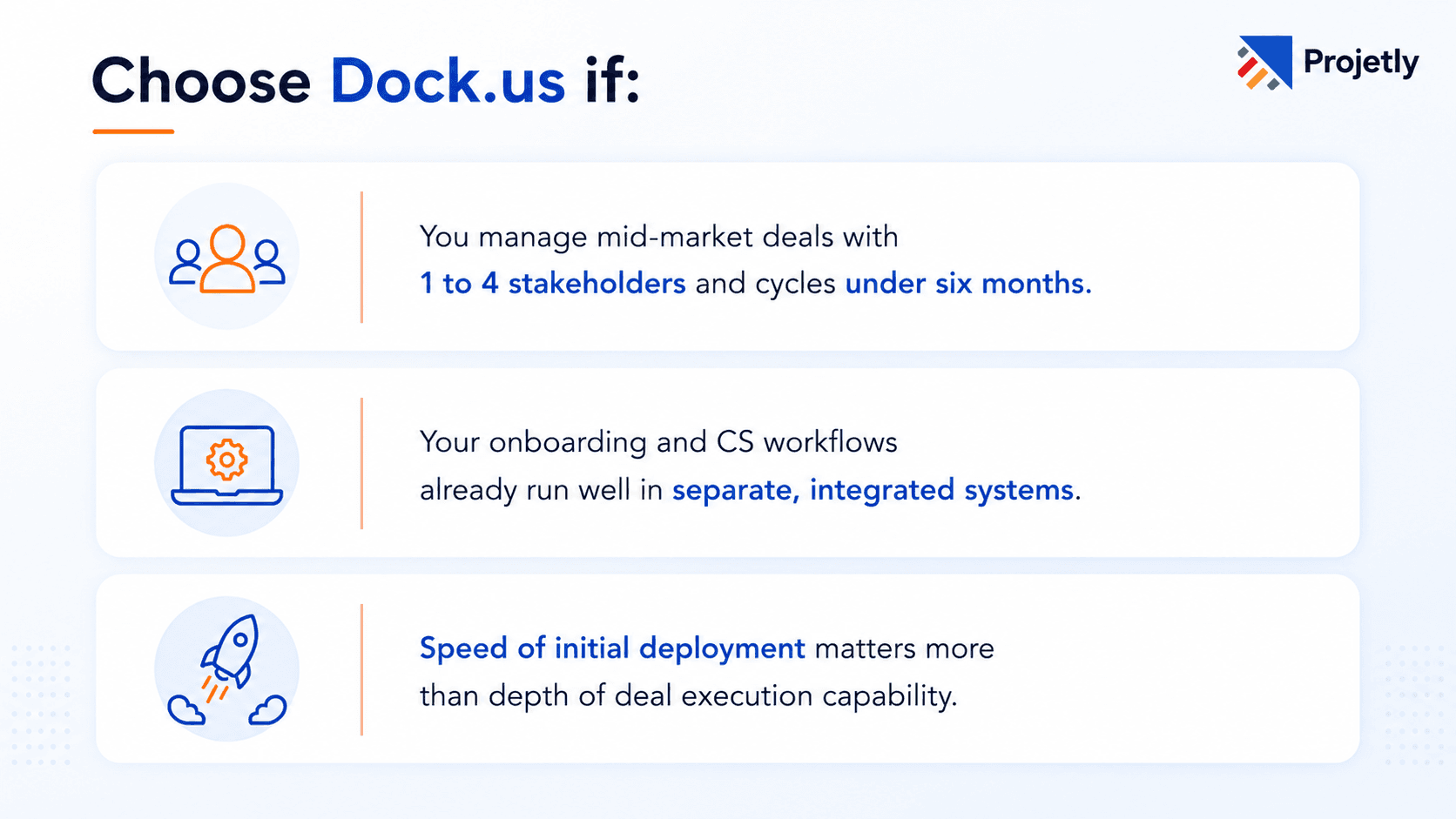
You manage mid-market deals with 1 to 4 stakeholders and cycles under six months
Your onboarding and CS workflows already run well in separate, integrated systems
Speed of initial deployment matters more than depth of deal execution capability
Choose Projetly DSR:
Projetly DSR is built for enterprise B2B teams managing complex deals, AI-driven execution, and same-platform sales-to-onboarding continuity in one platform.
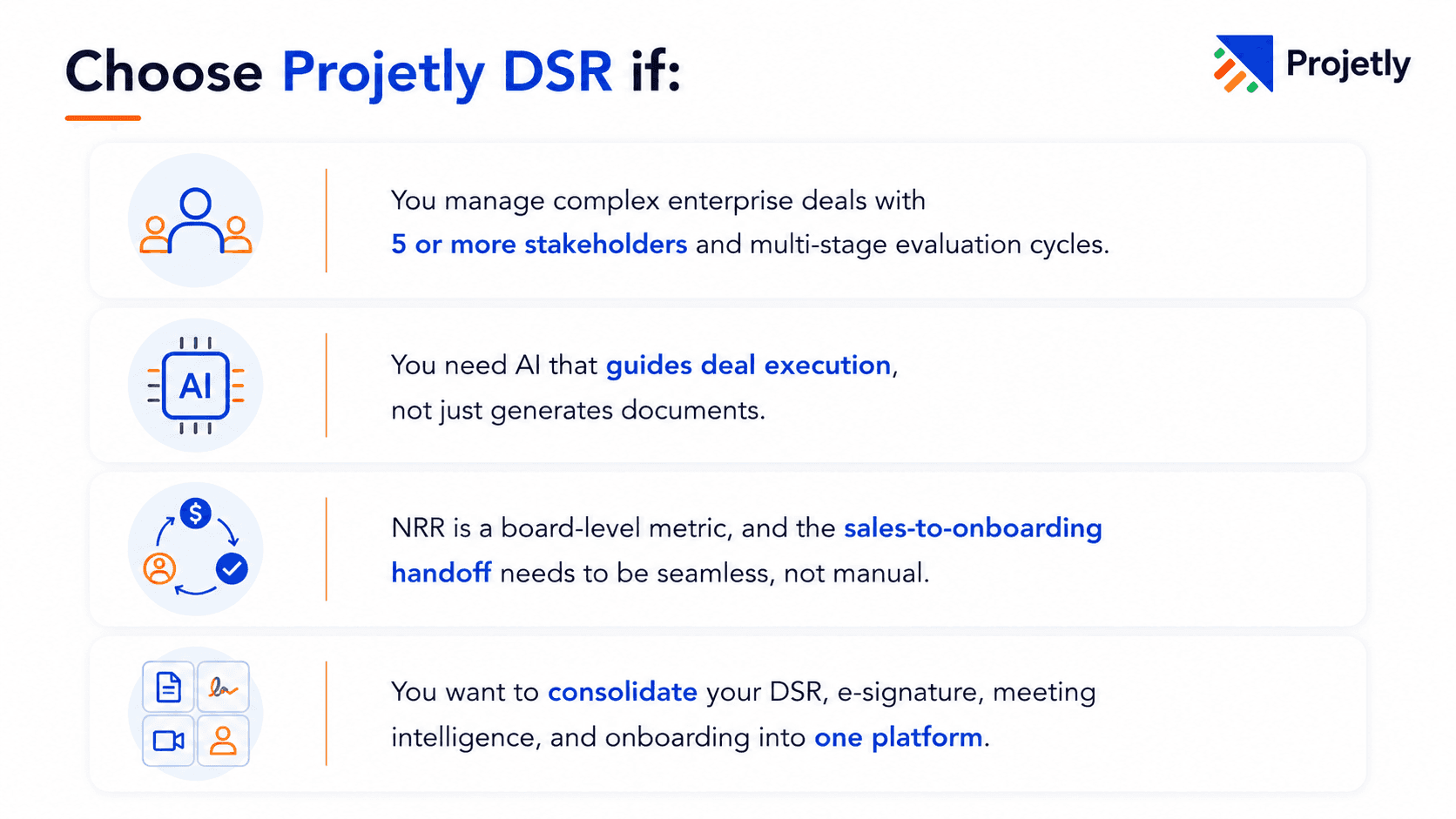
You manage complex enterprise deals with 5 or more stakeholders and multi-stage evaluation cycles
You need AI that guides deal execution, not just generates documents
NRR is a board-level metric, and the sales-to-onboarding handoff needs to stay on the same platform, not scatter across separate tools
You want to consolidate your DSR, e-signature, meeting intelligence, and onboarding into one platform
TL;DR
Dock.us is a clean, fast-to-deploy Digital Sales Room for buyer collaboration and mutual action plans in mid-market deals.
Projetly DSR combines AI deal execution, stakeholder intelligence, native e-signatures, meeting intelligence, and onboarding in a single enterprise platform.
Projetly’s AI surfaces next-best-action recommendations and deal risk, not just content, and once a team member creates the Project Room at Closed Won, CS starts with the full deal context already there.
Early-stage onboarding is where most churn risk gets set; Projetly’s native handoff is built around that window, while Dock.us relies on separate tools.
Enterprise teams consolidating into Projetly can meaningfully reduce point-solution tool spend.
If speed of first deployment is your constraint, Dock.us wins. If closing complex deals and retaining the revenue after they close is your constraint, Projetly is structurally built for it.
Ready to See How Projetly DSR Handles Your Enterprise Deal Motion?
Start your free trial today
Frequently Asked Questions
Which platform is easier to get buyer buy-in on?
Both give buyers one link instead of a folder of attachments, clearing the main hurdle. Dock.us feels lighter and more approachable for non-technical buyers. Projetly handles multiple stakeholders in one workspace more gracefully but has more surface area.
Does Projetly DSR work if onboarding uses a separate PM tool?
Yes, via Zapier, Projetly can push milestones and stakeholder data to Asana, Monday, or Notion. But the full value of same-platform deal-context handoff only comes when onboarding runs natively inside Projetly.
How long does it take to set up a deal room in each platform?
Dock.us is faster out of the box; most reps build a first room in under an hour. Projetly's templates are less mature, so early rooms take 2-3 hours. That gap shrinks once custom templates exist.
What does "native e-signature" mean, and why does it matter?
Contracts are signed inside the same deal room the buyer already knows, no DocuSign handoff or extra login required. Dock.us needs a third-party e-signature tool instead. That adds friction right at the finish line.
Can Dock.us handle enterprise deals with 10+ stakeholders?
It can, but with friction. Dock's stakeholder mapping is basic and doesn't flag which buyer has gone quiet. Over a 6-9-month cycle, with multiple departments involved, those gaps compound.
Does Projetly DSR replace a CRM?
No. Projetly syncs with CRMs like Salesforce, HubSpot, SugarCRM, and Pipedrive rather than replacing them. Your CRM remains the system of record; Projetly is the buyer-facing execution layer on top of it.
Is Dock.us or Projetly DSR better for a small sales team?
Dock.us is the stronger choice. It deploys quickly with minimal setup and covers the core use case, a buyer workspace with mutual action plans, without a learning curve. Projetly's depth suits enterprise complexity a small team won't fully use.
You may also like

A Guide to Project Management Professional Certification

Laugh Your Way to Productivity: 50 Workplace Quotes

50 Funny Workplace Memes That’ll Brighten Your Workday.
What Does a Customer-First Mindset Mean? Explained in 2025

What It Takes to be a Great Customer Success Manager in 2025