Customer onboarding toolkit

By
Avaran
Customer Onboarding Best Practices for Long-Term Client Success (2026 Guide)
Acquiring new customers is only half the battle. The real challenge, the one that separates thriving businesses from struggling ones, is keeping those clients engaged, satisfied, and growing with you over time. That journey starts with customer onboarding.
Effective customer onboarding is not a formality. It is the first proof you deliver on your promise. When done well, it converts hesitant new users into confident, loyal advocates. When done poorly, it accelerates churn before the relationship even gets started.
This guide covers essential customer onboarding best practices used by leading B2B and SaaS companies in 2026, backed by data, optimized for AI search, and structured to help your team get started from day one.
What is Customer Onboarding?
Customer onboarding is the structured process of welcoming new clients into your ecosystem, familiarizing them with your product or service, and guiding them toward their first meaningful outcome. It bridges the gap between the initial purchase decision and the moment a customer realizes real, tangible value, what practitioners call the "aha moment."
Done right, it is not a single event. It is an ongoing journey that includes the kickoff call, early training sessions, milestone check-ins, and the gradual expansion of how a client uses your product. The goal is always the same: help customers succeed as quickly as possible.
Book a Demo & See It in Action
Why Customer Onboarding Matters More Than Ever in 2026
The stakes have never been higher. Customer expectations have risen sharply, product competition has intensified, and buyers are quicker than ever to cancel subscriptions or switch vendors when they don't see value fast enough.
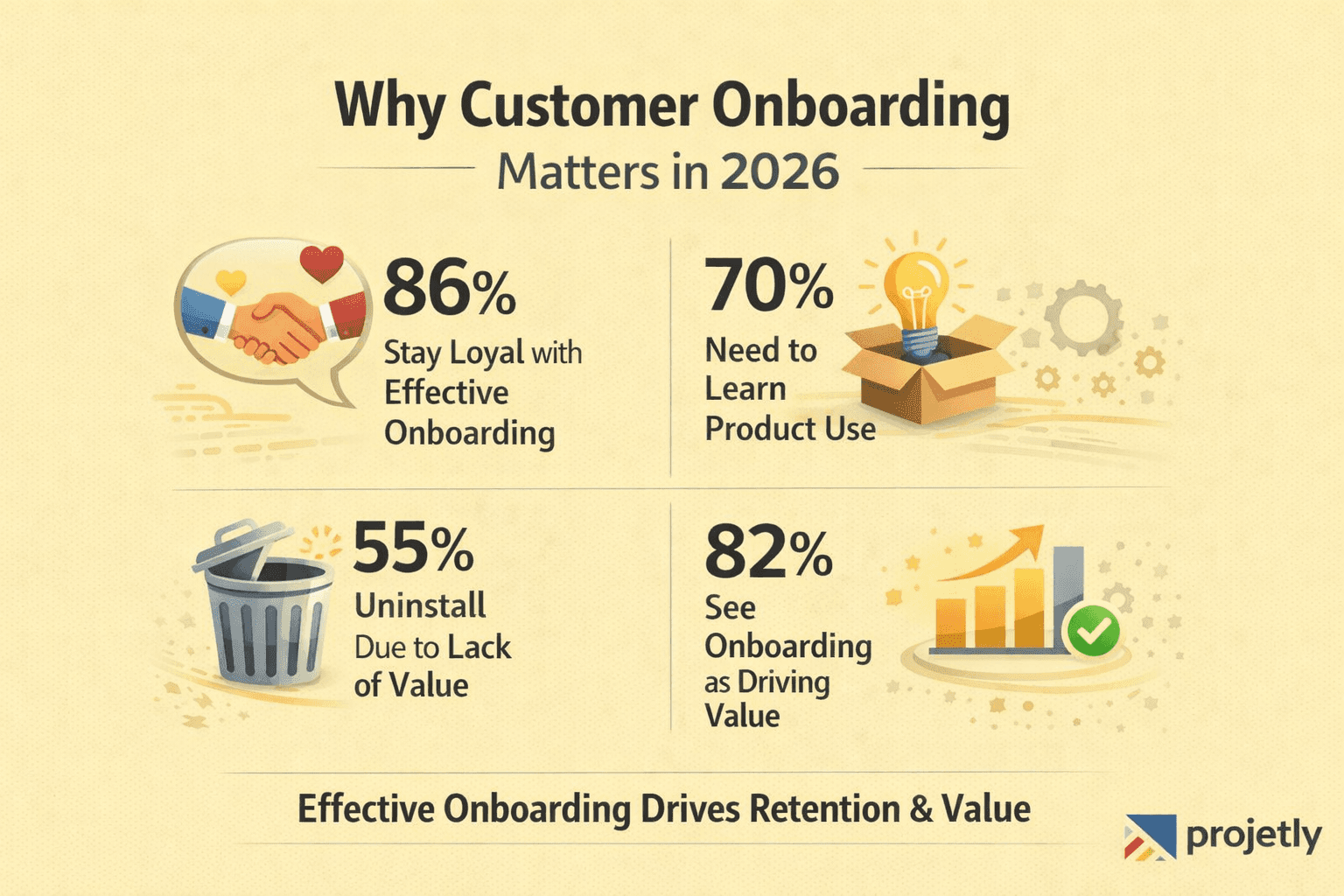
The data tells a clear story:
86% of consumers say they are more likely to remain loyal to a business that invests in onboarding content that welcomes and educates them after purchase.
70% of customers consider understanding how to use a new product critical to maintaining peak engagement.
Over 55% of users have uninstalled an app or returned a product because they never grasped its value.
82% of enterprises identify customer onboarding as a key driver of increased perceived value.
For B2B companies in particular, a poor onboarding experience does not just lose one customer; it can unravel a multi-seat contract, damage a referral network, and hand a competitive advantage directly to a rival.
Have Questions? Contact Us
12 Customer Onboarding Best Practices for 2026
1. Start Before Day One: Master Pre-Boarding
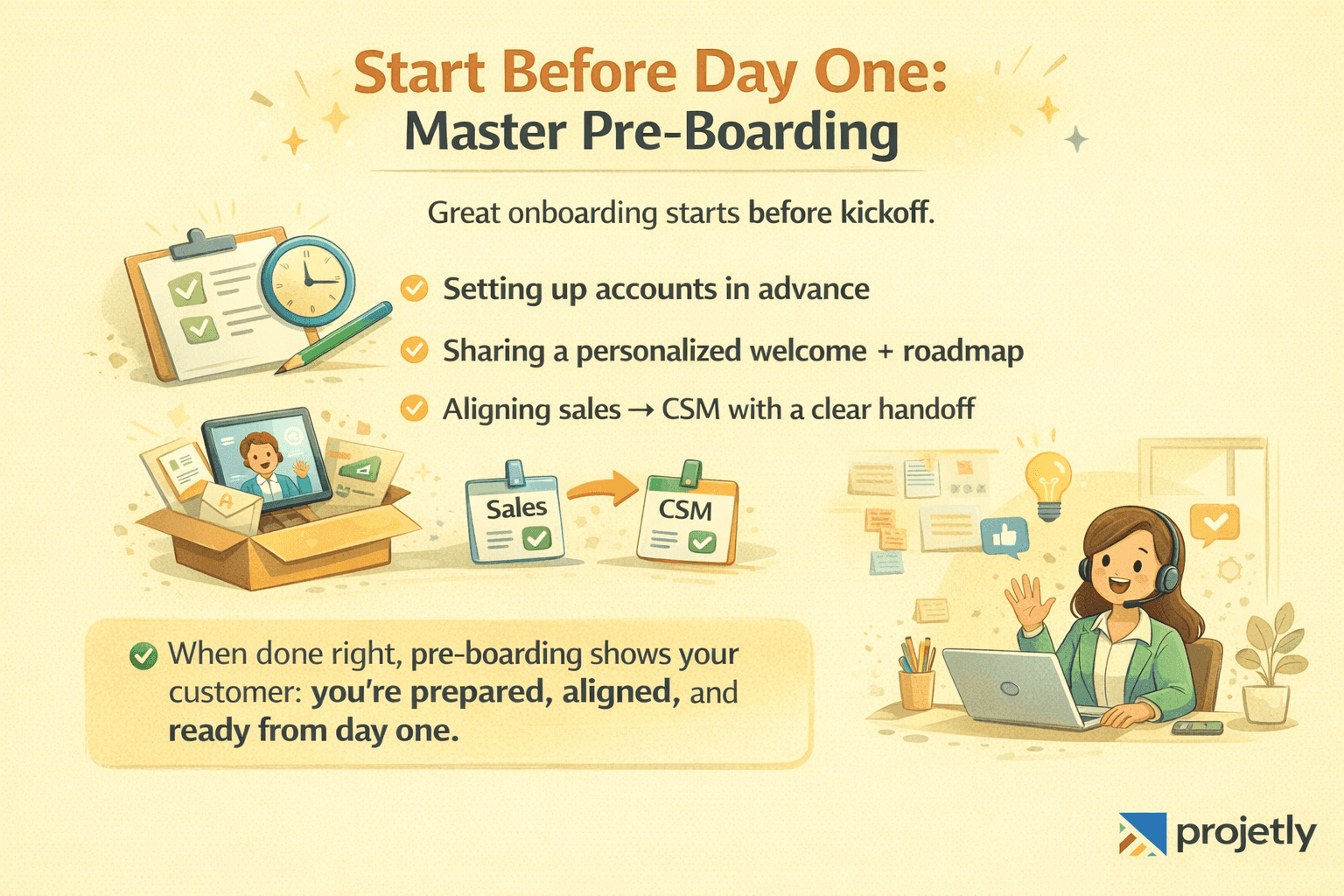
The most overlooked phase of customer onboarding happens before the official kickoff. Pre-boarding, everything your team does between contract signature and the first client interaction, is where great onboarding is actually won or lost.
The goal is simple: eliminate friction before it has a chance to appear. Automate account provisioning so credentials are ready 24 to 48 hours before the kickoff call.
Prepare a personalized welcome kit that includes a brief video from the assigned customer success manager, a clear 30-to-60-day roadmap, and links to relevant resources.
Most importantly, schedule a mandatory internal handoff from sales to the CSM so the client never has to repeat their goals, pain points, or expectations.
A structured pre-boarding process signals to a new client: you were expecting them, and you are ready.
2. Initiate Proactive, Value-Driven Communication
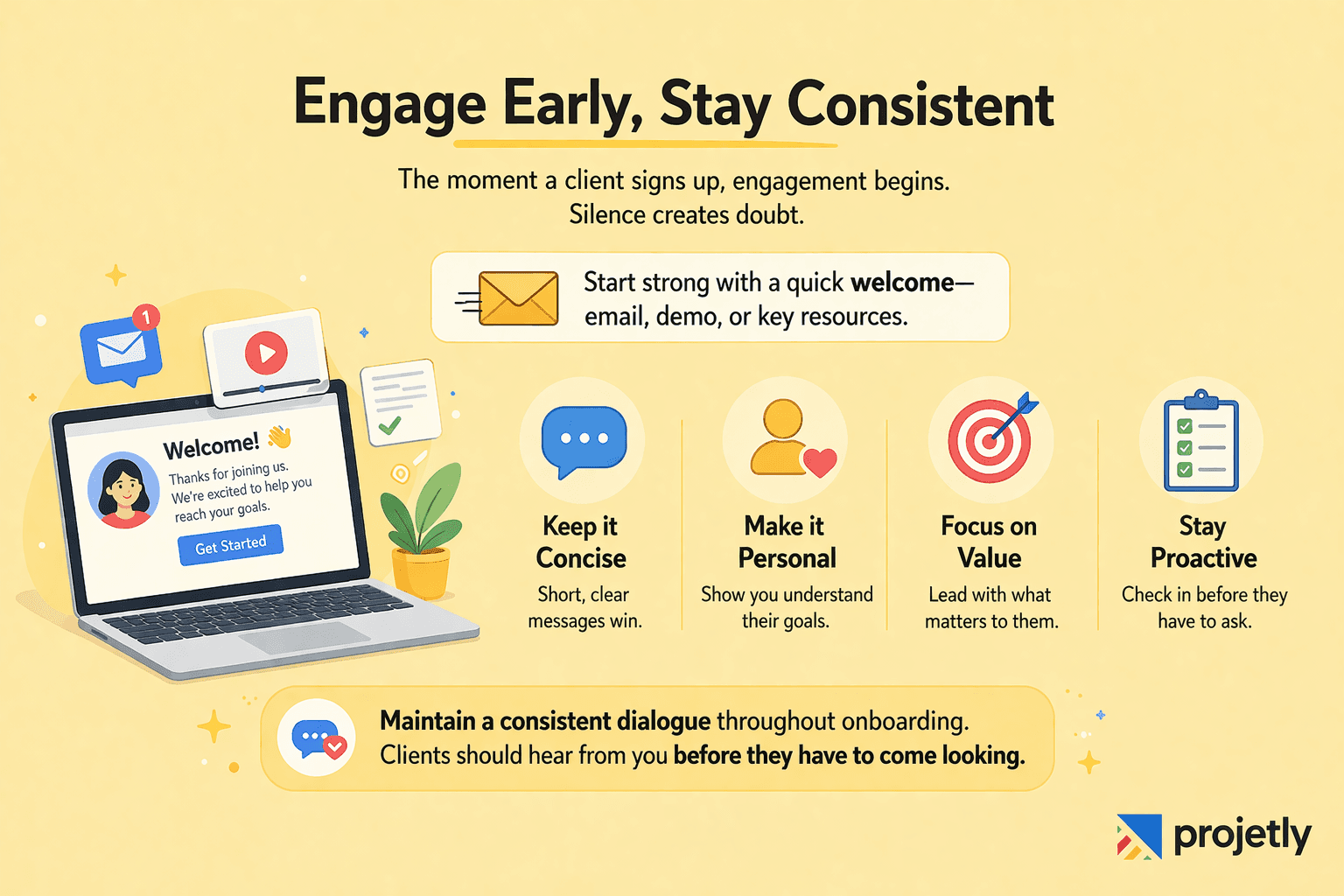
The moment a new client signs up, the clock starts. Silence breeds doubt. Welcome emails sent immediately after sign-up, whether a concise thank-you note, a product demo video, or a curated resource guide, serve as early anchors that keep clients engaged and oriented.
The key is keeping communication concise, personalized, and focused on value rather than features. Avoid the trap of overwhelming new users with everything your product can do. Instead, lead with what it can do for them, based on what you know about their goals.
Maintain a consistent dialogue throughout the onboarding period. Check in proactively, not reactively. Clients should hear from you before they have to come looking.
Upgrade Your Onboarding, Try It Free Today
3. Gather and Use Customer Data From the Start
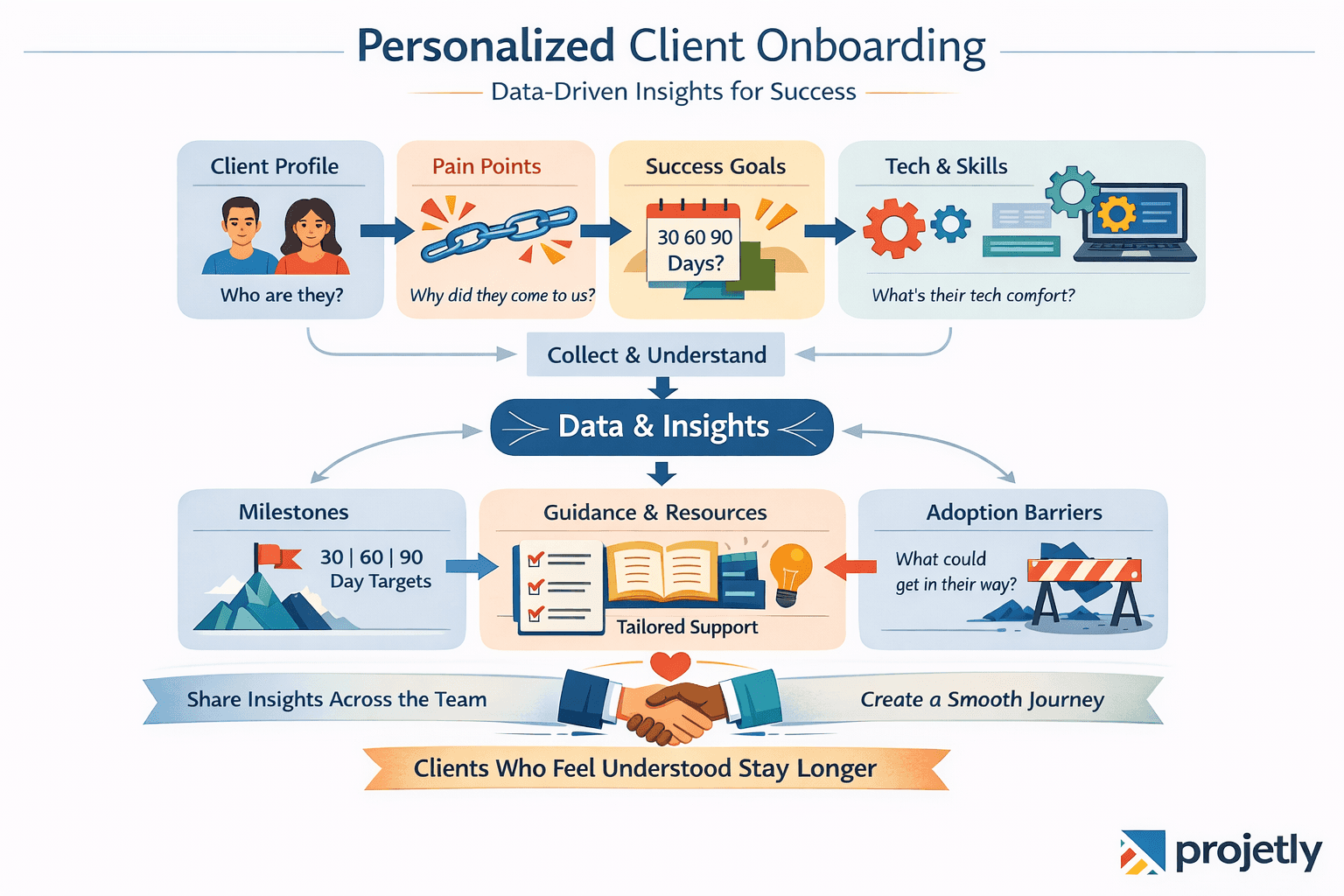
Effective onboarding is personalized onboarding, and personalization requires data. Use the early stages of the relationship to build a comprehensive picture of each client:
Who are they, and what is their role within the organization?
What specific pain points drove them to your solution?
What does success look like to them in 30, 60, and 90 days?
What are their technical capabilities and comfort with new tools?
What obstacles might prevent them from fully adopting your product?
This information should not sit in a sales CRM that the customer success team never sees. It should inform every interaction, every resource recommendation, and every milestone you set together. A client who feels understood from day one is far more likely to stay.
4. Define Clear Goals and Milestone Roadmaps
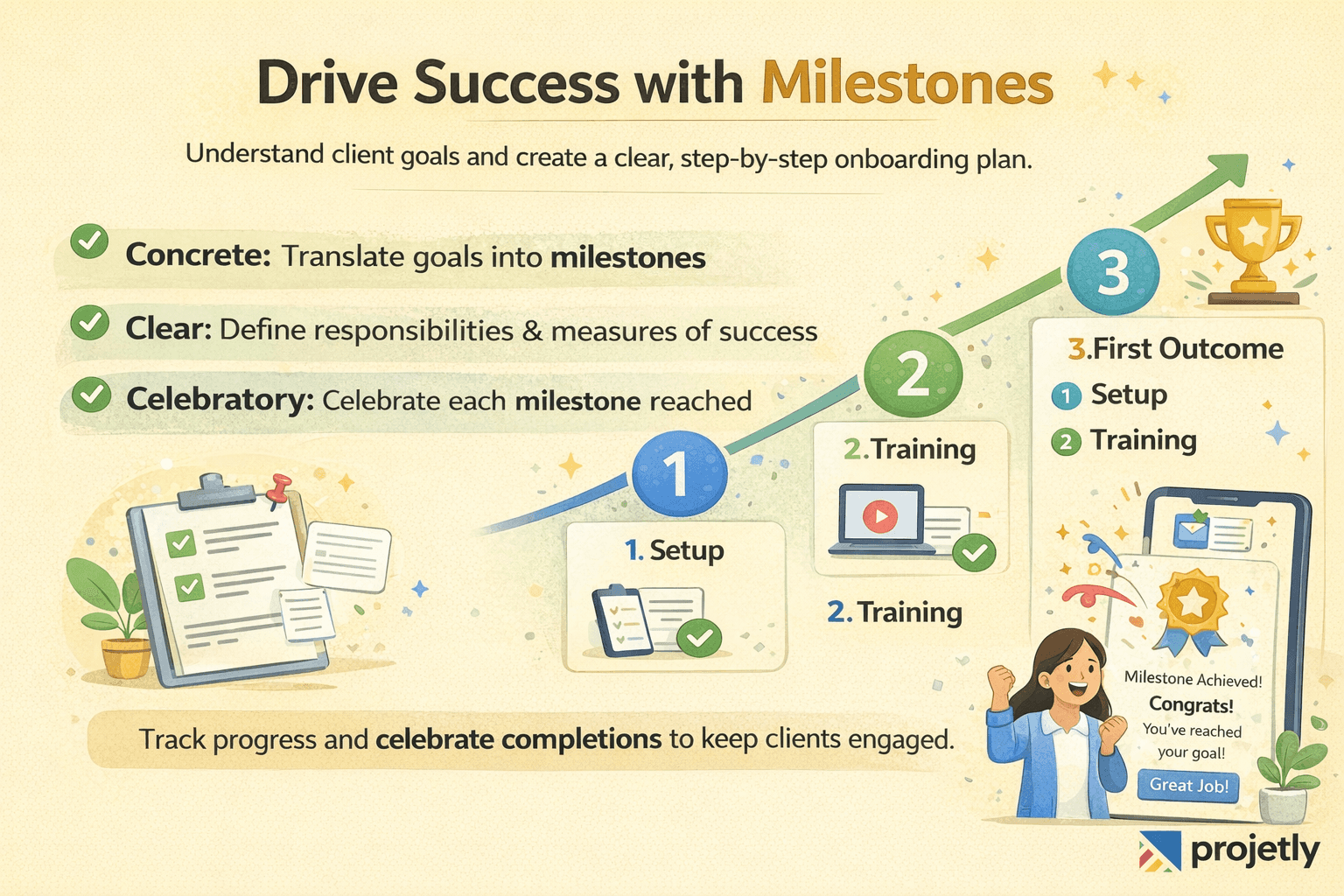
Once you understand what a client wants, translate those ambitions into concrete milestones. A milestone-driven onboarding plan is essentially a mutual success agreement; it makes abstract goals actionable and gives both sides clear accountability.
For enterprise clients, this might be a 90-day roadmap with weekly check-ins. For SMB clients, a simpler 30-day plan with three anchoring milestones (Setup, Training, First Outcome) may be more appropriate. The format matters less than the clarity. Clients should always know what happens next, who is responsible, and how progress is being measured.
Celebrate completions. A congratulatory email when a client hits a milestone is a small gesture with a disproportionate impact on engagement and momentum.
Start a Free Trial — No Setup Needed
5. Gamify the Experience to Drive Completion
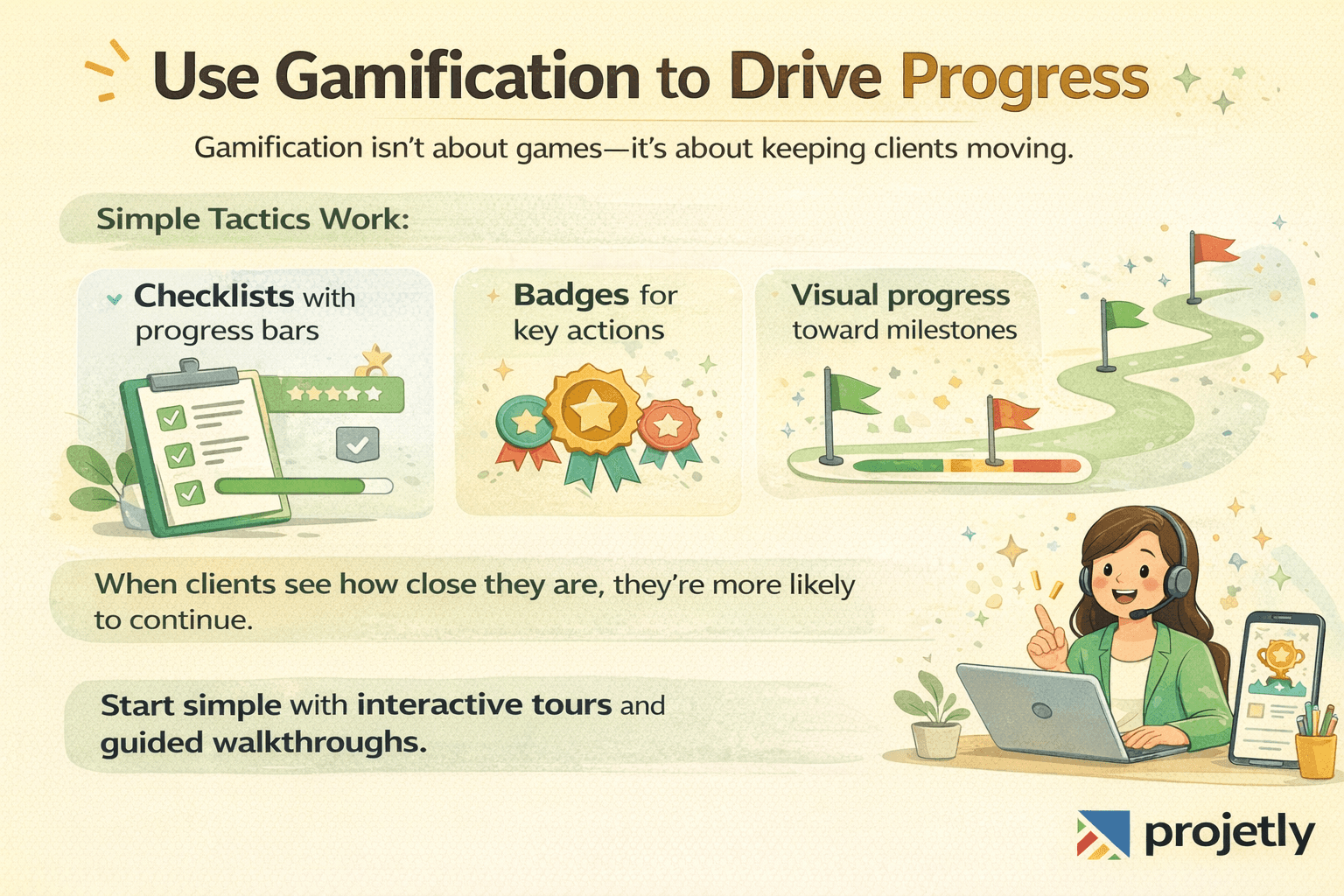
Gamification is not about turning onboarding into a game. It is about applying behavioral psychology to keep clients moving forward when friction would otherwise cause them to stall.
Even simple mechanics deliver results: onboarding checklists with progress bars, badges for completing profile setup, tokens for watching a tutorial, or visual indicators that show how close a client is to their first milestone. These elements tap into the Zeigarnik Effect, the psychological principle that incomplete tasks stay top of mind. Clients who can see how close they are to finishing are far more likely to push through.
For SaaS products especially, interactive product tours and walkthroughs are a low-effort, high-impact starting point if full gamification feels out of reach.
6. Design for Self-Service, But Guide the Path
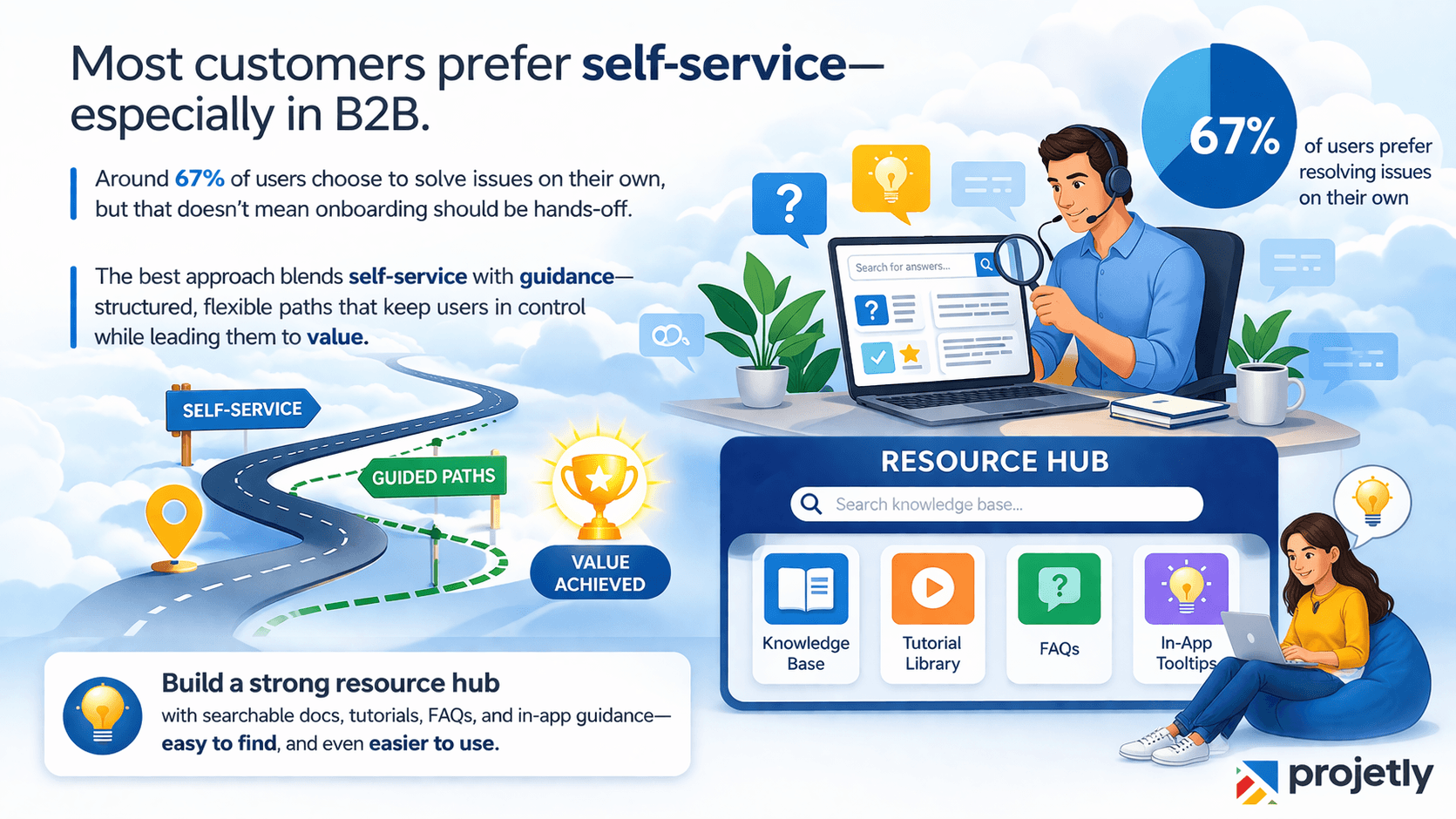
Research consistently shows that approximately 67% of modern consumers prefer resolving issues on their own rather than reaching out to a support agent. This preference is even more pronounced among B2B buyers who are technically capable and time-constrained.
That said, self-service and guidance are not mutually exclusive. The best onboarding programs offer structured pathways, curated flows that let clients choose their direction while ensuring they cannot wander too far from the value proposition.
Think of it as a guided choose-your-own-adventure: the client feels in control, but every path leads somewhere meaningful.
Build a comprehensive self-service resource hub: searchable knowledge bases, tutorial libraries, FAQ pages, and in-app tooltips. Make sure it is easy to find and easier to navigate.
Get Expert Help with Your Onboarding
7. Personalize at Scale Using Client Segmentation
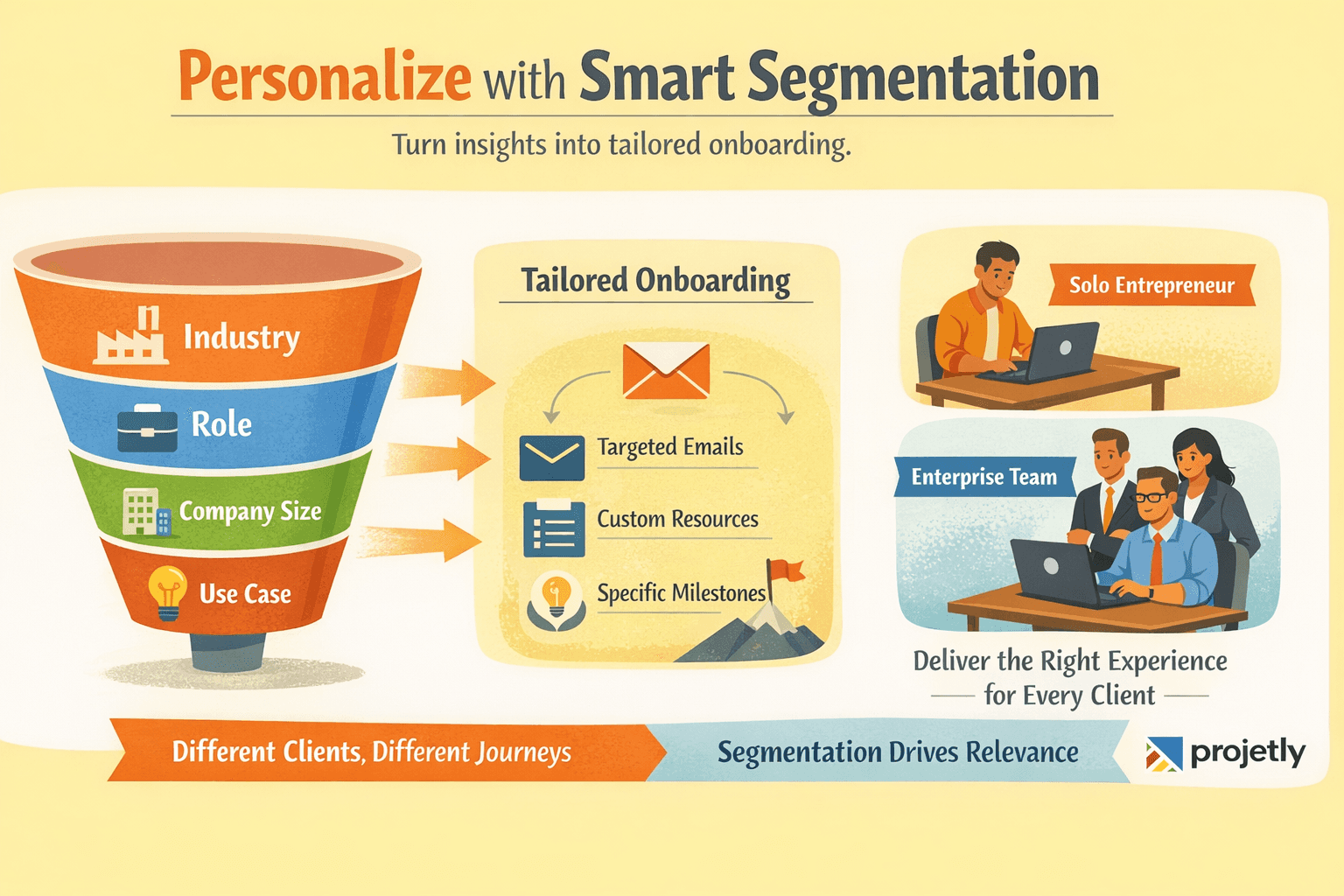
If you have done the data collection work in step three, you now have the ingredients for genuine personalization. The practical way to deliver this at scale is through segmentation.
Group clients into personas based on their industry, role, technical sophistication, company size, and primary use case. Then build distinct onboarding flows for each segment, different email sequences, different resource recommendations, and different milestone structures.
A solo founder using your tool for personal productivity has very different needs than an enterprise procurement team deploying it across 200 seats.
Even if a new client shares minimal information upfront, a well-segmented program can deliver a relevant experience from the first touchpoint, demonstrating that you built this with someone like them in mind.
8. Use Technology to Automate Without Losing the Human Touch
Customer onboarding software has matured significantly. The best platforms in 2026 do more than send automated emails; they track engagement signals, adapt the onboarding flow based on behavior, surface at-risk accounts before they churn, and provide CSMs with the context they need to have meaningful conversations.
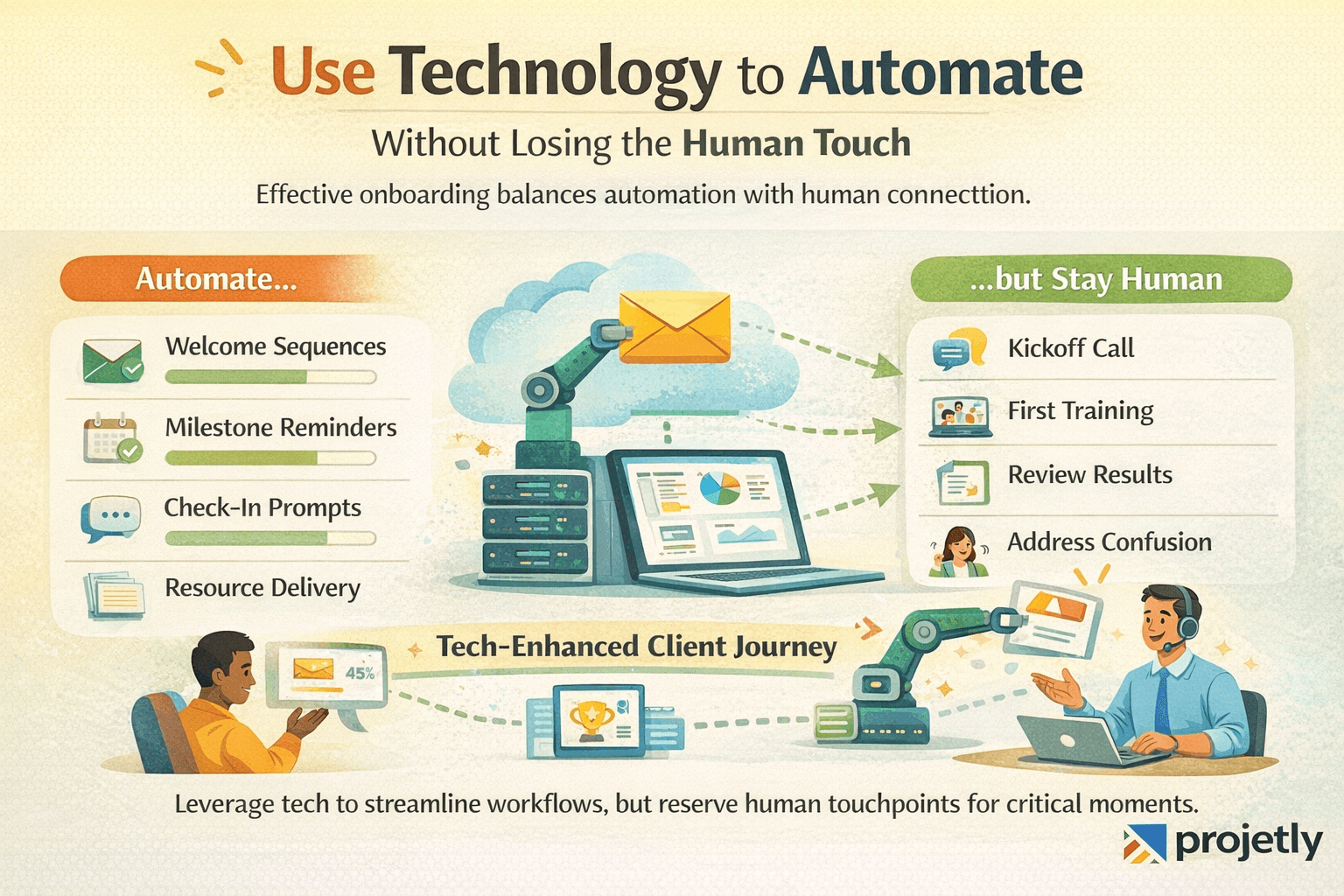
Use automation to handle the repeatable, time-sensitive elements: welcome sequences, milestone reminders, check-in prompts, and resource delivery.
Reserve human touchpoints for the moments that matter most: the kickoff call, the first training session, the review of early results, and any point where a client shows signs of confusion or disengagement.
Technology should amplify your team's capacity, not replace the judgment and empathy that make client relationships last.
9. Leverage AI-Powered Insights to Predict and Prevent Churn
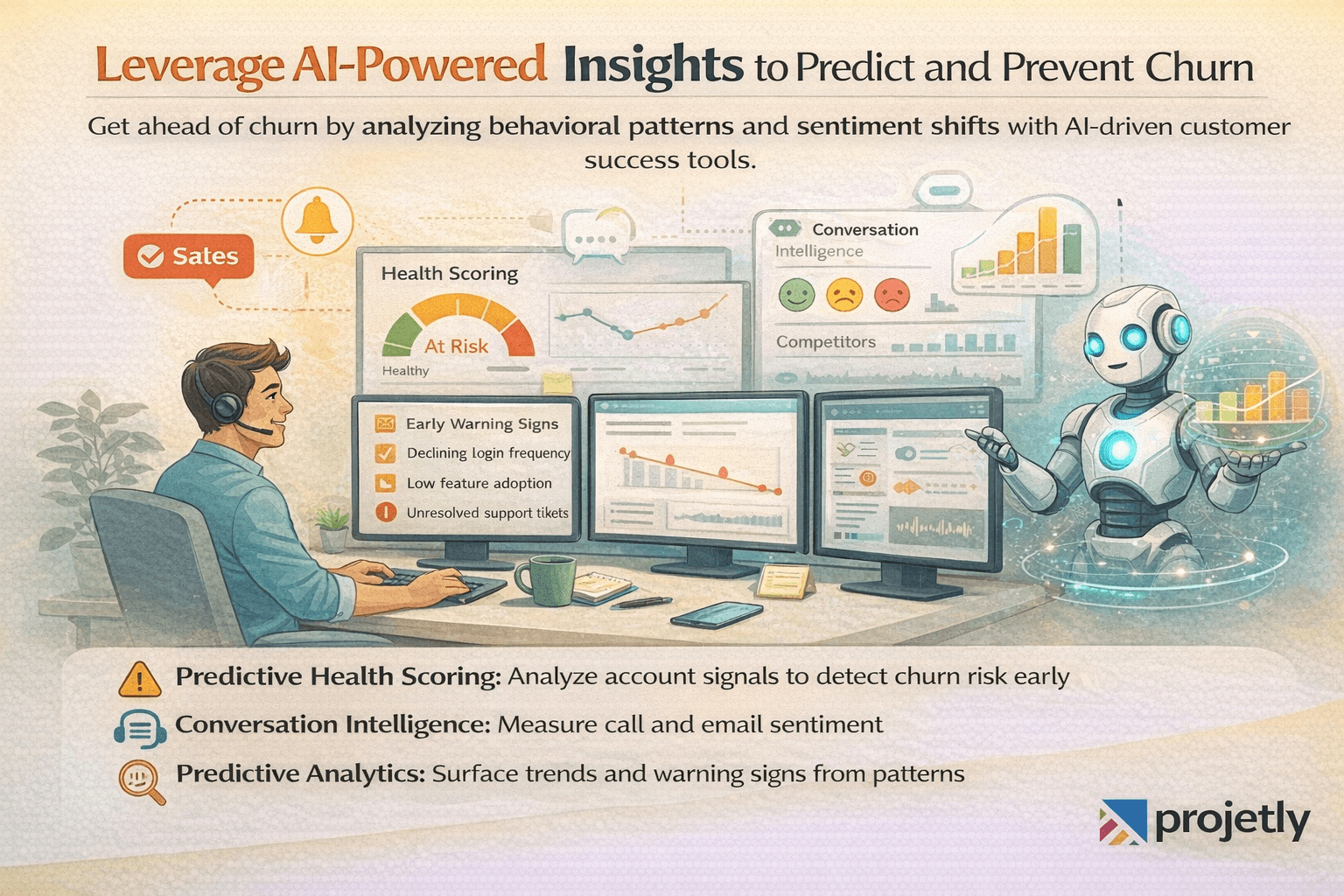
In 2026, the most forward-thinking customer success teams are using AI not just to automate tasks, but to identify patterns that human teams would miss. Predictive health scoring, which flags accounts showing early warning signs like declining login frequency, low feature adoption, or unresolved support tickets, allows CSMs to intervene before a client has decided to leave.
Pair these signals with conversation intelligence tools that analyze calls and emails for sentiment shifts, unresolved concerns, or competitor mentions. The goal is not surveillance, it is pattern recognition in service of proactive support.
10. Measure What Matters: Onboarding KPIs That Drive Action
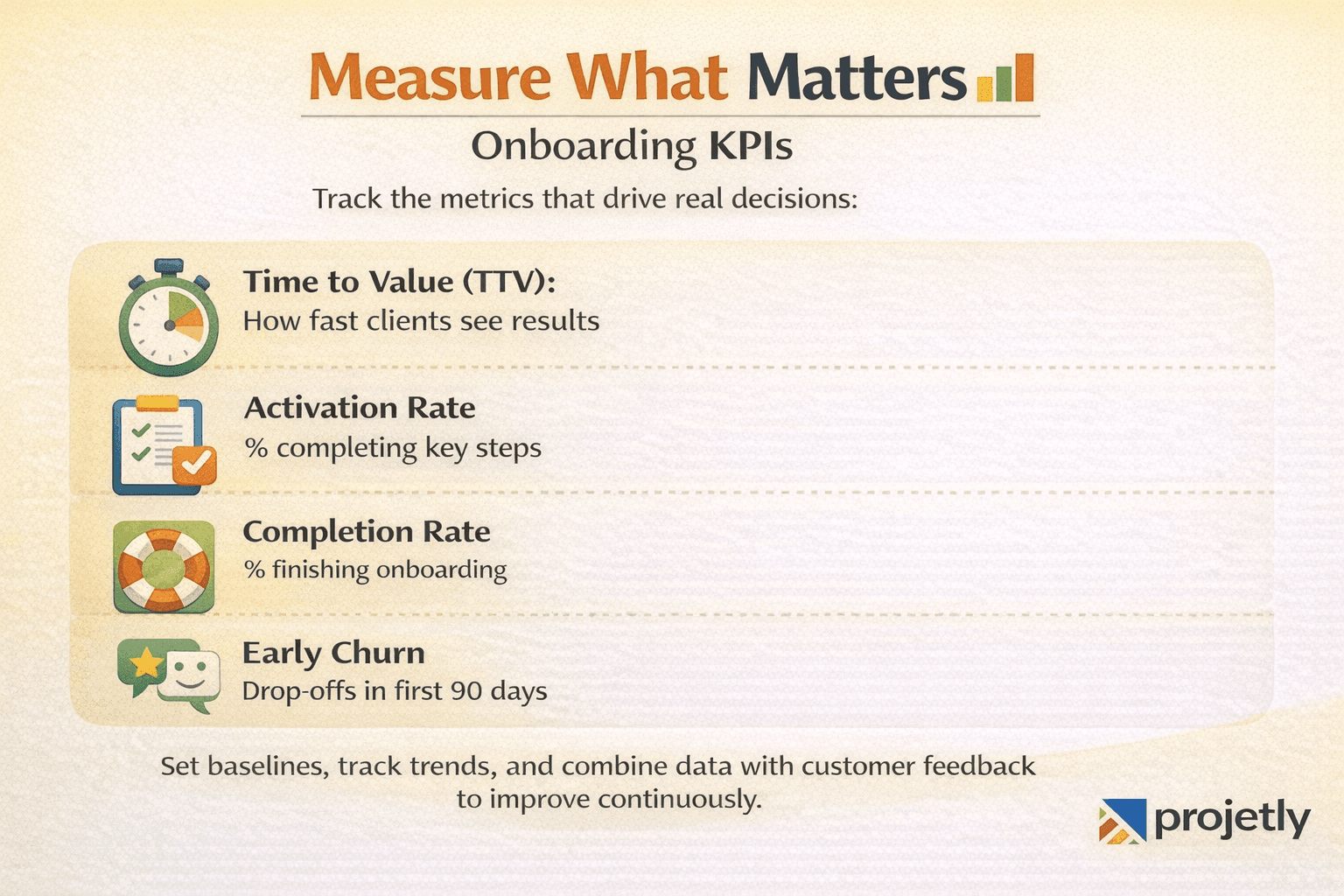
You cannot improve what you do not measure, and not all metrics are equally useful. The customer onboarding metrics that actually drive decision-making include:
Time to Value (TTV): How long does it take a new client to reach their first meaningful outcome?
Activation Rate: What percentage of new users complete the core onboarding steps?
Onboarding Completion Rate: How many clients finish the full program?
Early Churn Rate: How many clients leave within the first 90 days?
Set baselines using historical data, then track changes as you iterate on the program. Use customer feedback surveys and open channels to capture qualitative insights that numbers alone cannot tell you.
Talk to Us About Your Onboarding Goals
11. Foster Cross-Functional Alignment Across Teams
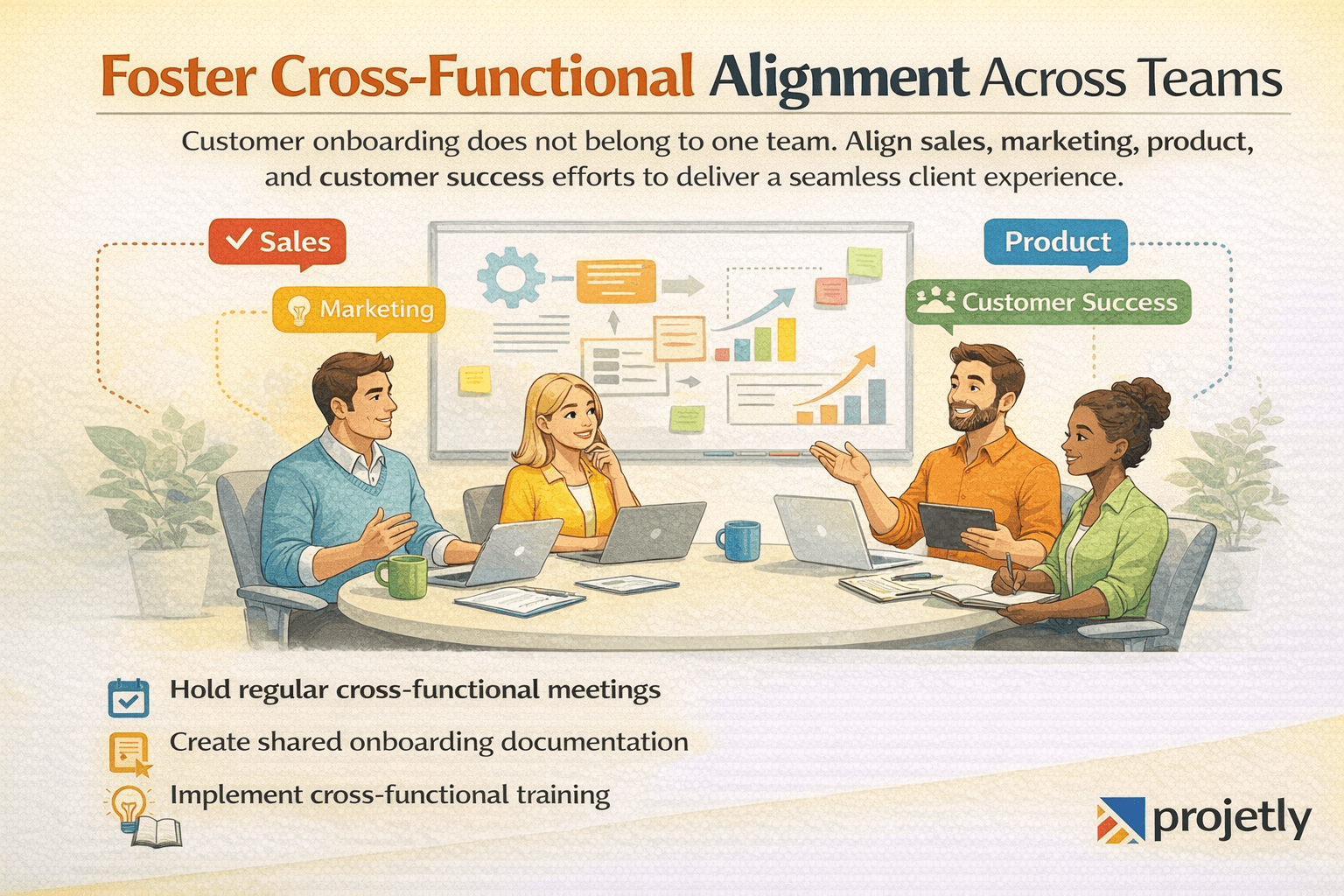
Customer onboarding does not belong to one team. Sales owns the relationship before the contract. Marketing sets expectations through content. Product shapes the experience inside the tool. Customer success owns the journey after the sale. When these teams operate in silos, clients feel the disconnection.
Establish regular cross-functional meetings to align on the onboarding strategy. Create shared documentation that captures what was promised during the sales process, what the client's goals are, and what the CSM knows from early conversations. Implement cross-functional training so each team understands how their work affects the client's first impression.
A client who transitions smoothly from sales to onboarding without repeating themselves is a client who already trusts you.
12. Invest in Continuous Learning, For Clients and Teams
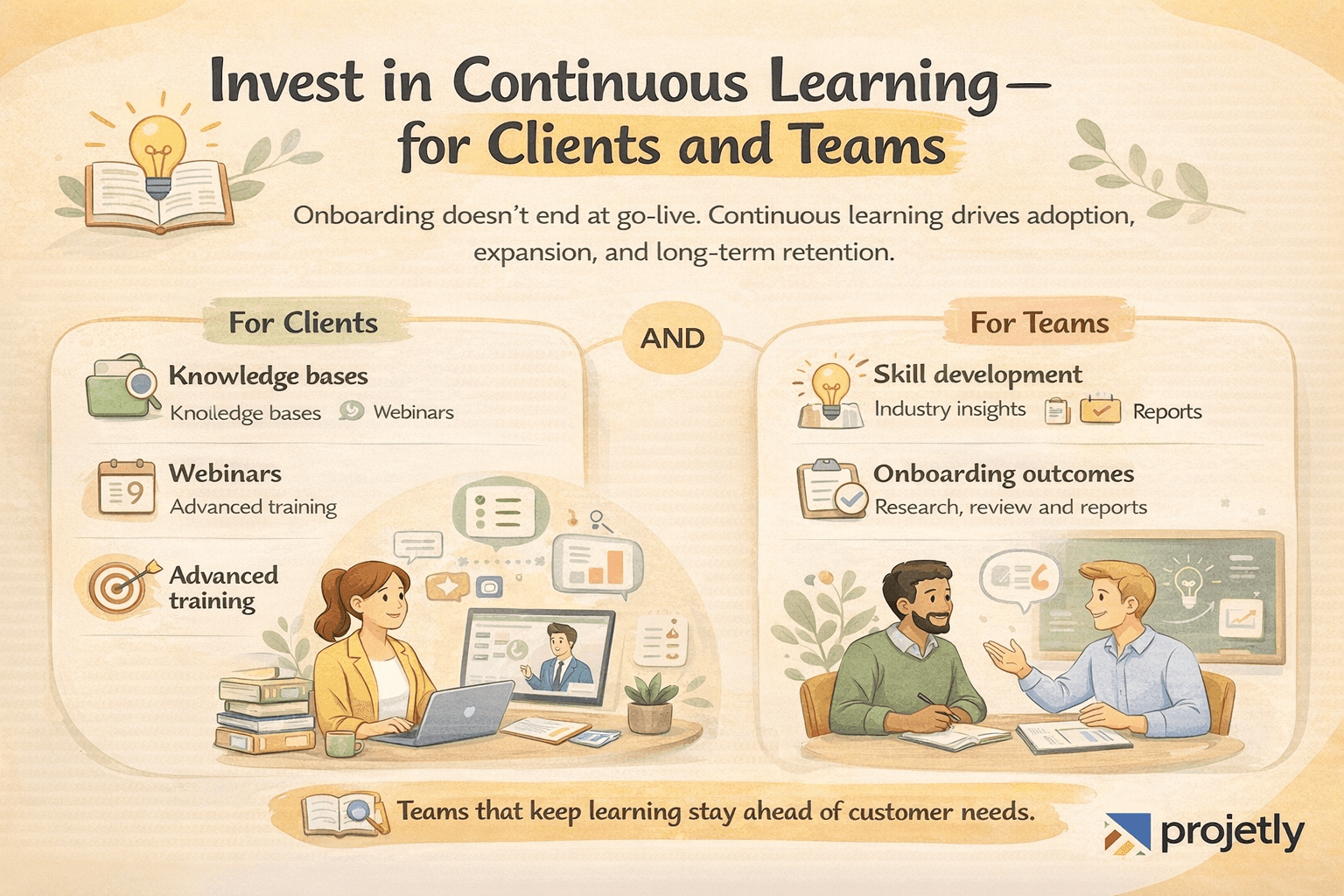
The relationship does not end when onboarding does. Clients who continue learning tend to expand their usage, advocate for your product internally, and churn far less frequently. Building a culture of continuous education is one of the highest-leverage investments a customer success team can make.
For clients, this means providing access to a growing knowledge base, hosting regular webinars, offering advanced training tracks as their usage matures, and surfacing relevant content at the right moments in their lifecycle.
For internal teams, it means regular skill development, exposure to industry research, and systematic review of onboarding outcomes. The teams that stay ahead of client needs are the ones who study those needs obsessively.
Building an Onboarding Program That Compounds Over Time
The best customer onboarding programs are not static. They evolve as your product evolves, as your customer base diversifies, and as you accumulate more data about what actually drives long-term retention.
Think of onboarding as a living system with inputs (client data, feedback, behavioural signals) and outputs (activation, retention, expansion, advocacy). Every touchpoint is a data point. Every client conversation is a source of insight. Every churn event is a lesson.
Build with that mindset from the start, and onboarding becomes less of a handoff and more of a foundation, one that your entire customer relationship is built on top of.
Frequently Asked Questions
Why is customer onboarding important in 2026?
With subscription fatigue and fierce product competition, customers make retention decisions faster than ever. A structured onboarding program reduces early churn, accelerates time to value, and builds the trust that underpins long-term loyalty.
What is the difference between onboarding and training?
Training is one component of onboarding. Onboarding is the broader process of guiding a new client through orientation, setup, goal-setting, and early success. Training equips clients with skills; onboarding ensures they know what success looks like and believe they can get there.
How long should customer onboarding last?
It depends on product complexity and client size. Simple SaaS products might complete core onboarding in 14 to 30 days. Enterprise implementations with complex configuration and multi-team rollout often span 60 to 90 days or more.
What technologies support customer onboarding in 2026?
Leading tools include dedicated onboarding platforms, CRM integrations, in-app guidance tools, customer health scoring platforms, and AI-powered conversation intelligence. The most effective programs combine automation with human judgment.
How do I measure whether my onboarding program is working?
Track time to value, activation rate, early churn rate, and post-onboarding CSAT. Compare cohorts over time and tie onboarding completion to downstream metrics like expansion revenue and annual renewal rates.
What are the most common customer onboarding mistakes?
The most frequent mistakes are: overwhelming new clients with information upfront, failing to personalize the experience, leaving clients without a clear roadmap, and treating onboarding as a one-time event rather than an ongoing relationship.
You may also like

A Guide to Project Management Professional Certification

Laugh Your Way to Productivity: 50 Workplace Quotes

50 Funny Workplace Memes That’ll Brighten Your Workday.
What Does a Customer-First Mindset Mean? Explained in 2025

What It Takes to be a Great Customer Success Manager in 2025