Customer onboarding toolkit

By
Sam

Best Rocketlane Alternatives & Competitors in 2026: A Buyer’s Guide for B2B and SaaS Teams
If you’ve outgrown Rocketlane or you’re evaluating it against other options, you’re asking the right question at the right time. The customer onboarding software category has matured considerably heading into 2026, and what passed for “good enough” a few years ago now looks thin compared to modern platforms that combine project delivery, client portals, automation, and real-time visibility in a single workspace.
This guide breaks down the top Rocketlane alternatives in 2026 with an honest look at what each platform does well, where it falls short, and who it’s actually built for. We’ve pulled from G2, Capterra, GetApp, and direct user feedback to give you a grounded comparison, not a vendor feature checklist.
What Is Rocketlane, and Why Are Teams Looking for Alternatives?
Rocketlane is a PSA and customer onboarding platform built for implementation-heavy SaaS and professional services teams. It brings project management, a client-facing portal, time tracking, and resource planning into one tool. For teams running structured onboarding at scale, that’s genuinely useful.
Users on G2 and Capterra often mention that the Salesforce integration is limited to Premium plans and lacks the sync depth many RevOps teams expect.
Several verified users report that onboarding for Rocketlane can feel complex and not sufficiently tailored to individual workflows.
Pricing starts at $19 per member/month (with a five-member minimum) and scales to $99+ for enterprise tiers, which can feel expensive for smaller teams that don’t need a full PSA platform.
None of that makes Rocketlane a bad product. It makes it a specific product. And specific products have specific blind spots. Here’s what the alternatives look like.
The Best Rocketlane Alternatives in 2026
1. Projetly: Best All-in-One for Client-Facing Delivery Teams
G2 Rating: With a 4.3/5 rating on G2, the product is quickly building momentum as a trusted emerging platform.
Best For: Teams wanting a unified internal + client-facing workspace without enterprise-tier pricing
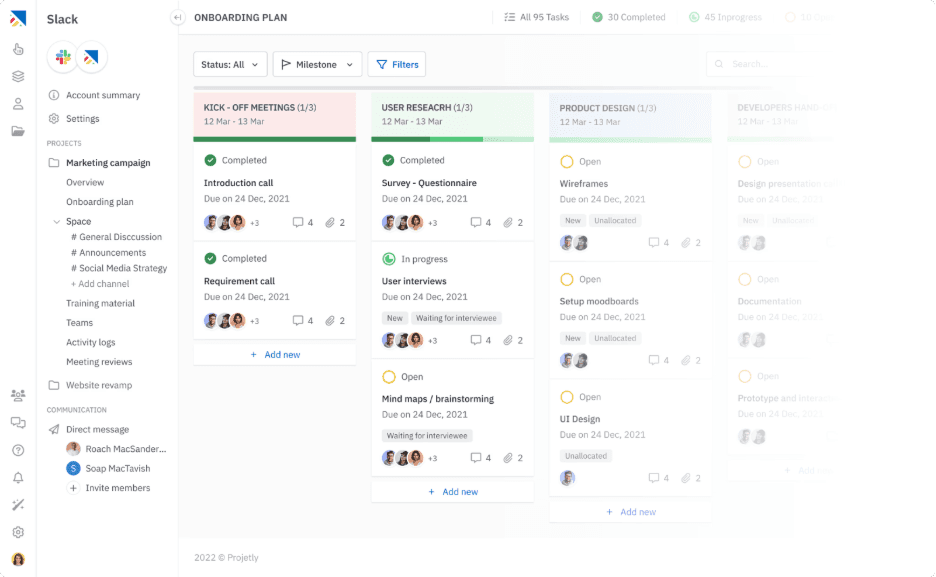
Projetly is the closest direct challenger to Rocketlane for teams running structured customer onboarding. It combines a branded client portal with internal project management in a way that doesn’t require you to stitch together two separate tools.
Clients access a white-labeled portal to track progress, review/sign documents, and communicate with your team in one place.
Teams manage tasks, dependencies, and timelines from a shared internal dashboard linked to the client portal.
Automation triggers next steps inside a project once it’s created; for example, a completed kickoff task can notify the account manager automatically. Turning a signed contract into that onboarding project is a manual step today.
Documents like contracts, questionnaires, and kickoff decks live inside the portal, eliminating tool-switching.
Clients can review, comment, and sign documents directly within the platform.
Delivers a unified internal + client experience with strong automation and a fully branded portal.
Enables real-time collaboration without relying on separate chat or file sharing tools.
Related Blog: Powerful Client Onboarding: Best Practices for You
Core Strengths
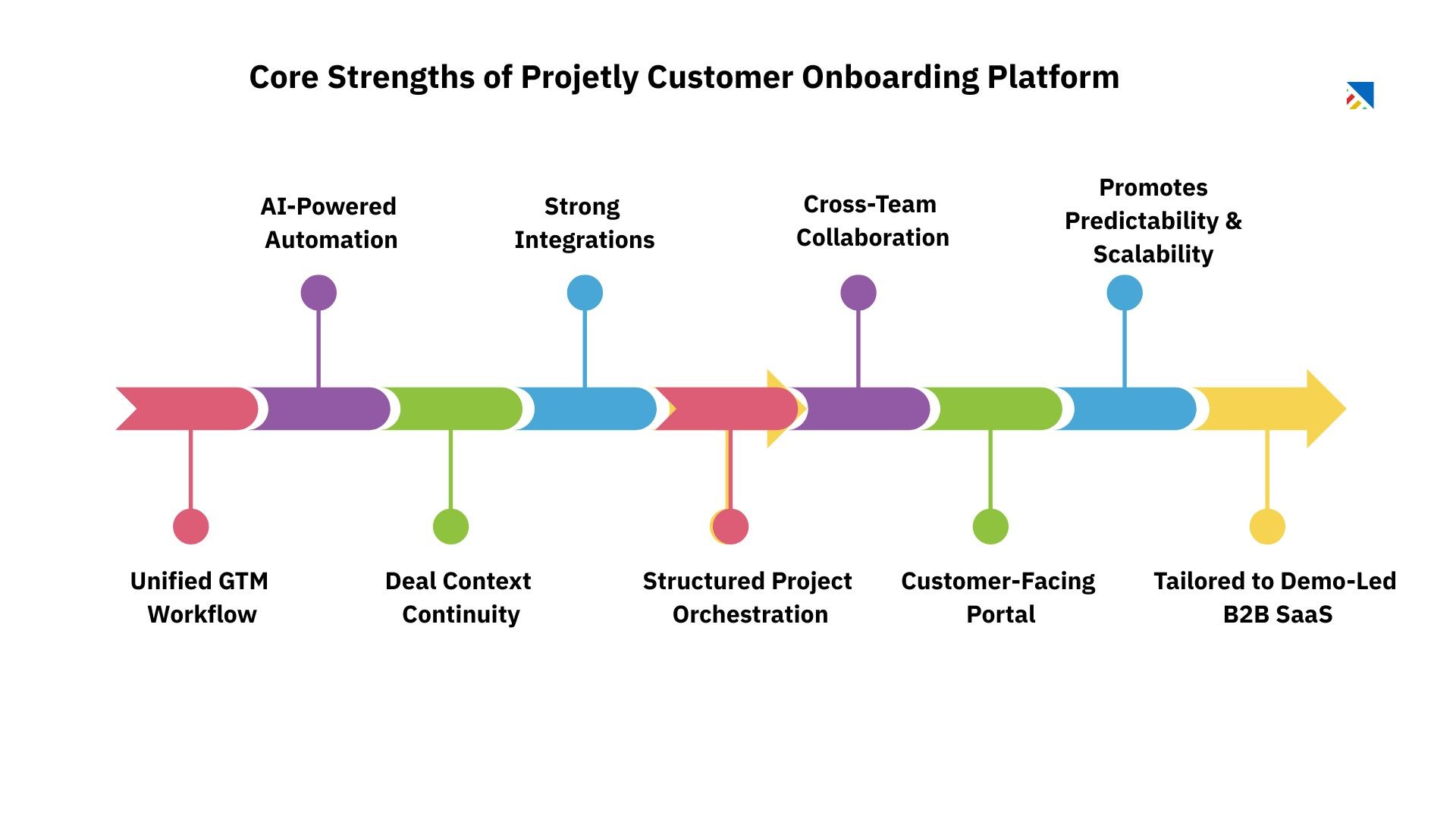
1. Unified GTM Workflow: Combines Digital Sales Rooms, onboarding, service delivery, and AI automation in one platform, reducing tool sprawl and context switching.
2. AI-Powered Automation: AI generates meeting insights, templates, and task suggestions, helping teams move faster with less manual effort.
3. Deal Context Continuity: Digital Sales Rooms retain rich deal information that flows into onboarding and delivery, preventing information loss between teams.
4. Strong Integrations: Works with popular sales and collaboration tools (e.g., Zoom, HubSpot), fits into existing team tech stacks without a heavy overhaul.
5. Structured Project Orchestration: Provides templated and customizable project plans and task lists for both onboarding and service delivery, enabling repeatability and consistency.
6. Cross-Team Collaboration: Offers a shared workspace where sales, customer success, and operations can work together with aligned visibility, reducing silos.
7. Customer-Facing Portal: Includes a portal for customers to engage, view progress, and collaborate, increasing transparency and satisfaction.
8. Promotes Predictability & Scalability: By standardizing processes and automating routine tasks, it helps teams scale delivery without proportional increases in headcount.
9. Tailored to Demo-Led B2B SaaS: Designed for companies with high-touch sales models, making its feature set particularly valuable for teams moving deals manually through stages.
CRM integrations: HubSpot, Salesforce, calendar tools, and cloud storage.
Ready to make onboarding predictable and scalable?
🚀 Schedule your personalized Projetly demo Today
2. GuideCX: Best for Structured Client Onboarding with Strong Visibility
Best For: Mid-market SaaS and services teams running implementation projects with multiple stakeholders
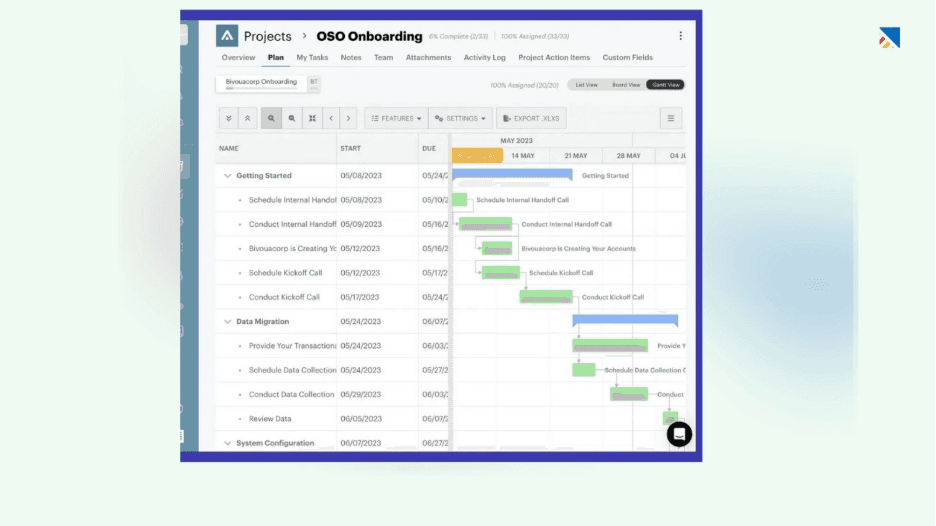
GUIDECX gives teams and clients a shared visibility into onboarding progress.
Clients receive tasks and updates without complex dashboards.
Conditional workflows adjust onboarding paths automatically.
Analytics highlight time-to-value and bottlenecks.
Strengths: Simple client experience, flexible flows, useful insights, and affordable pricing.
Where it’s limited: Fewer project management features than Rocketlane; less depth on resource planning and financial tracking. Integration coverage is narrower than that of some competitors.
Related Blog: AI-Powered Customer Onboarding: How to Automate with AI
3. ClickUp: Best for Teams That Want to Consolidate Tools
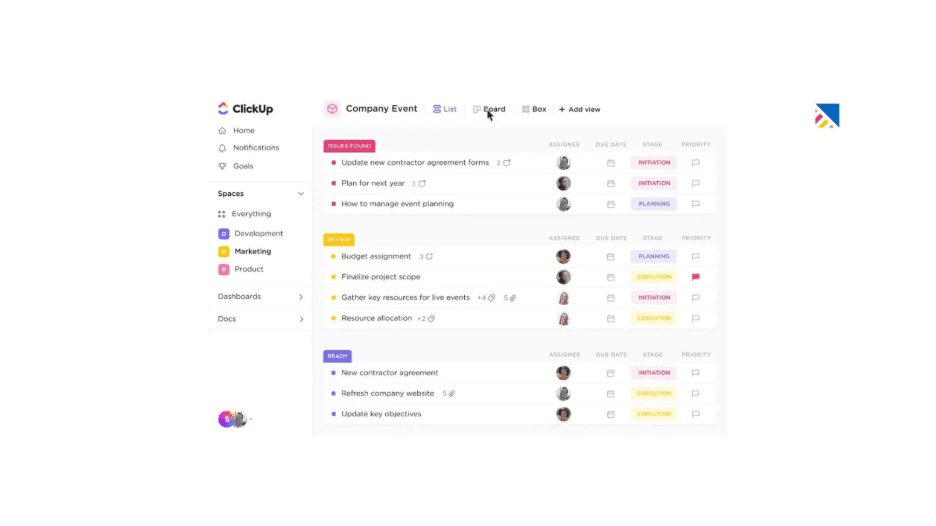
Best For: Growing teams that want one platform for project management, documentation, and onboarding workflows
ClickUp isn’t a dedicated onboarding tool. It’s a general work management platform often adapted for onboarding workflows.
It suits teams that want more structure than spreadsheets but don’t need highly specialized onboarding software.
Built-in AI features help automate tasks, updates, and link documentation to projects.
A large template library makes it easy to create onboarding workflows with minimal setup.
The trade-off: it doesn’t offer a true native client portal experience.
Client visibility typically relies on shared boards or views rather than a fully branded guided journey.
What it does well: Extremely versatile, generous free plan, strong automation, AI-native in 2026, excellent for internal team management.
Where it’s limited: Not purpose-built for onboarding; no dedicated client portal; can become noisy or over-engineered if not configured carefully.
Start a Free Trial
🚀 Launch Your First Project Today
4. Arrows: Best for HubSpot-Native Teams
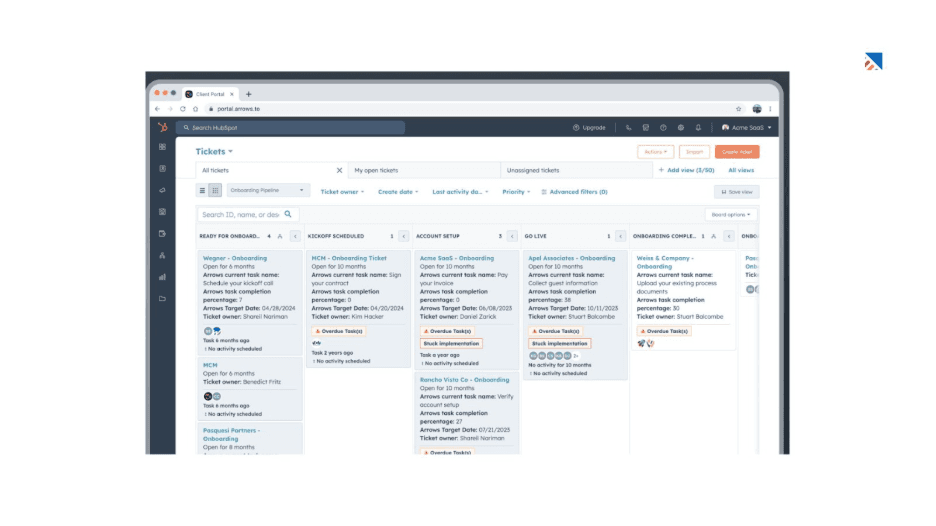
Best For: Customer success and sales teams running onboarding directly inside HubSpot.
Arrows is designed to run onboarding directly inside HubSpot, keeping tasks, communication, and tracking in one system.
Eliminates context-switching, manual CRM updates, and data sync issues.
Clients access a simple guided plan via a link, no complex logins required.
The frictionless experience helps improve completion rates and time-to-value.
Example: HungryHungry restructured onboarding with Arrows and reported major gains in efficiency and churn reduction.
What it does well: Seamless HubSpot integration, frictionless client experience, strong onboarding analytics, excellent for CS and sales-led onboarding motions.
Where it’s limited: Best suited to HubSpot shops; if you’re on Salesforce or another CRM, the native advantage disappears. Less depth on project management features.
Related Blog: 12 Successful Customer Onboarding Best Practices
5. Teamwork.com: Best for Agency and Client-Services Teams
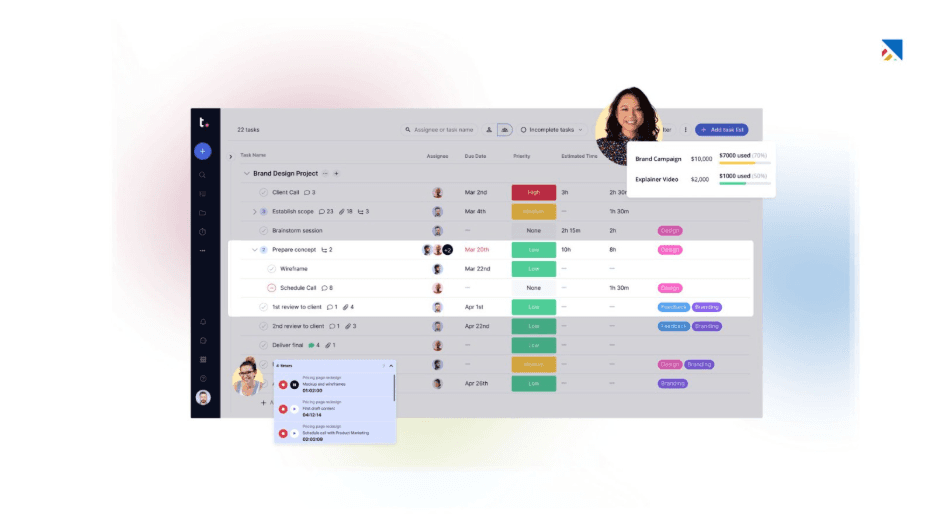
Best For: Agencies, consultancies, and services teams managing multiple simultaneous client projects
Teamwork.com blends project management with client delivery, supporting time tracking, workload planning, billing, and client access.
Profitability reporting shows margins and budgets per project without spreadsheets.
Custom permissions let clients see progress without exposing internal details.
Automated reminders keep teams and customers aligned.
Capacity tracking helps smaller teams avoid overallocation and missed deadlines.
What it does well: Strong time tracking and billing, excellent for multi-client environments, solid workload management, and good client permission controls.
Where it’s limited: Less polished client portal experience than Rocketlane; not as specialized for SaaS onboarding workflows; the interface can feel dated compared to newer tools.
Related Blog: How Customer Onboarding Can Reduce Time to Value
6. WalkMe: Best for Complex Product Adoption and In-App Guidance
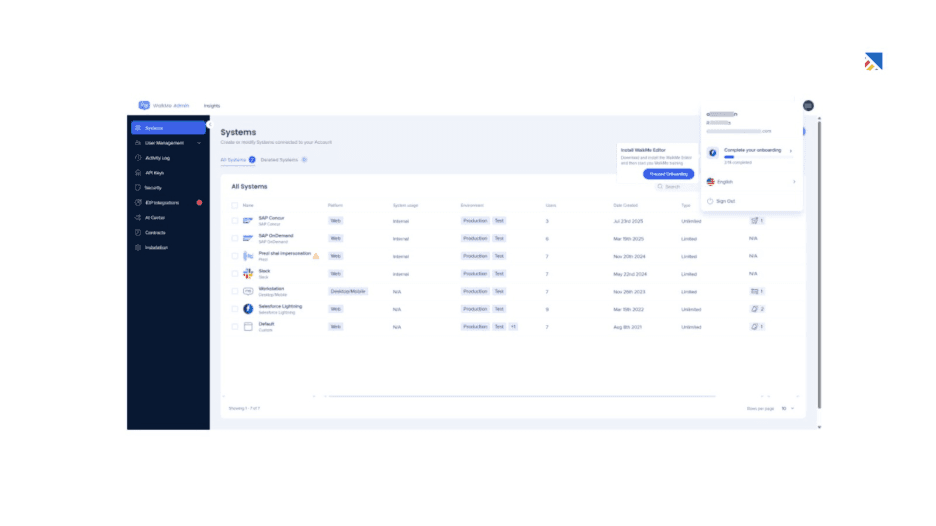
Best For: Enterprise teams with complex software products where in-product guidance is central to onboarding success.
WalkMe focuses on the in-product experience, guiding users with tooltips, prompts, and contextual help.
Useful for products with complex interfaces or adoption challenges after implementation.
Analytics reveal drop-offs, feature engagement, and messaging effectiveness.
Downsides include high cost, configuration complexity, and the need for dedicated management resources.
What it does well: Deep in-product guidance, powerful behavioral analytics, broad enterprise integrations, useful for driving adoption post-implementation.
Where it’s limited: Not a project management software or client collaboration tool; expensive; requires technical investment to configure well.
7. Tallyfy: Best for Non-Linear Workflow Management Beyond Onboarding
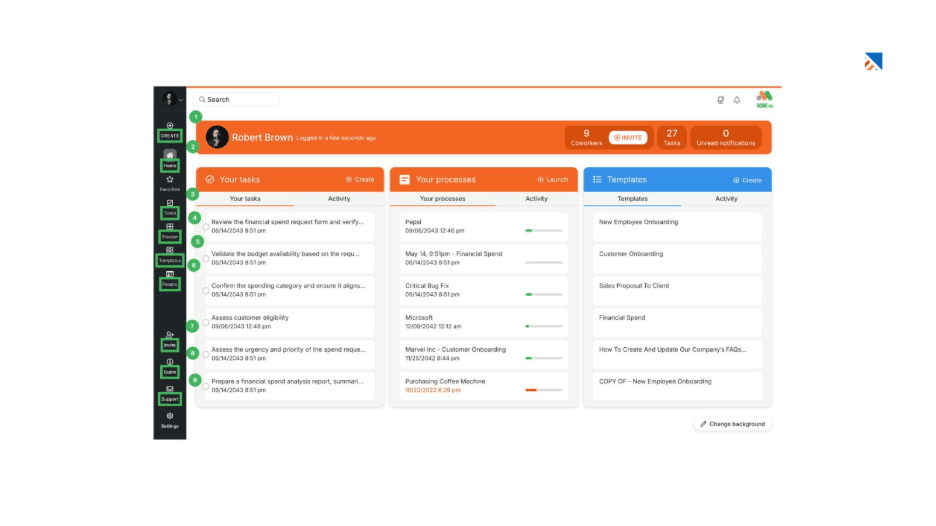
Best For: Operations teams that need flexible workflow management across multiple business processes, not just onboarding.
Tallyfy supports a wide range of repeatable workflows, not just onboarding.
Works well for teams managing many structured processes in one system.
Guests can complete tasks via secure links without creating accounts.
Branded guest portals maintain a consistent company experience.
What it does well: Versatile across workflow types, no-account guest access, branded portals, scales across business processes beyond onboarding.
Where it’s limited: Less depth on onboarding-specific features like milestone tracking, implementation analytics, or resource planning.
Still have doubts?
💬 Talk to our experts today. Contact us now.
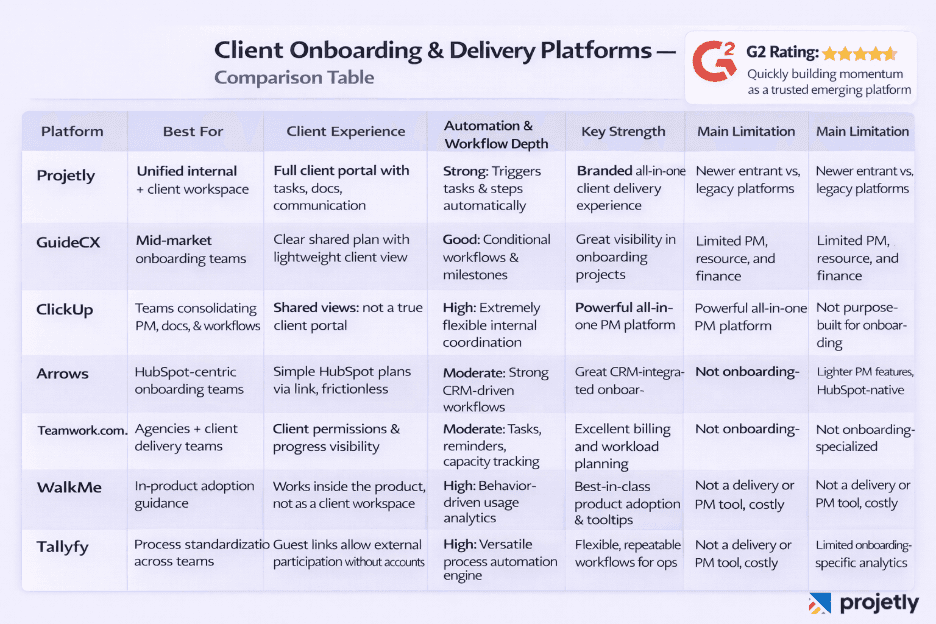
Rocketlane vs. Alternatives: Quick Comparison
How to Choose the Right Platform in 2026
The onboarding software market in 2026 looks similar on the surface, but tools are built for very different needs. If you’re deep in HubSpot and want minimal integration work, Arrows is a natural fit. For PSA depth, resource planning, and financial tracking, Rocketlane and Teamwork.com stand out. If post-implementation product adoption is your biggest gap, WalkMe solves a different problem entirely.
Teams seeking a strong client experience without enterprise complexity often land in the middle with Projetly or GuideCX, both offering solid client portals and mid-market positioning.
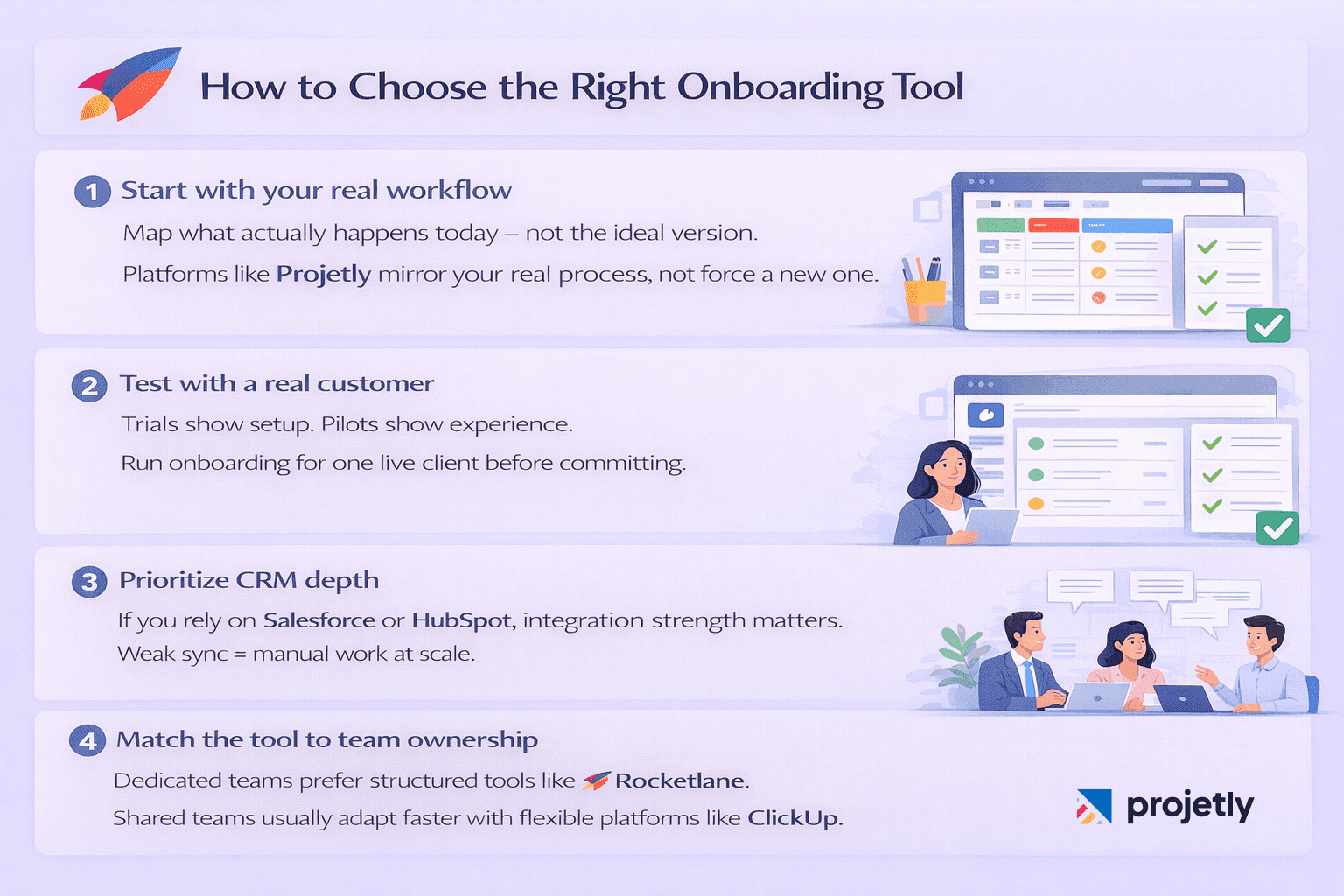
A few practical steps before you commit:
Map your real onboarding workflow first. Not the ideal version, the one that actually runs today, with all the Slack nudges, spreadsheet tracking, and manual handoffs included. The right platform is the one that removes your friction, not a generic onboarding team’s friction. Tools like Projetly are designed to bring structure and visibility to the workflows you already run, rather than forcing you into rigid templates.
Run a pilot with a real customer. Free trials help with setup, but the real test is how the experience feels to a live client under real timelines and pressure. Most vendors will support a structured pilot if you ask, and platforms focused on onboarding execution, including Projetly, tend to offer guided pilots for this reason.
Factor in your CRM dependency. If your customer data lives in Salesforce or HubSpot, integration depth becomes a major decision driver. Shallow syncs create manual updates that multiply as you scale, while strong integrations let onboarding run from a single source of truth.
Consider who owns onboarding internally. If you have a dedicated implementation team, you may prefer structured onboarding tools like Rocketlane. If ownership is shared across CS, sales, and product, flexible work platforms such as ClickUp can adapt more easily. Projetly sits in the middle, purpose-built for customer onboarding but flexible enough to support cross-functional collaboration.
Related Blog: From Chaos to Clarity: Customer Onboarding Best Practices for Success
Frequently Asked Questions
Why consider alternatives to Rocketlane at all?
Rocketlane is a strong platform, but it’s optimized for a specific use case: implementation-heavy, SaaS-led, with dedicated onboarding teams and enough volume to justify $19–$99+ per user per month. Teams outside that profile often find themselves paying for features they don’t use while missing simpler functionality they actually need.
Which Rocketlane alternative is best for small teams?
ClickUp’s free and low-cost tiers give small teams access to strong project management and workflow automation without a per-user minimum. Projetly offers a middle-ground option, combining structured onboarding capabilities with client-facing delivery features at pricing more accessible than enterprise-focused tools.
Which platform has the best client portal experience in 2026?
Projetly and Rocketlane both offer the most purpose-built client portals. Arrows has the cleanest frictionless experience for HubSpot-native teams. GuideCX offers solid client visibility without the white-glove complexity.
Is there a free alternative to Rocketlane?
ClickUp has a functional free plan. Most dedicated onboarding platforms including Rocketlane, GuideCX, and Arrows, offer free trials but require paid subscriptions for production use.
What’s the difference between customer onboarding software and user onboarding software?
Customer onboarding software (like Rocketlane, Projetly, and GuideCX) manages the delivery process, the coordination of tasks, timelines, documents, and stakeholders to get a customer fully implemented and live. User onboarding software (like WalkMe, Appcues, and Userlane) manages the in-product experience, guiding individual users through product features after implementation is technically complete. Many organizations need both.
You may also like

A Guide to Project Management Professional Certification

Laugh Your Way to Productivity: 50 Workplace Quotes

50 Funny Workplace Memes That’ll Brighten Your Workday.
What Does a Customer-First Mindset Mean? Explained in 2025

What It Takes to be a Great Customer Success Manager in 2025