Project Management

By
Sam

Best Project Management Software for Freelancers in 2026
Most project management tools are built for teams. If you're a freelancer, that disconnect shows up fast: you're tracking tasks in Asana, logging time in Toggl, chasing invoices in FreshBooks, and answering client questions over email. Nothing talks to anything else.
This guide cuts through the noise and shows you exactly which tools solve the real problem: keeping your projects, clients, and business operations in one place so you can actually do the work you're being paid for.
What Is Project Management Software for Freelancers?
Project management software for freelancers is different from what enterprise teams use. It's not about managing 50 people across departments; it's about running your entire client operation from a single platform.
That means breaking projects into tasks with deadlines and priorities, tracking your time so billing is accurate, communicating with clients without endless email threads, and moving from proposal acceptance to final invoice without switching apps.
The freelancers who get the most value from these tools aren't using them as glorified to-do lists. They're using them to replace three or four disconnected subscriptions with a single system that connects every phase of their work, from the first client intake to the final payment.
See How PSA Software Works. Start a Free Trial Today
Why Freelancers Need Dedicated Project Management Tools in 2026
The gig economy has matured considerably. Clients expect structured updates, clear timelines, and professional delivery, not a scattered string of Slack messages and Google Docs. At the same time, freelancers are managing more complexity with fewer resources than a typical agency.
Research from TeamStage shows that 36% of freelancer time goes to administrative tasks that the right connected tools could automate. That's more than a day of every five-day workweek spent not doing billable work. A project management platform that connects task tracking, time logging, client communication, and invoicing doesn't just keep you organized it directly protects your income.
In 2026, the tools that lead this space have also added meaningful AI features like predictive deadline alerts, workload balancing, and automated reporting that shift freelancers from reactive firefighting to proactive planning.
The 10 Best Project Management Tools for Freelancers in 2026
These tools have been evaluated across four criteria that actually matter for independent contractors: ease of setup, how well they connect project work to billing, client-facing features, and value at different price points.
1. Hive: Best for Freelancers Who Want Everything in the Free Tier
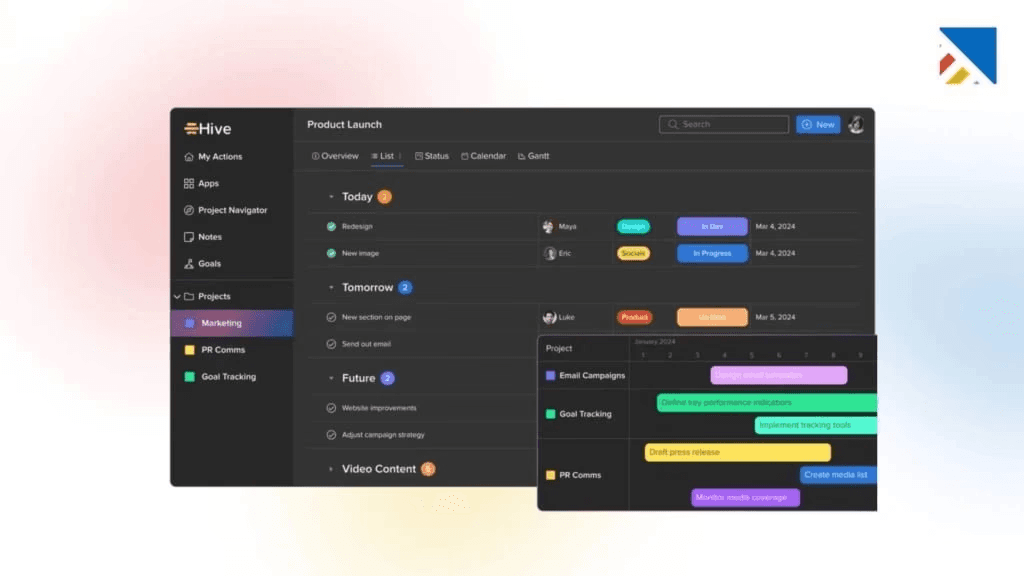
Hive was built by users, for users, and that philosophy is obvious the moment you open the platform. Unlike many project management tools that lock core functionality behind paywalls, Hive’s free version is genuinely powerful. It includes multiple project views (Gantt, Kanban, calendar, and portfolio), built-in chat, workflow automation for recurring tasks, and Hive Notes for collaborative meeting documentation.
What freelancers use it for:
Managing multiple client projects from a single dashboard
Running repeatable workflows without rebuilding processes each time
Keeping client notes, meetings, and task lists connected in one workspace
Best for: Freelancers who want a robust free solution before committing to a subscription. The 14-day trial of Hive’s paid plan is useful if you want to explore timesheets, analytics, and deeper collaboration features.
2. Asana: Best for Freelancers Managing Complex Project Dependencies
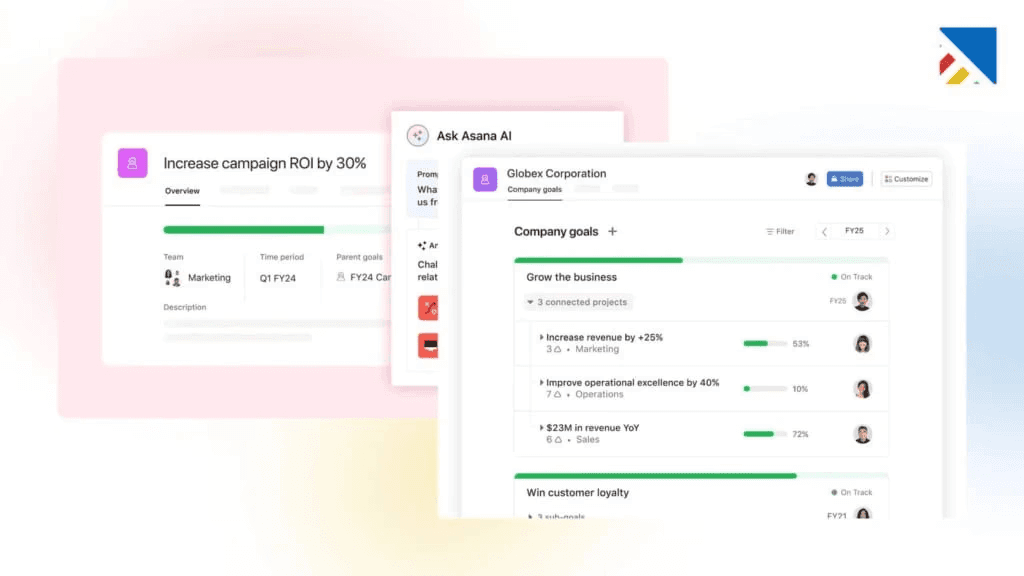
Asana has been in the project management space longer than most competitors, and its depth of features reflects that maturity. Its free plan is one of the more generous on the market, offering unlimited tasks, projects, and activity logs, along with multiple views, including List, Board, and Calendar. It also includes solid security basics such as two-factor authentication and SOC 2 Type II compliance.
The key trade-off: Asana is designed for team collaboration, not full freelance business management. It doesn’t include built-in proposals, contracts, invoicing, or client portals at any pricing tier. Freelancers will need separate tools for billing and client financial workflows.
For freelancers focused purely on task tracking, timelines, and structured project coordination, especially those already using another billing solution, Asana remains one of the strongest free options available.
What freelancers use it for:
Managing projects with complex task dependencies and timelines
Structuring multi-step workflows with clear ownership and deadlines
Tracking activity history and updates across multiple client projects
Best for: Experienced freelancers, or those moving from agency environments, who already know Asana and use separate software for invoicing and contracts.
3. Teamwork.com: Best for Freelancers with Billable Hour Reporting Needs
Teamwork earns its place on this list because of its strong financial and reporting capabilities. It’s one of the few project management platforms that meaningfully connects project execution with profitability.
Features like unlimited free client users, built-in time tracking across plans, budget monitoring, and integrations with accounting tools such as QuickBooks make it especially useful for freelancers who need to understand margins on a per-project basis.
The free plan does have clear limits for up to five users, five projects, and 100MB of storage. But for solo freelancers or small consulting practices focused on accurate billing, those constraints are often manageable.
What freelancers use it for:
Tracking billable hours directly alongside project tasks
Monitoring project budgets to ensure work stays profitable
Sharing access with clients without paying for extra seats
Best for: Consultants and service-based freelancers who invoice hourly and want profitability reporting built into the same workspace where project work happens.
See PSA Software in Action. Book a Demo Now
4. ClickUp: Best for Power Users Who Want Maximum Customization
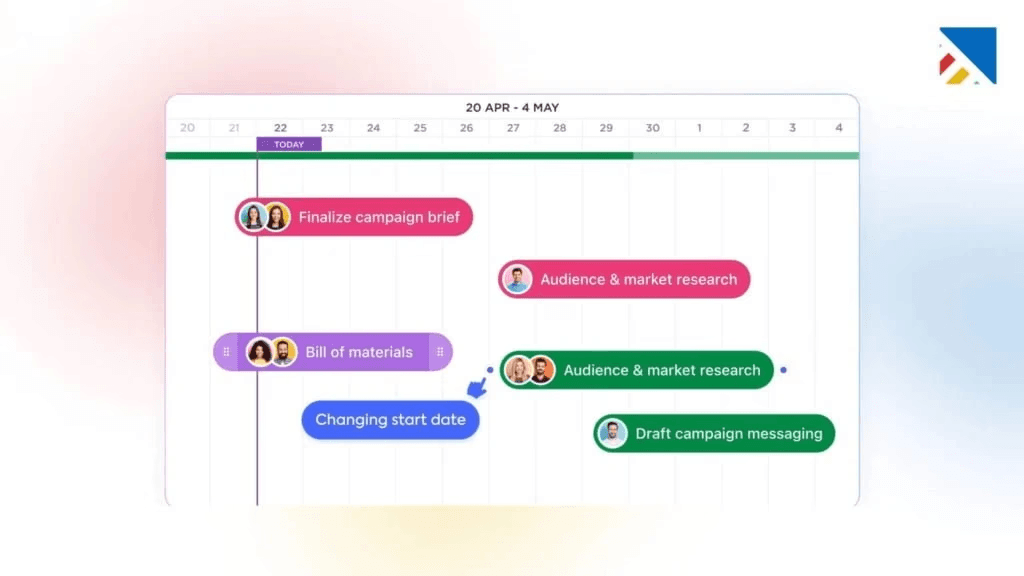
ClickUp’s free tier is already generous, offering unlimited tasks, collaborative docs, real-time chat, and email integration. But its real advantage appears as you move into paid plans, where customization becomes the centrepiece with flexible statuses, automation triggers, goal tracking, and granular permissions that rival much more expensive enterprise tools.
The trade-off is the initial setup. ClickUp’s depth can create decision fatigue when you first configure your workspace. Freelancers who already understand their workflows will appreciate the control. Those newer to structured project management may find onboarding more involved than expected.
What freelancers use it for:
Designing highly customized workflows that match their exact process
Automating repetitive task steps and project handoffs
Centralizing docs, chat, and project tracking in one configurable workspace
Best for: Freelancers who want full control over how their workspace is structured and don’t mind investing time upfront to tailor the system to their workflow.
5. Trello: Best for Freelancers Who Just Need Simple Task Visibility
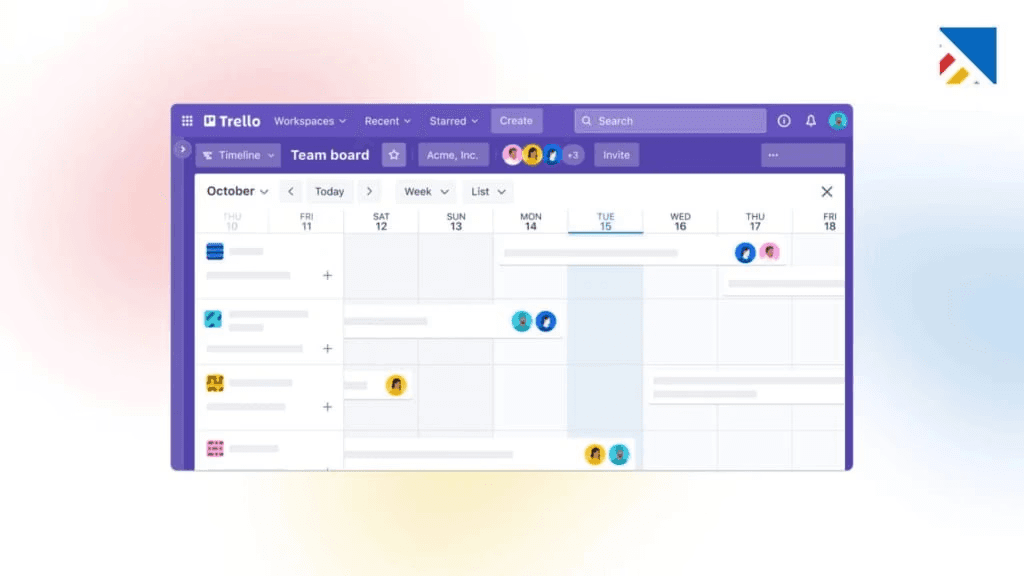
Trello’s card-and-board Kanban system has been the entry point into project management for countless freelancers, and for good reason. It’s visually intuitive and quick to learn, and the free plan is generous enough for lightweight workflows, offering unlimited cards, up to 10 boards per workspace, and 250 automation runs per month. Many experienced freelancers still keep Trello in their toolkit for smaller projects simply because it stays out of the way.
Its limitations are also well known. Trello doesn’t include native time tracking, invoicing, or client portals, and as projects grow more complex, boards can become difficult to manage. For many freelancers, it works best as a starting point rather than a long-term operational hub.
What freelancers use it for:
Visualising tasks quickly using simple Kanban boards
Organizing lightweight or short-term client projects
Tracking personal workload without heavy configuration
Best for: Freelancers just getting started who want a zero-friction way to visualize work before committing to a more advanced platform.
6. Notion: Best for Freelancers Who Want a Fully Custom Workspace
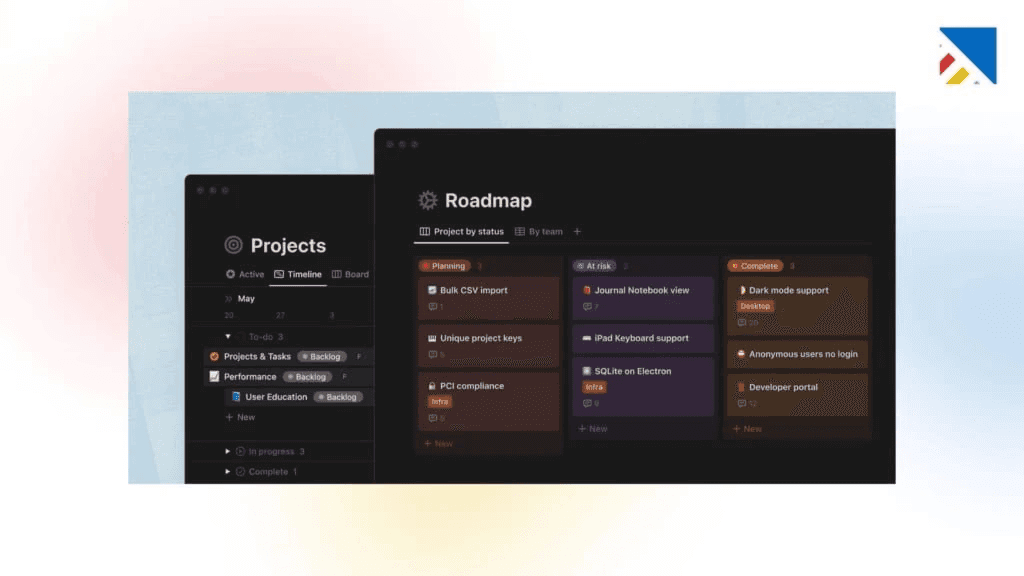
Notion sits in a different category from most project management tools. Instead of giving you a predefined workflow, it provides flexible building blocks, databases, linked views, templates, and pages that you assemble into your own system. When configured well, it can function as a project tracker, client knowledge base, content calendar, and personal wiki all at once.
The free tier is generous, supporting unlimited pages and up to 10 collaborators, along with one synced database integration (such as Jira, GitHub, or Asana). However, Notion doesn’t include native time tracking, invoicing, or true Gantt charts without workarounds. For freelancers comfortable designing their own workflows, these gaps are manageable. For those who want a tool that works immediately out of the box, it may feel too open-ended.
What freelancers use it for:
Building a custom operating system for projects, notes, and client knowledge
Creating centralized dashboards that combine tasks, docs, and planning
Managing content calendars, research, and documentation alongside project work
Best for: Freelancers willing to invest time upfront to build a tailored workspace especially those who want a “second brain” as much as a project tracker.
Still comparing the PM tool vs PSA tool? Talk to Our Experts
7. Basecamp: Best for Freelancers Who Collaborate with Client Teams
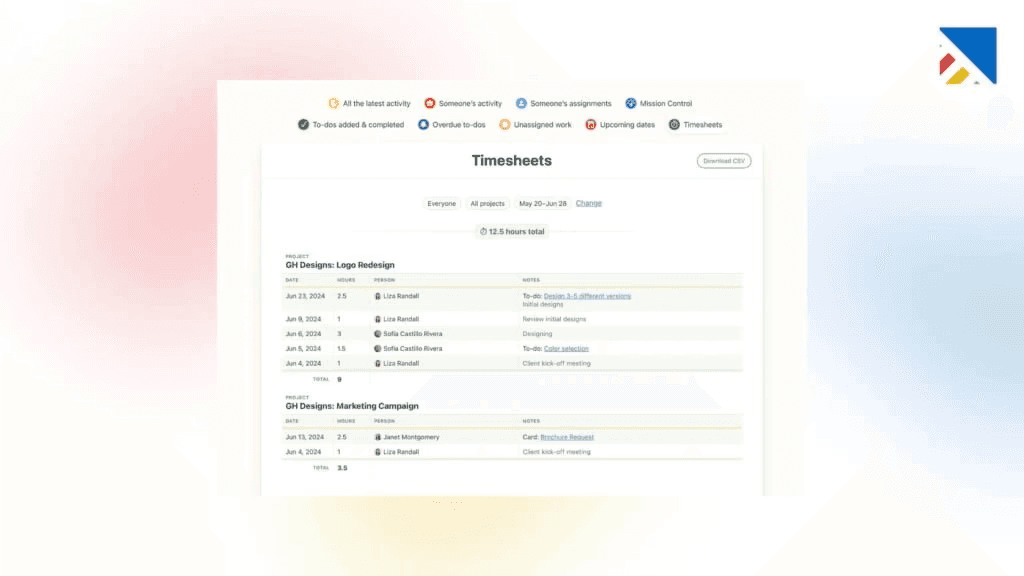
Basecamp positions itself as a remote work headquarters, and its features reflect that collaboration-first philosophy. With team projects, built-in client access controls, message boards, and reusable project templates, it’s particularly well-suited to freelancers who work closely with client teams or operate as embedded contributors inside larger organizations.
There’s no permanent free plan, but the 30-day trial provides full access, making it easy to evaluate whether the workflow suits your style before committing.
What freelancers use it for:
Collaborating directly with client teams in a shared workspace
Centralizing project discussions, files, and updates in one place
Reusing standardized project templates for repeat client work
Best for: Freelancers who function as embedded contractors or long-term collaborators within client organizations, where shared visibility and communication matter more than advanced task automation.
8. nTask: Best for Freelancers on a Tight Budget Who Need Risk Tracking
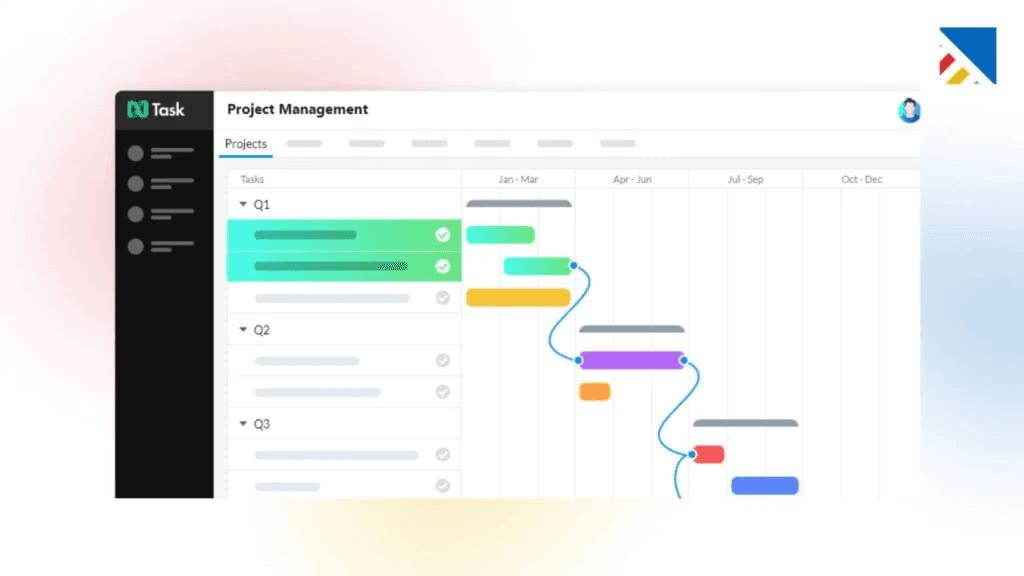
nTask stands out in the budget-friendly tier because it includes features rarely available at this price point. Risk management, issue tracking, and detailed Gantt charts are accessible even on the free plan, making it unusually capable for structured project environments. Add in time tracking, timesheets, and third-party integrations, and you get a toolkit that genuinely punches above its weight.
While the interface isn’t as polished as some larger competitors, the functional depth makes it a strong option for freelancers who care more about control and visibility than aesthetics.
What freelancers use it for:
Tracking risks, blockers, and dependencies in structured client projects
Building timeline-driven plans with Gantt charts and milestones
Logging time and maintaining basic reporting without extra tools
Best for: Freelancers handling complex deliverables where risks need to be flagged early and documented clearly, particularly technical freelancers, project managers, and consultants.
Streamline Your Projects. Start Your PSA Free Trial
9. TMetric: Best Dedicated Time Tracking + Project Management Combo
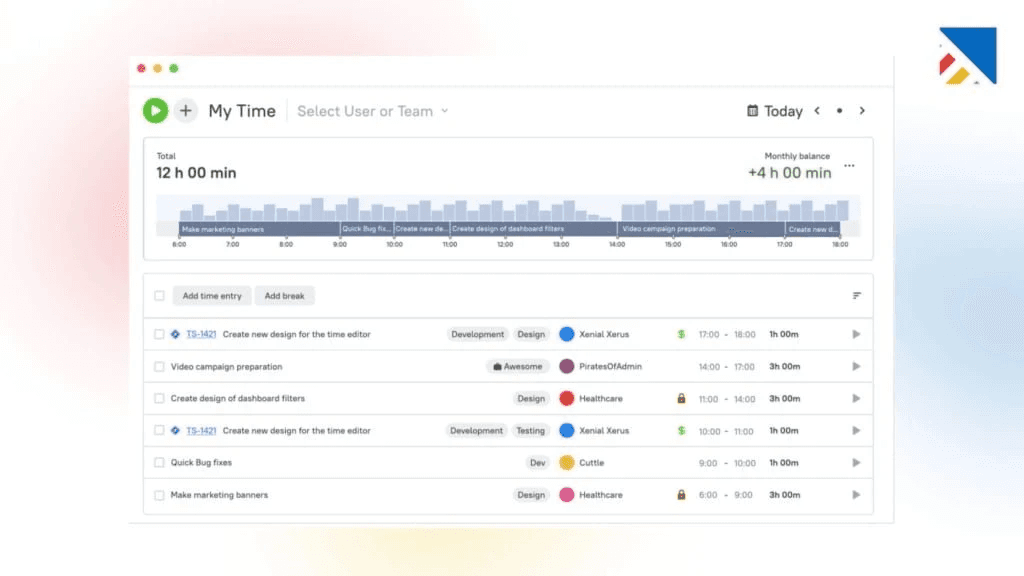
TMetric earns its place by focusing on two things freelancers care deeply about: accurate time tracking and clear project linkage. Instead of treating time logs as an afterthought, it connects every tracked hour directly to the project and task it belongs to. With unlimited projects and clients, built-in invoicing, task deadlines, and client-facing reports, it delivers a streamlined system without the complexity of broader project platforms.
It’s not designed to replace full-scale collaboration suites, but for freelancers whose income depends on billable hours, that focus is exactly the point.
What freelancers use it for:
Tracking billable time directly against projects and tasks
Generating invoices from tracked hours without manual calculations
Sharing transparent time reports with clients for trust and clarity
Best for: Hourly-rate freelancers who prioritize tracking accuracy above all else and want time data to flow seamlessly into invoicing.
10. Freedcamp: Best Free Collaboration Hub with Slack and Zoom Integration
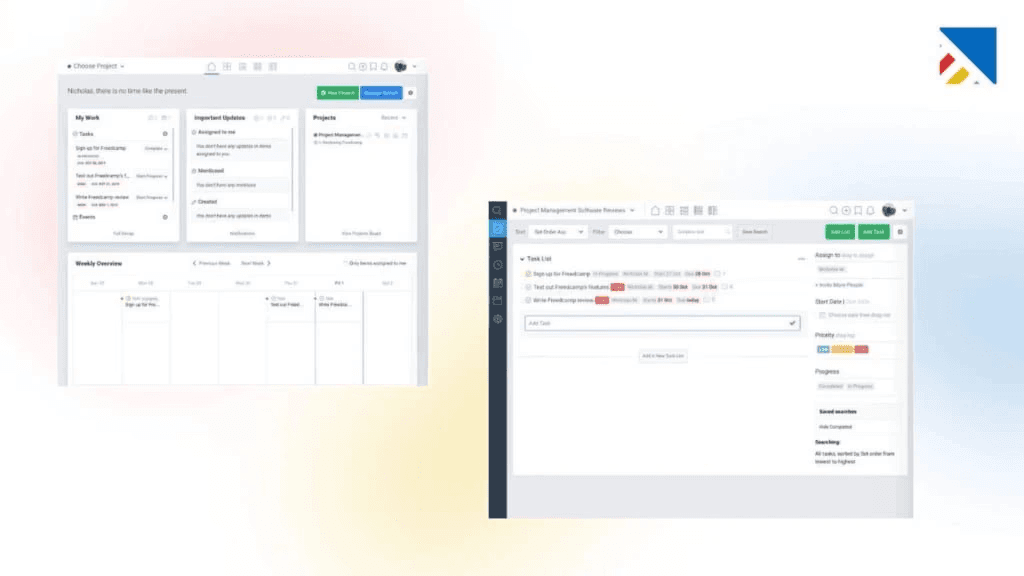
Freedcamp makes a strong case for budget-conscious freelancers by offering a surprisingly capable free plan. It includes essentials like a shared calendar, recurring tasks, and Gantt chart views, along with direct integrations with collaboration tools such as Slack and Zoom. The interface is straightforward, the learning curve is gentle, and the paid upgrade is one of the most affordable on the market, starting at just $1.49 per user per month.
While it may not have the brand recognition of larger platforms, Freedcamp’s balance of functionality and price makes it a practical choice for freelancers who rely heavily on communication tools and want project tracking to stay connected to those workflows.
What freelancers use it for:
Managing projects while collaborating through Slack and Zoom
Scheduling recurring work and tracking timelines visually
Keeping communication and task tracking aligned without extra complexity
Best for: Freelancers or small agencies that already operate inside Slack and Zoom and want project management to integrate smoothly with those tools.
How to Choose the Right Project Management Software for Your Freelance Business
The right project management tool depends less on feature lists and more on where your freelance business is today and where it’s losing the most time. Use this practical decision framework to narrow your options.
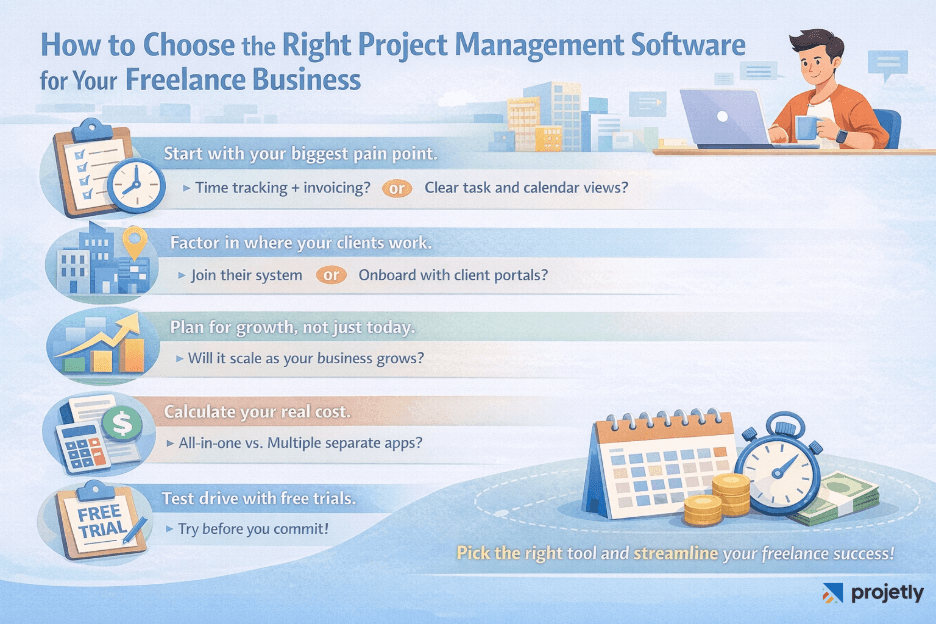
Start with your primary operational constraint.
If your clients already work in platforms like Trello or Asana, it’s usually easier to align with their system than push for change. If you frequently onboard new clients, choose a tool with built-in client access or portals to streamline communication.
Consider the environments in which your clients already operate.
If your clients already work in platforms like Trello or Asana, it’s usually easier to align with their system than push for change. If you frequently onboard new clients, choose a tool with built-in client access or portals to streamline communication.
Evaluate future scalability, not only present needs.
A platform that supports five active clients today should be capable of accommodating fifteen tomorrow without requiring disruptive system changes. Prioritizing scalability early helps avoid costly migrations and workflow interruptions as your freelance practice grows.
Assess total operational cost rather than subscription price alone.
Maintaining separate subscriptions for project management, time tracking, proposals, and invoicing often results in higher overall expenditure and duplicated administrative effort. In many cases, a consolidated platform in the $19–25 per month range delivers a lower total cost while reducing manual data transfer between systems.
Use trial periods as structured evaluations.
Rather than exploring features superficially, run an active client engagement during the trial window. Platforms such as Hive (14-day trial), Basecamp (30-day trial), and Freedcamp (low-cost pro trial) provide sufficient time to determine whether their workflows genuinely support your operating model.
Why Projetly’s PSA Software Goes Beyond Standard Project Management
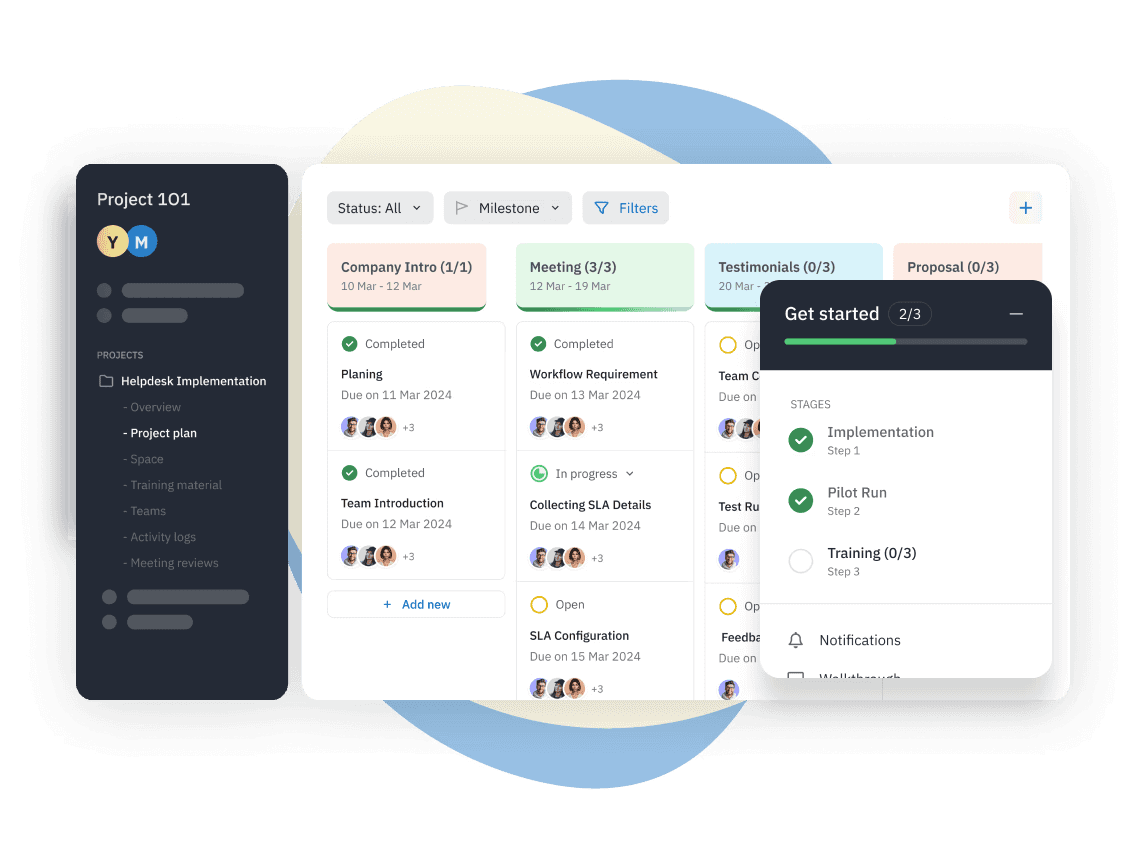
Traditional project management tools primarily focus on tasks, deadlines, and team coordination. Projetly operates at a broader operational level, supporting the entire professional services lifecycle from onboarding and planning to deliver, collaboration, billing, and performance analysis within a single AI-enabled environment.
This places it within the Professional Services Automation (PSA) category, which integrates project execution with resource planning, financial tracking, and client engagement. PSA platforms are typically adopted when fragmented tools and manual workflows begin to impact efficiency, profitability, and client satisfaction.
For freelancers and service firms, this shift moves operations beyond managing projects toward managing delivery performance and business outcomes.
Ready to Upgrade to PSA?
Start Your PSA Free Trial Today and experience end-to-end service delivery in one unified platform.
What Projetly’s PSA Platform Covers
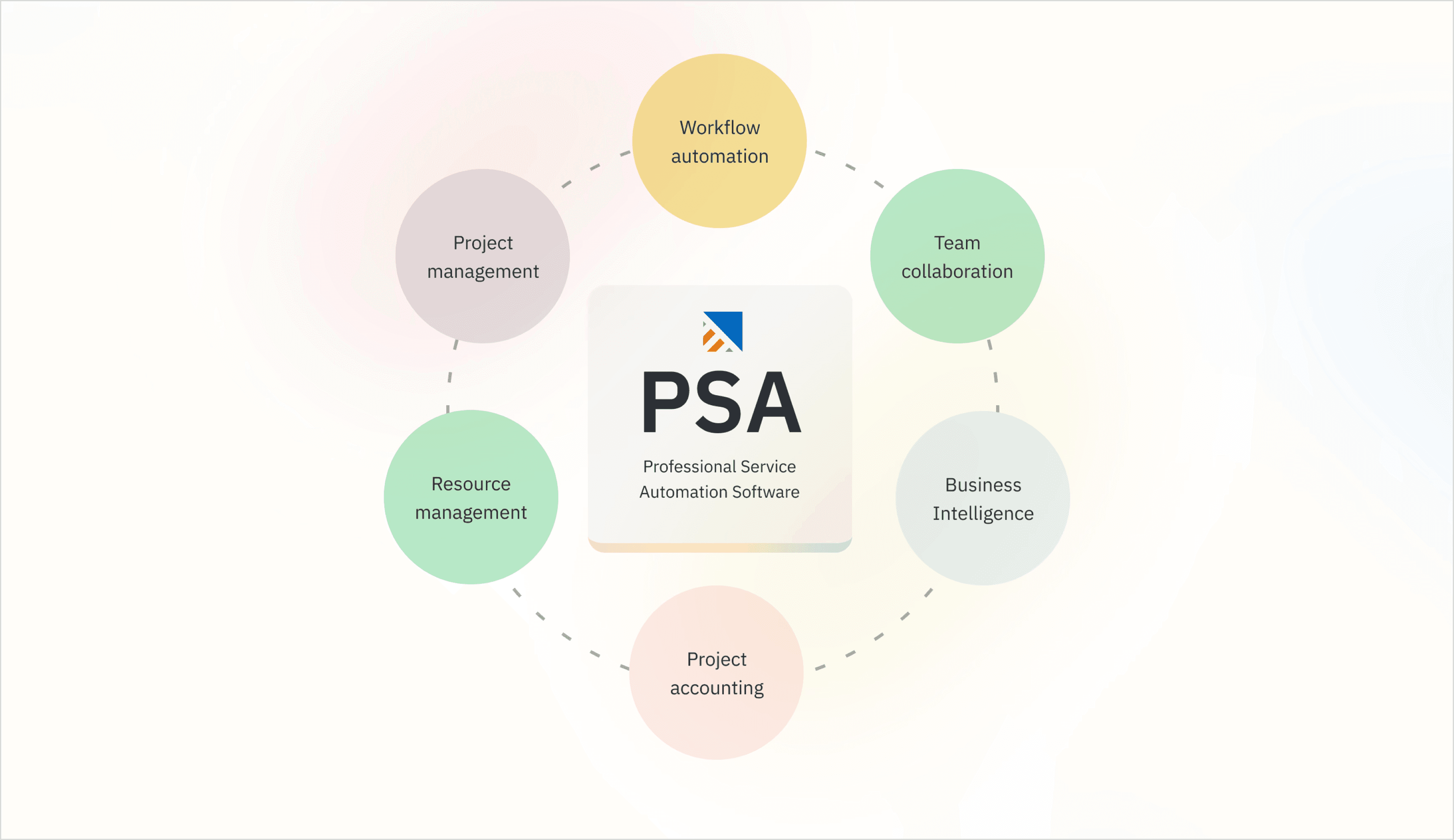
Project Management: This is the operational core of PSA software. It covers project planning, task assignment, scheduling, milestone tracking, and progress monitoring. The goal is to ensure work moves forward on time, within scope, and with full visibility for both teams and stakeholders.
Resource Management: This focuses on allocating the right people to the right work. PSA systems track availability, workload, and skill sets so managers can balance capacity, avoid burnout, and prevent projects from stalling due to resourcing gaps.
Project Accounting: Project accounting connects financial performance directly to project activity. It tracks billable hours, expenses, budgets, and margins so businesses can see whether each engagement is profitable, not just completed.
Business Intelligence: This layer transforms project and financial data into insights. Dashboards and reports show utilization rates, profitability trends, delivery performance, and client health metrics, helping leaders make better operational and strategic decisions.
Team Collaboration: Collaboration features centralize communication, feedback, files, and approvals within the project workspace. This reduces reliance on scattered emails or chats and ensures everyone involved in internal teams and clients stays aligned.
Workflow Automation: Automation handles repetitive administrative tasks such as status updates, notifications, approvals, and task transitions. This reduces manual effort, enforces consistency, and allows teams to focus on delivery rather than coordination.
In practice, this means Projetly functions less like a task tracker and more like an operational backbone for service delivery, connecting execution, financial performance, and client experience in one system.
Want to See How Projetly’s PSA Works in Real Time? Book a Demo Today
Frequently Asked Questions
What is the best free project management software for freelancers in 2026?
Hive offers one of the strongest free tiers, including multiple views, chat, and automation. Asana is ideal if you want deeper task structure, while Trello remains the simplest option for freelancers just getting started.
Do I need separate invoicing software?
It depends on your tool. Platforms like TMetric or Teamwork.com include invoicing features, reducing extra admin work. With tools focused purely on task tracking, you’ll likely need a separate billing solution.
How do I get clients to use project software with me?
The easiest approach is to choose a tool with a client-facing view or portal. This lets clients review progress, files, and approvals without learning a new system, which removes most adoption resistance.
What should freelancers prioritize in a tool?
Look for software that improves visibility across clients, connects time tracking to real work, and supports simple client communication. Automation and billing integrations become increasingly valuable as your workload grows.
Is it worth it for part-time freelancers?
Yes, especially since many platforms offer free plans. Structured task tracking reduces mental load and prevents missed deadlines, which is often more valuable when freelancing alongside other commitments.
Do I need technical skills to use project management software?
No coding is required for modern tools. Platforms like Freedcamp are beginner-friendly, while systems like Notion or ClickUp simply require a bit more setup time rather than technical expertise.
The Bottom Line
The best project management software for freelancers in 2026 is the one that fixes what’s currently breaking in your workflow. If task visibility is the issue, start with Hive or Trello. If billing accuracy matters most, TMetric or Teamwork are strong contenders. And if you’re juggling multiple disconnected tools, an integrated platform can often reduce both cost and admin time.
Most tools in this guide offer free plans or trials, so the practical move is simple: shortlist two or three based on your biggest pain point, test them on a real project, and keep the one that actually gets used.
Project management software doesn’t change the quality of your work; it changes how much of your time you get to spend doing it.
If you’re ready to move beyond task tracking and manage your entire delivery cycle in one place, consider exploring Projetly. Its AI-powered PSA platform connects projects, clients, time tracking, and billing into a single workflow, and you can try it with full access before committing.
You may also like

A Guide to Project Management Professional Certification

Laugh Your Way to Productivity: 50 Workplace Quotes

50 Funny Workplace Memes That’ll Brighten Your Workday.
What Does a Customer-First Mindset Mean? Explained in 2025

What It Takes to be a Great Customer Success Manager in 2025