NEW CLIENT ONBOARDING
Customer onboarding toolkit

By
Dhruv
8 Best SaaS Onboarding Tools to Boost User Activation and Retention in 2026
Your SaaS onboarding experience isn't a checkbox. It determines whether a paying customer becomes a long-term advocate or a 30-day churn statistic. Research consistently shows that up to 80% of users abandon a product within the first 90 days when onboarding fails them, and that figure hits revenue hard.
The stakes are high, but so is the opportunity. The right onboarding software transforms that fragile first-week window into a growth engine. Personalized journeys, in-app guidance, workflow automation, and real-time analytics help users reach their "aha moment" before doubt sets in.
This guide covers the 8 best SaaS onboarding tools for 2026, what they do well, who they're built for, and how to pick the one that actually fits your team.
Launch Better Customer Onboarding Today
What Makes Great SaaS Onboarding Software?
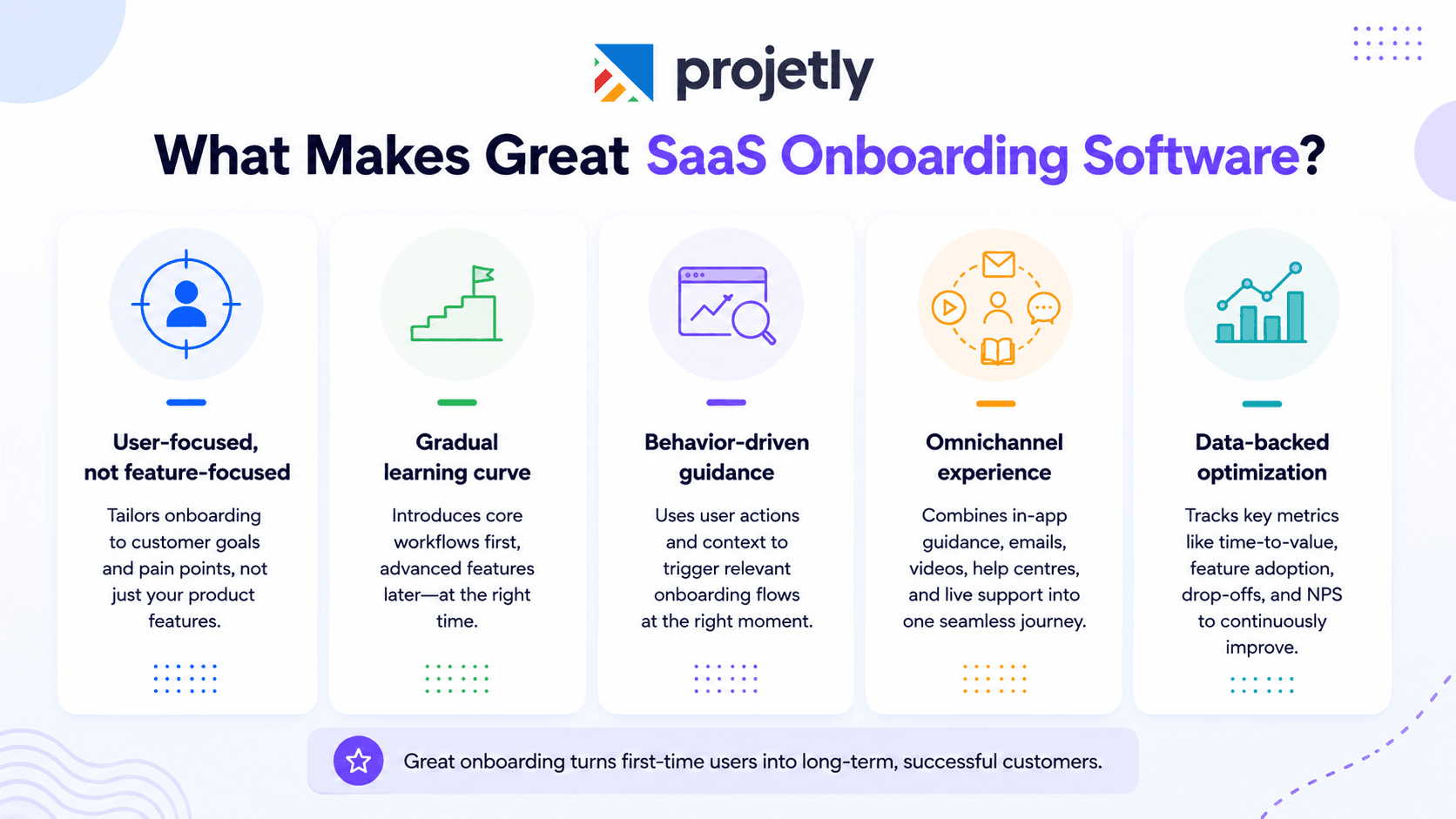
Before comparing products, it helps to understand what separates a tool that genuinely moves the needle from one that just looks good in a demo.
It centres on the user, not the product: The best onboarding platforms are built around solving customer pain points, not walking users through a feature list. A marketing manager and a system administrator need completely different first experiences; great onboarding software makes that distinction and acts on it.
It respects the learning curve. Nobody wants to be handed 47 tooltips on day one. Effective platforms introduce complexity gradually, core workflows first, advanced features later, timed to when users actually demonstrate readiness.
It uses behavioral data intelligently: Modern onboarding tools don't guess what a user needs. They track behavior, trigger flows contextually, and surface the right guidance at the right moment, not just based on a timer.
It works across channels. In-app flows are a starting point, not the whole picture. Email sequences, resource centres, video walkthroughs, and live support should all work together under one coordinated strategy.
It measures what matters. Drop-off rates, time to value, feature adoption, NPS at key milestones, without this data, you're iterating blind.
Get a Custom Onboarding Strategy Demo
The Most Common SaaS Onboarding Failures (And Why They Happen)
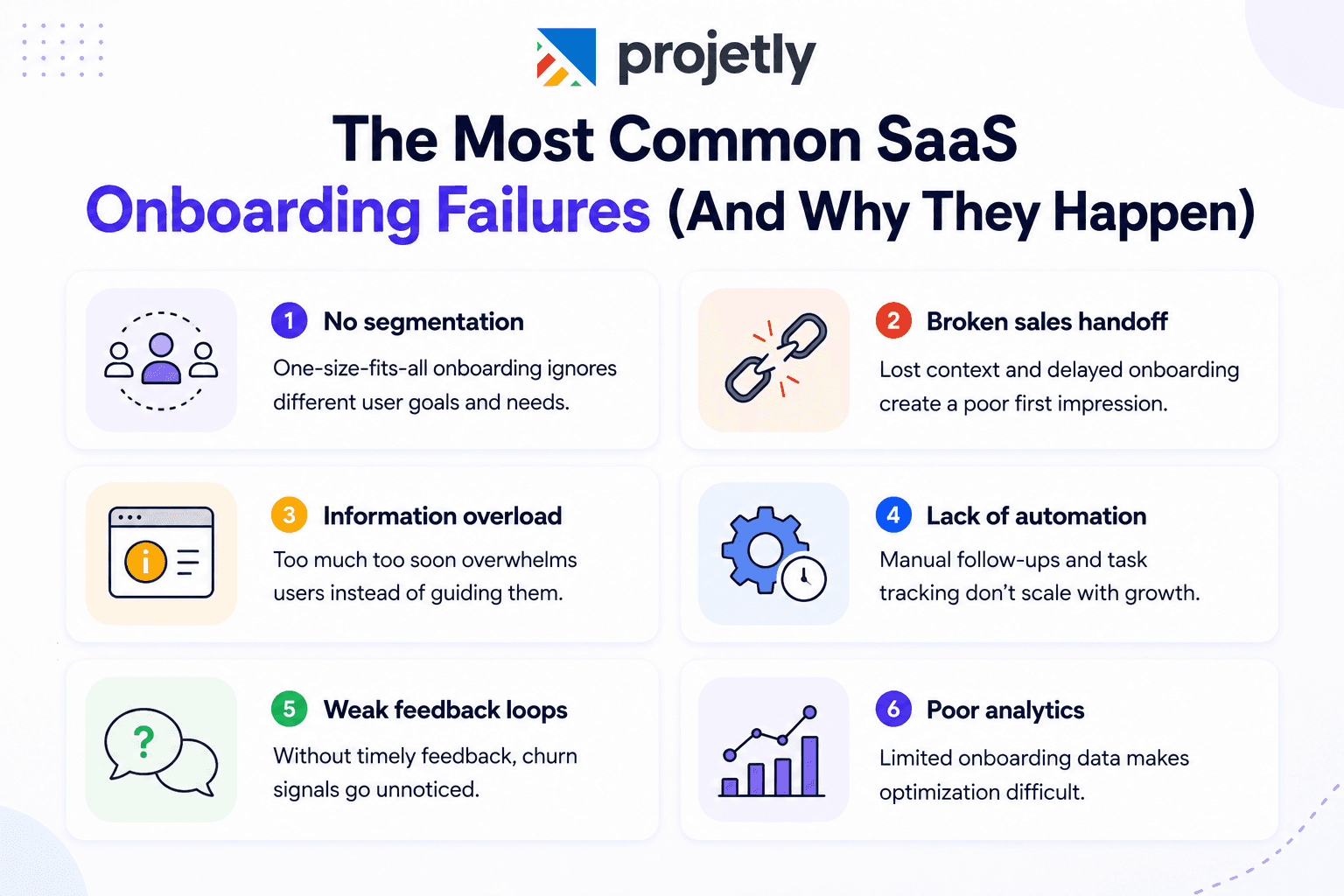
Understanding where onboarding breaks down helps you ask better questions when evaluating tools. Here are the problems that surface most often:
No segmentation. A one-size-fits-all welcome flow assumes everyone is the same kind of user with the same goals. They're not, and users figure that out within minutes.
A broken handoff from sales. In B2B SaaS onboarding, the moment a deal closes should trigger a seamless onboarding kickoff. When it doesn't, when context gets lost, kickoffs are delayed, or CSMs start from scratch, customers notice immediately.
Information overload: Throwing everything at users upfront is counterproductive. Progressive disclosure isn't just a design preference; it's the difference between users feeling capable and users feeling overwhelmed.
No automation, so teams don't scale: Manual follow-ups, task tracking, and reminders don't hold up when your customer base grows. Without automation, CS teams stretch thin, and onboarding quality suffers inconsistently.
Poor feedback loops. If you don't ask users how onboarding is going, at meaningful moments, not just at the end, you miss churn signals while they're still fixable.
Weak analytics. You can't improve what you can't see. Tools without robust onboarding metrics leave teams guessing about what's actually working.
Overcoming these challenges requires the right onboarding tool and an effective user onboarding that combines automation, customer data, onboarding practices, and real-time analytics. A tool like this not only helps users to use your product effectively but also drives customer engagement and long-term loyalty.
Explore AI-Powered Onboarding Workflows, Start a Free Trial
Essential Features in SaaS Onboarding Tools
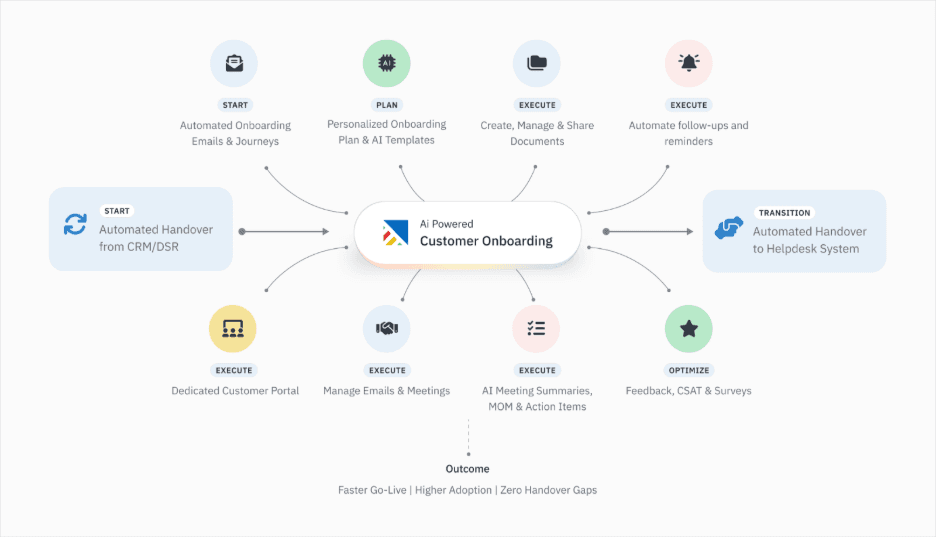
Automated Handover from CRM/DSR: Closed-won deals flow directly from your CRM into onboarding, so CS owns a complete, accurate customer record from day one, no manual handoffs, no dropped context.
Automated Onboarding Emails & Journeys: Pre-built, trigger-based email sequences move customers through onboarding milestones automatically, freeing your CSMs from repetitive follow-ups and keeping every customer on track.
Personalized Onboarding Plans & AI Templates: AI generates tailored onboarding plans from proven templates, so your team delivers a consistent, high-quality experience at scale without starting from scratch every time.
Centralized Document Management: Every onboarding asset, contracts, guides, and SOWs live in one shared workspace. Your team and customers always work from the same source of truth.
Automated Follow-Ups & Reminders: Auto-sent reminders for pending tasks, approvals, and deadlines ensure nothing slips through the cracks, so your CSMs spend time on relationships, not chasing.
Dedicated Customer Portal: Customers get a branded, self-serve portal to track onboarding progress, access documents, and complete tasks, dramatically reducing inbound "where are we?" questions.
Unified Email & Meeting Management: All onboarding communications and meeting activity are captured in one place, giving every CSM full context and making handovers between team members seamless.
AI Meeting Summaries, MOMs & Action Items: Meetings are automatically summarized, minutes generated, and action items assigned, so your CSMs walk out of every call ready to execute, not scrambling to take notes.
Feedback, CSAT & Milestone Surveys: Automated surveys trigger at key onboarding moments, surfacing satisfaction signals early so your team can intervene before churn becomes a risk.
Automated Handover to Helpdesk: Once onboarding wraps, a complete customer profile passes to your support team automatically, ensuring a smooth, informed transition to long-term success.
Automate Your SaaS Onboarding Journey
The 8 Best SaaS Onboarding Tools for 2026
Now, let's explore the top onboarding platforms that can transform your user activation and retention in 2026.
Projetly: Best for Enterprise B2B Customer Onboarding with AI
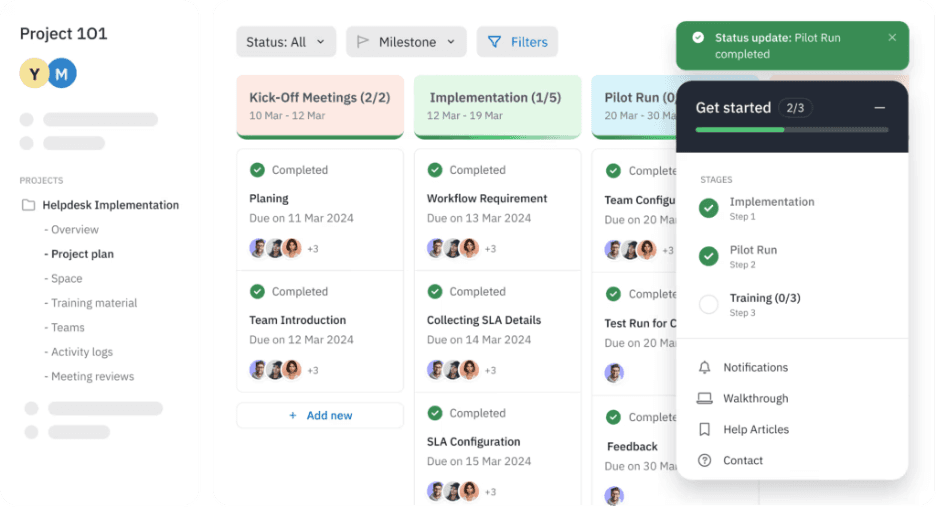
An AI-powered customer onboarding platform built for enterprise B2B SaaS companies managing complex, high-touch implementations. Unlike traditional tools focused narrowly on in-app guidance, this platform manages the entire customer journey, from sales handoff to go-live and beyond, in one unified workspace.
Key Features:
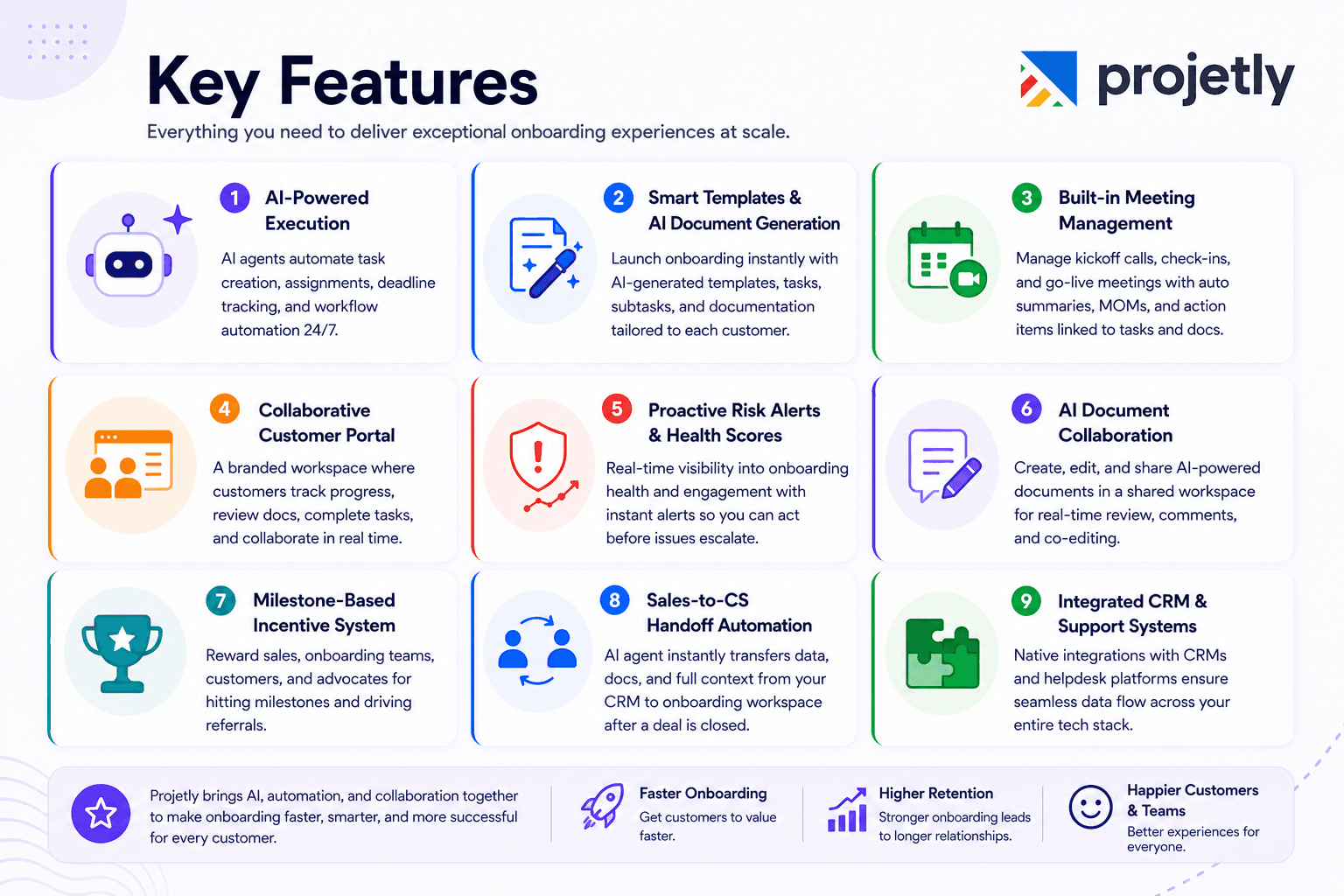
Here are the 9 features rewritten to match Projetly's capabilities:
AI-Powered Execution: AI agents automatically handle task creation, assignment, deadline tracking, and workflow automation, keeping onboarding moving around the clock without manual intervention.
Smart Templates & AI Document Generation: Launch onboarding projects instantly with AI-generated templates, tasks, subtasks, and documentation tailored to each customer's journey, combining standardization with personalization at scale.
Built-in Meeting Management: Manage kickoff calls, weekly check-ins, and go-live meetings directly in the platform, with automatic summaries, AI-generated MOMs, and action items linked to relevant tasks and documents.
Collaborative Customer Portal: A branded, self-serve customer workspace where clients track onboarding progress, review documents, complete tasks, and collaborate in real time, eliminating scattered email chains and disconnected tools.
Proactive Risk Alerts & Health Scores: Real-time visibility into onboarding momentum, customer engagement, and sentiment, with instant alerts when implementations show early warning signs so your team can step in before issues escalate.
AI Document Collaboration: Create, edit, and share AI-powered documents in a centralized shared workspace, where customers can review, comment, and co-edit onboarding plans, SOPs, and knowledge docs in real time.
Sales-to-CS Handoff Automation: An AI agent automatically transfers data, documents, and full customer context from your CRM to the onboarding workspace the moment a deal is closed, eliminating manual handoff friction and ensuring CS starts with everything they need.
Integrated CRM & Support Systems: Native integrations with major CRMs and helpdesk platforms ensure seamless data flow across your entire tech stack, from sales through onboarding to long-term support.
Try Smarter Customer Onboarding Free
Key Benefits
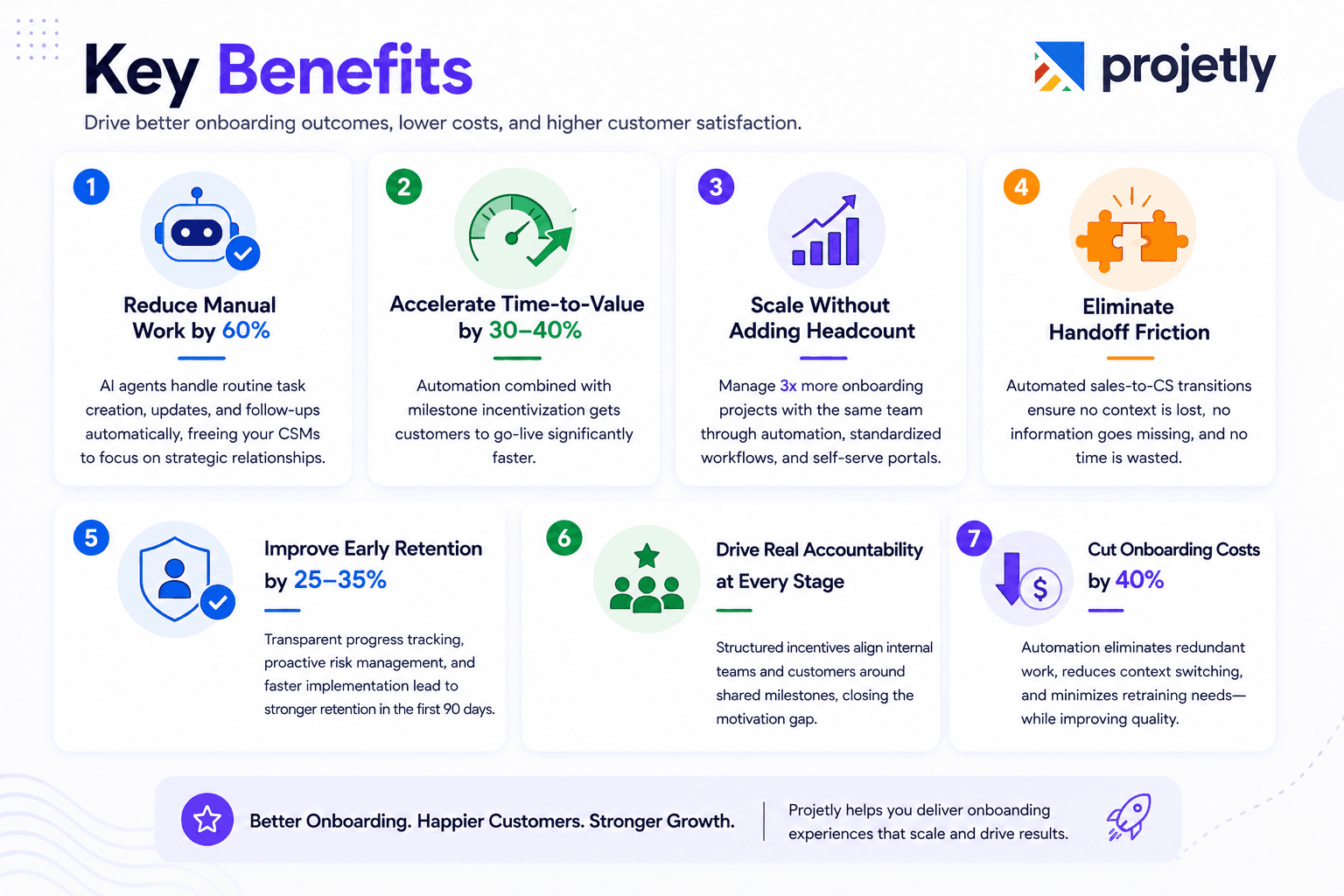
Reduce Manual Work by 60%: AI agents handle routine task creation, updates, and follow-ups automatically, freeing your CSMs to focus on strategic relationships instead of administrative overhead.
Accelerate Time-to-Value by 30–40%: Automation combined with milestone incentivization gets customers to go-live significantly faster, directly impacting revenue recognition and satisfaction.
Scale Without Adding Headcount: Manage 3x more onboarding projects with the same team through intelligent automation, standardized workflows, and self-serve customer portals.
Eliminate Handoff Friction: Automated sales-to-CS transitions ensure no context is lost, no information goes missing, and no time is wasted between deal close and onboarding kickoff.
Improve Early Retention by 25–35%: Transparent progress tracking, proactive risk management, and faster implementation directly correlate with stronger retention in the first 90 days.
Cut Onboarding Costs by 40%: Automation eliminates redundant work, reduces context switching, and minimizes retraining needs, all while raising quality and consistency.
Pricing: Contact for custom enterprise pricing. Free trial available with no credit card required.
Best For: Enterprise B2B SaaS companies with complex onboarding processes requiring coordination across sales, customer success, and implementation teams, particularly organizations managing multi-stakeholder rollouts and looking to accelerate time-to-value at scale.
Turn New Customers Into Active Users
Userpilot: Best for Product-Led Growth Teams
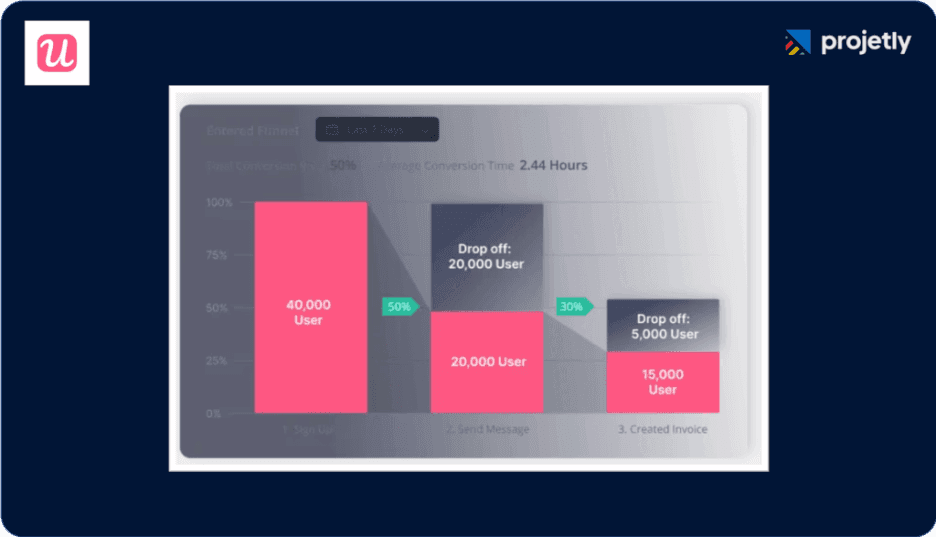
Userpilot has built a strong reputation among PLG teams that want behavioral onboarding without writing code. It combines in-app experience building, user analytics, and feedback collection in a single platform, and the integration between those three layers is where it earns its place.
Key Features:
No-code builder for product tours, tooltips, modals, and slideouts
Advanced segmentation by behavior, attributes, and lifecycle stage
Behavioral triggers that launch flows at contextually relevant moments
In-app NPS, CSAT, and custom feedback surveys
Goal tracking and activation funnel analytics
A/B testing to optimize onboarding flows over time
Resource centre for self-serve support content
Best For: Mid-market to enterprise product teams that want data-driven onboarding without heavy engineering support.
Appcues – Best for Simple, Quick Implementation
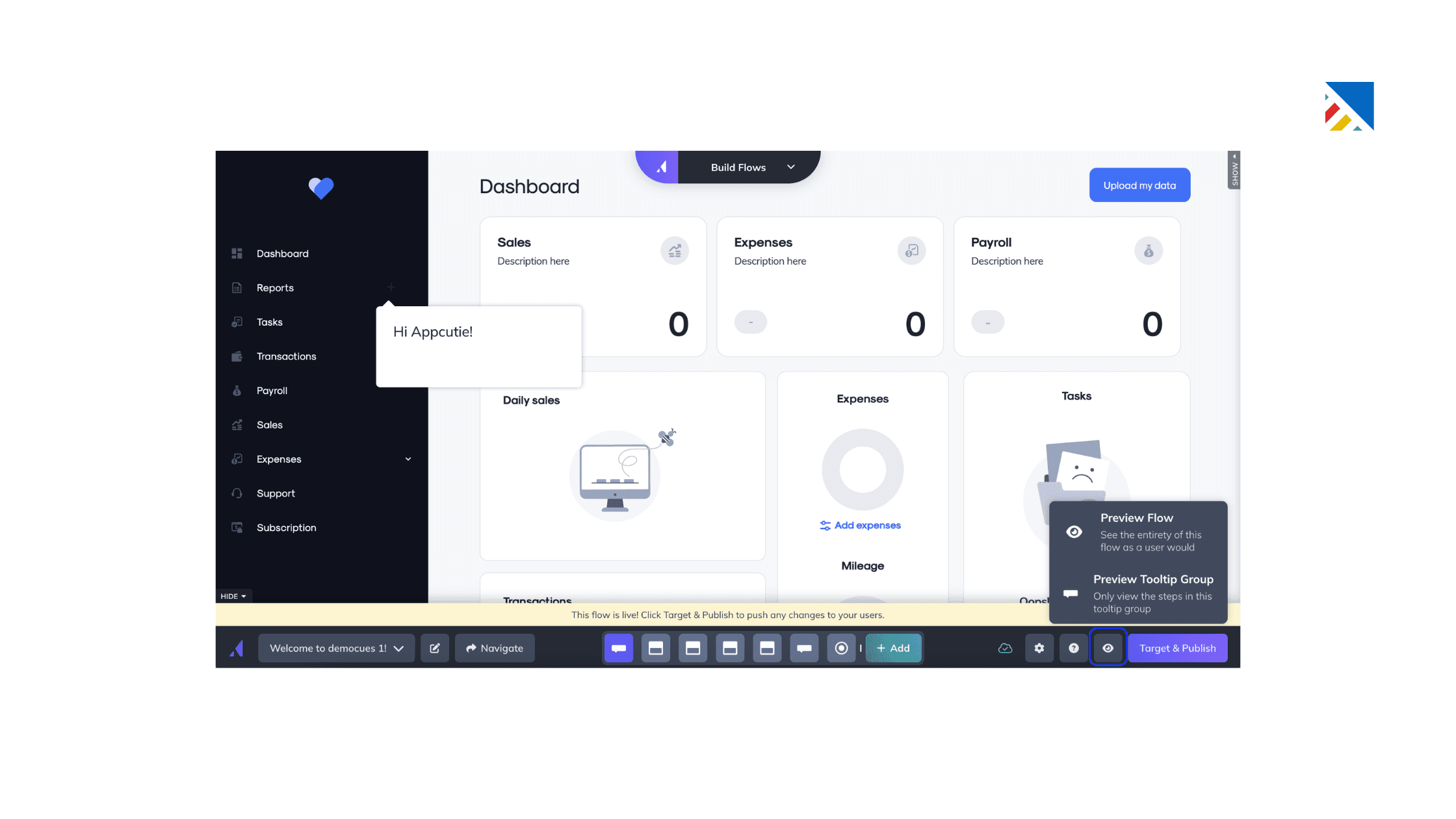
Appcues has always competed on speed and simplicity. Its drag-and-drop builder lets non-technical product managers and CS teams stand up guided tours, checklists, and announcements in hours rather than weeks. The trade-off is depth; it doesn't offer the granular analytics or behavioral complexity of Userpilot or Pendo.
Key Features:
Drag-and-drop builder for product tours and onboarding flows
Onboarding checklists with real-time progress tracking
Targeted messaging for different user segments
Event tracking for engagement monitoring
Mobile support for iOS and Android apps
Integrations with Segment, HubSpot, Salesforce, and others
In-app feedback collection
Pre-built templates for common onboarding patterns
Best For: Small to mid-size SaaS companies that want straightforward onboarding without a steep learning curve or heavy technical involvement.
Simplify Onboarding From Day One
Pendo – Best for Enterprise Product Intelligence
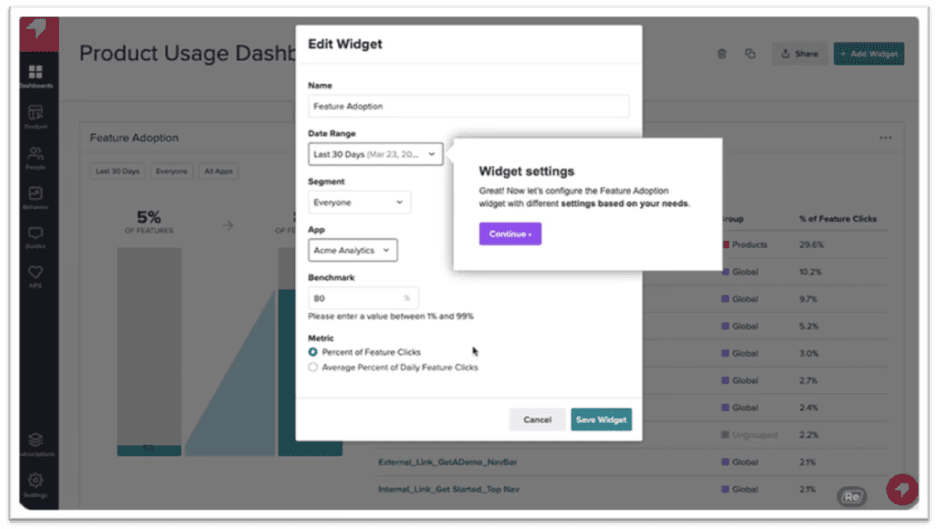
Pendo occupies a different position from most onboarding tools. Yes, it has in-app guides and user flows, but its real differentiator is the analytical depth sitting underneath all of it. Automatic event tracking (no tagging required), retention analysis, NPS at scale, and product roadmap features make it a serious contender for enterprise product and CS teams.
Key Features:
Automatic event tracking with no manual instrumentation
In-app guidance for onboarding, feature adoption, and announcements
Deep usage analytics with cohort analysis and retention reporting
Feedback management at enterprise scale
Roadmap planning that incorporates customer input
Predictive analytics to surface churn risk signals early
50+ integrations including Salesforce, HubSpot, Zendesk, and Jira
Best For: Enterprise SaaS companies that need advanced product analytics alongside onboarding.
Improve Customer Adoption Faster
Chameleon – Best for Customization and Flexibility
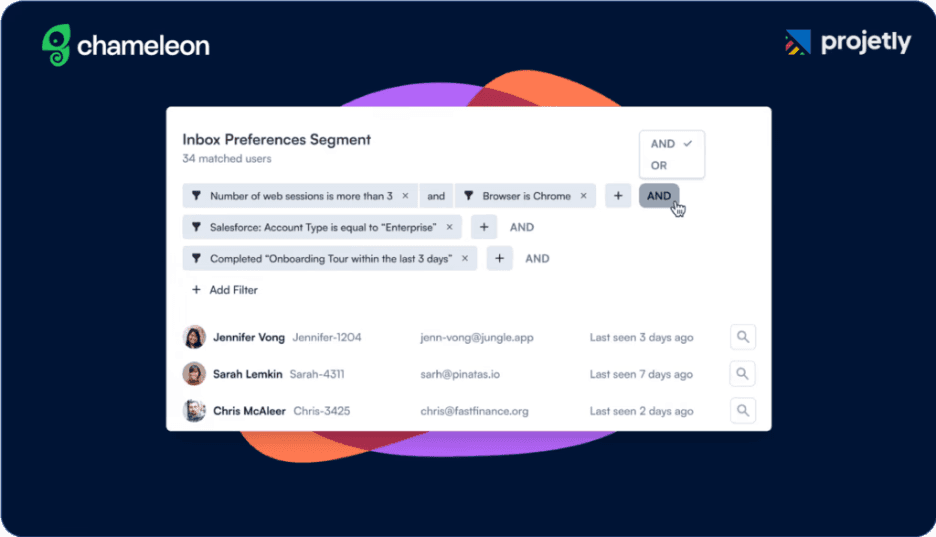
Chameleon exists for teams where brand fidelity is non-negotiable. Full CSS control, advanced behavioral triggers, smart rate limiting (so users aren't bombarded), and A/B testing make it a legitimate choice for companies that have outgrown the "good enough" aesthetic of simpler tools.
Key Features:
HelpBar for self-serve feature search and navigation
Full CSS customization, no template constraints
Smart behavioral triggers with complex condition logic
A/B testing for flow and messaging optimization
Interactive product demos
Survey builder with skip logic and branching
Rate limiting to prevent guide fatigue
Dynamic personalization via data integrations
Best For: Design-driven SaaS companies that want highly customized, on-brand onboarding flows.
Simplify Onboarding From Day One
WalkMe – Best for Complex Enterprise Applications
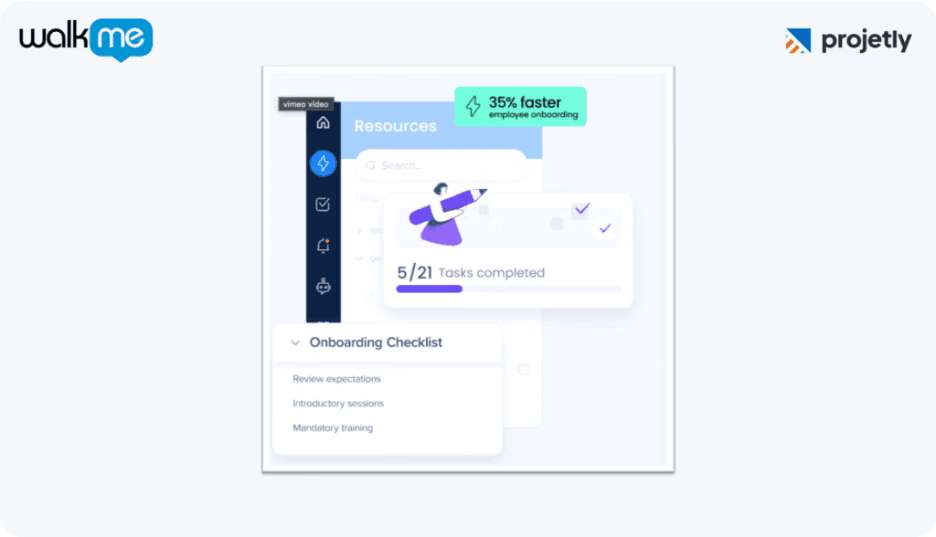
WalkMe is a digital adoption platform that goes deeper than most. It's less about SaaS product activation in the traditional sense and more about guiding users through genuinely complex enterprise software ecosystems, ERP systems, CRMs, custom platforms, and multi-application environments. Its ActionBot can actually execute tasks on behalf of users, not just guide them.
Key Features:
Adaptive Walk-Thrus that adjust to user behavior in real time
Task automation to reduce repetitive workflows
ShoutOuts for feature announcements and system updates
ActionBot AI chatbot that answers questions and takes actions
Insights analytics for adoption tracking and friction identification
Cross-application support across multiple enterprise systems
Mobile SDKs for mobile onboarding coverage
SOC 2 compliant with enterprise-grade security
Best For: Large enterprises with sophisticated internal tools or customer-facing platforms that require structured, in-depth guidance.
Explore AI-Powered Onboarding Workflows
Intercom – Best for Conversational Onboarding
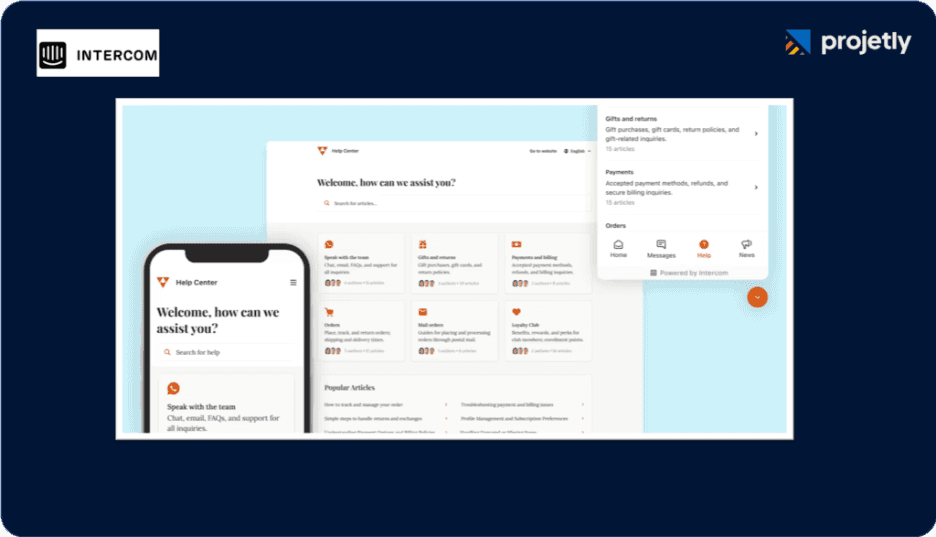
Intercom is primarily known as a customer messaging platform, but its onboarding capabilities, product tours, behavioral email sequences, in-app chatbots, and live chat make it uniquely suited for teams that want automation with a human escape hatch. The conversational layer distinguishes it from pure product adoption tools.
Key Features:
Product tours for guided feature discovery
Targeted in-app messaging and behavior-triggered email
Chatbots for automated onboarding assistance and qualification
Live chat for seamless agent handoff
Outbound messaging tied to lifecycle stage
Customer data platform for deep personalization
Multi-touch campaign builder across channels
Push notifications and in-app mobile messaging
Best For: Companies that want a hybrid onboarding approach, automated flows supported by real-time conversations.
Get a Custom Onboarding Strategy Demo
Whatfix - Best for Large-Scale Employee Onboarding
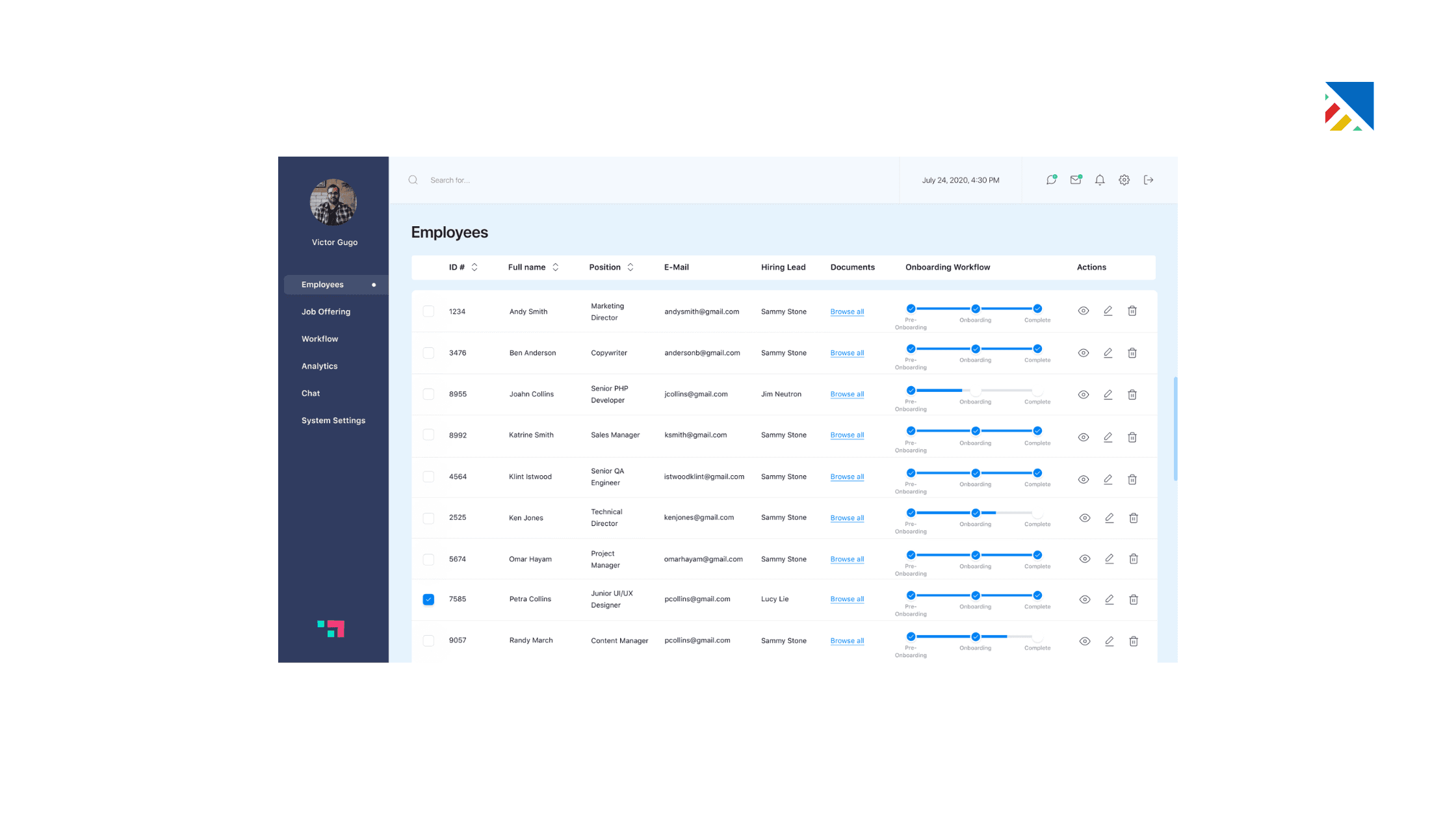
Whatfix is distinct from the rest of this list in an important way: it's built primarily for employee onboarding and digital adoption, not customer activation. That said, its depth in handling complex enterprise applications makes it worth mentioning, especially for companies that have both internal training and customer onboarding challenges.
Key Features:
Step-by-step interactive walkthroughs for complex enterprise workflows
Task lists with structured progress tracking
Self-help widget accessible from any screen within the application
Smart Tips that appear based on the user's location in the app
Field validation to guide accurate data entry
Analytics dashboard for adoption rates, completion metrics, and friction points
70+ language support for global rollouts
Offline mode for applications used without internet access
Best For: Large enterprises onboarding employees to internal systems like Salesforce, SAP, Workday, or custom applications.
Explore AI-Powered Onboarding Workflow
How to Choose the Right Tool for Your SaaS Onboarding Process
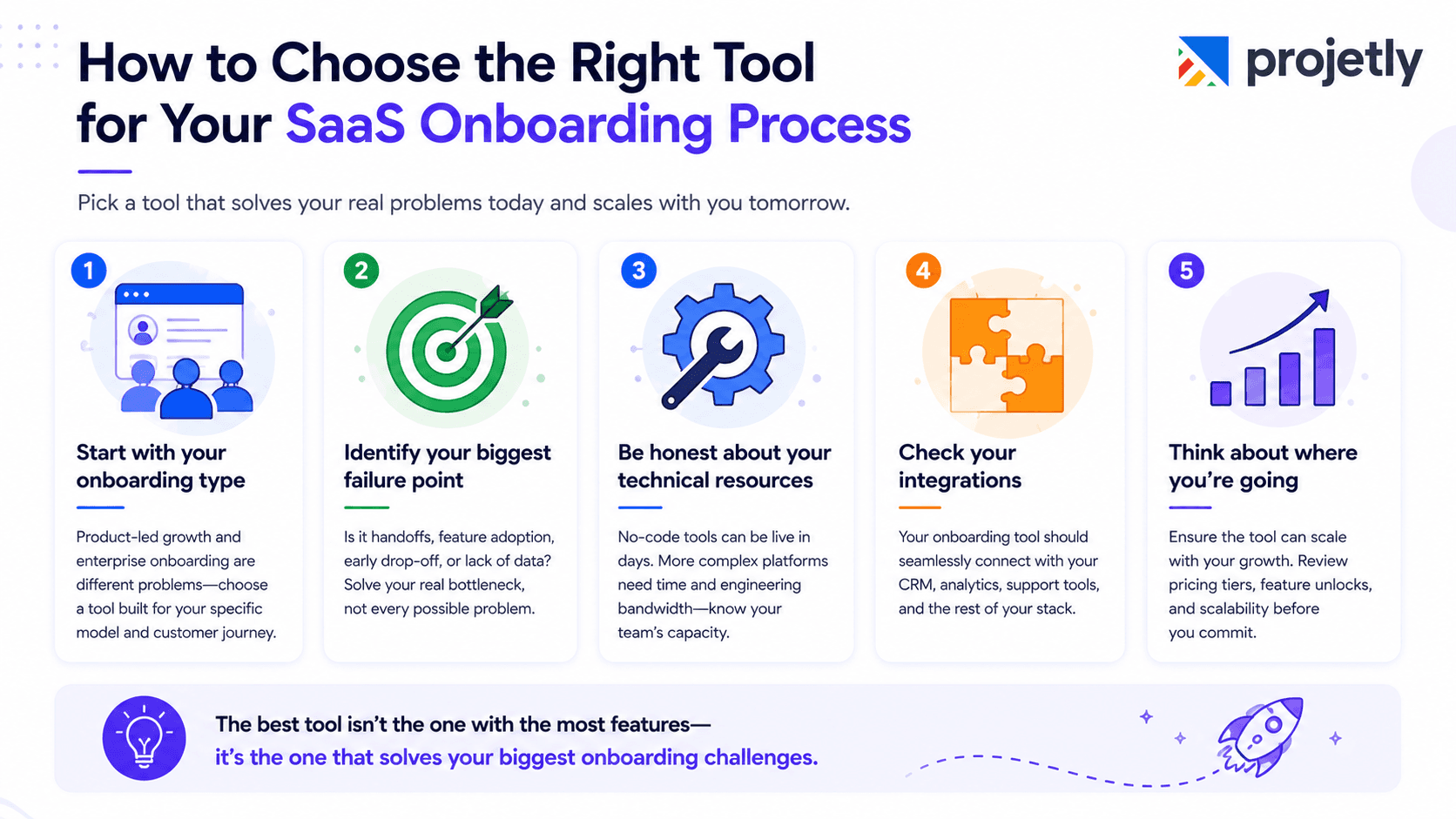
The right answer here depends less on which tool has the most features and more on what's actually breaking in your current process.
Start with your onboarding type: Product-led growth companies with self-serve signup flows need different tools than B2B SaaS companies managing enterprise implementations with 90-day go-lives. These are fundamentally different problems.
Identify your biggest current failure point: Is it the sales-to-CS handoff? Feature adoption? User drop-off in the first 48 hours? Lack of data? The tool that fixes your actual bottleneck is more valuable than the tool with the longest feature list.
Be honest about your technical resources: No-code tools like Appcues and Userpilot can be live in days. Platforms like Pendo and WalkMe require proper implementation time. If you don't have engineering bandwidth, that matters.
Check your integrations: Your onboarding tool needs to talk to your CRM, your analytics stack, and your support platform. Gaps in integrations create data silos that undermine everything else.
Think about where you're going, not just where you are. A tool that's perfect for 500 customers may crack under the weight of 5,000. Evaluate pricing tiers, feature unlocks, and scalability before committing.
Try Smarter Customer Onboarding Free
Best Practices for Successful SaaS Onboarding
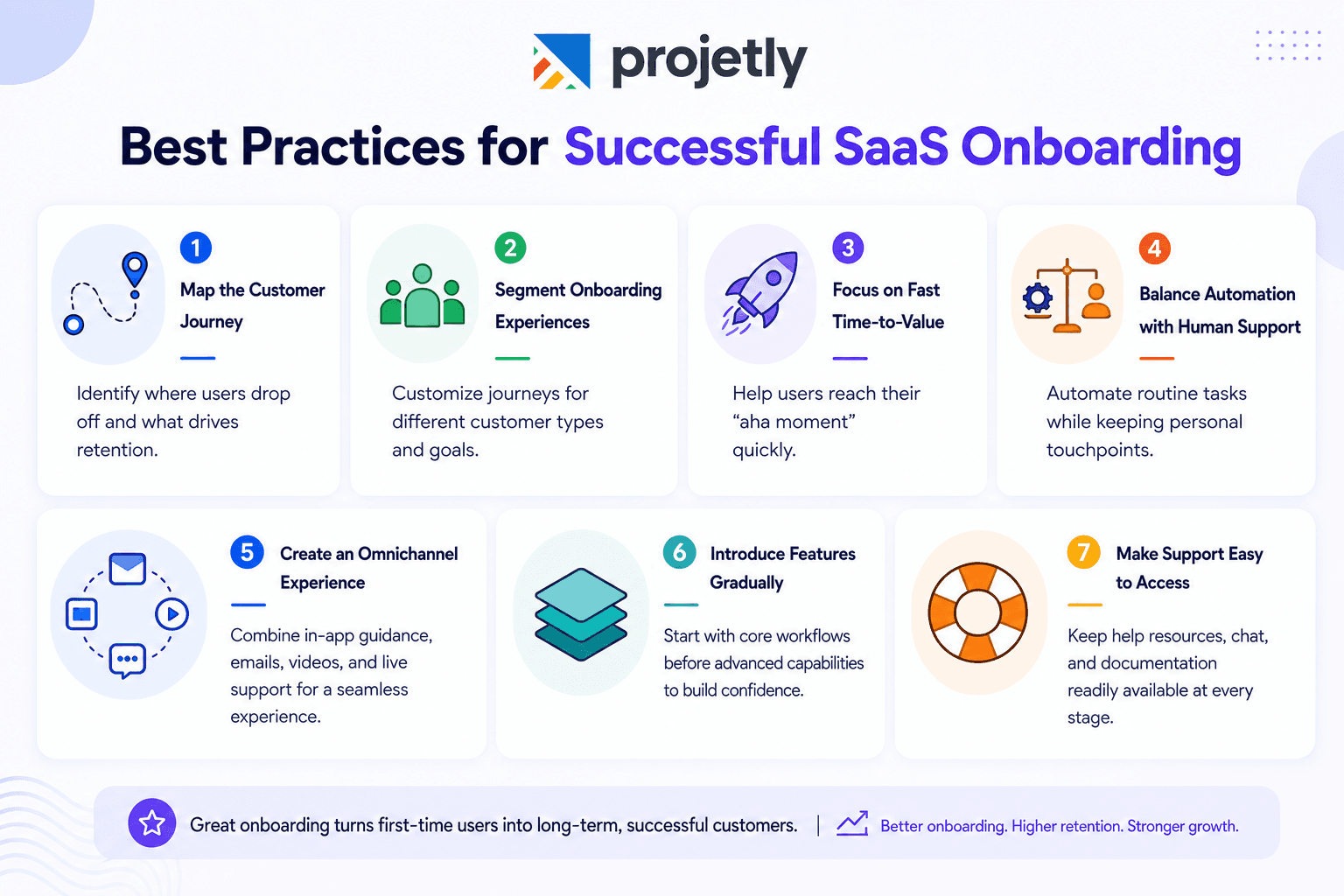
1. Map Your Customer Journey Before Anything Else: Document your current onboarding process end-to-end and pinpoint where customers stall, disengage, or need hand-holding. Know which early actions correlate with long-term retention, then build your process and tooling around those signals, not the other way around.
2. Build Onboarding Paths for Each Customer Segment: A 5-person startup and a 500-seat enterprise have fundamentally different needs, timelines, and success metrics. Design distinct onboarding journeys for each segment and use your tooling's segmentation capabilities to deliver experiences that feel relevant, not one-size-fits-all.
3. Engineer a Fast Path to Value: Identify your product's "aha moment", the earliest point where a customer feels undeniable value, and ruthlessly optimize your onboarding to get them there faster. Everything else can wait. The longer it takes to reach that moment, the higher your early churn risk.
4. Balance Automation with Human Judgment: Automation handles scale; your CSMs handle nuance. Use automated workflows to cover routine touchpoints and information delivery, but train your team to recognize when a personal call or check-in will do what no sequence can. The best onboarding programs blend both without making customers feel like a ticket number.
5. Engage Customers Across Every Channel: In-app guidance alone isn't enough. Coordinate email journeys, shared portals, video walkthroughs, and live touchpoints into a single coherent experience. Customers absorb information differently; meet them where they are.
6. Introduce Complexity Gradually: Resist the urge to showcase every feature upfront. Guide customers through core workflows first, then layer in advanced capabilities as they build confidence. Overloading customers early is one of the fastest ways to lose them.
7. Make Support Frictionless at Every Stage: If a customer has to hunt for help, you've already lost momentum. Embed support resources, knowledge base, live chat, and documentation directly into the onboarding experience, so help is always one click away, never an interruption.
Conclusion: Choosing Your Path to Better Onboarding
The right SaaS onboarding tool can transform those critical early customer experiences, but success depends on choosing a solution that fits your product, team, and growth stage. Whether it’s advanced analytics, simplicity, or enterprise-grade capabilities, alignment matters more than features alone.
Remember, tools don’t fix onboarding by themselves. Real results come from pairing the right technology with a clear strategy, customer insight, and continuous optimization. Start with one core persona and flow, refine it, then scale.
The best SaaS companies treat onboarding as a culture, not a checklist. They measure impact, iterate constantly, and keep the user journey at the center.
Audit your current process, identify the biggest gaps, and test the tool that best fits your needs. The investment you make in onboarding today will drive stronger activation, retention, and long-term growth.
Ready to elevate your onboarding experience? Book a demo, start a free trial, or explore your top choice today, and turn first impressions into long-term customer success.
Frequently Asked Questions
1. What is SaaS onboarding software?
SaaS onboarding software helps companies guide new users through their product using in-app walkthroughs, automation, analytics, and personalized journeys to improve activation and retention.
2. How do I choose the best onboarding tool for my SaaS business?
Evaluate your company size, product complexity, technical resources, and onboarding strategy. Choose a tool that aligns with your goals, integrates with your tech stack, and provides measurable analytics.
3. What features are essential in a SaaS onboarding platform?
Key features include in-app guidance, segmentation, automation, analytics, CRM integrations, feedback collection (NPS/CSAT), and multi-channel engagement.
4. Can onboarding tools improve customer retention?
Yes. Effective onboarding helps users reach their “aha moment” faster, increasing feature adoption, reducing early churn, and improving customer lifetime value.
5. What’s the difference between product onboarding and customer onboarding?
Product onboarding focuses on in-app feature adoption, while customer onboarding (especially in B2B SaaS) includes the full implementation journey, including sales handoff, project management, stakeholder alignment, and post-go-live support.
6. What makes Projetly unique for customer onboarding?
Projetly is built for enterprise B2B SaaS companies with complex implementations. It manages the full onboarding lifecycle, from sales handoff to go-live, using AI automation and real-time tracking to accelerate milestone completion and improve alignment.
You may also like

A Guide to Project Management Professional Certification

Laugh Your Way to Productivity: 50 Workplace Quotes

50 Funny Workplace Memes That’ll Brighten Your Workday.
What Does a Customer-First Mindset Mean? Explained in 2025

What It Takes to be a Great Customer Success Manager in 2025